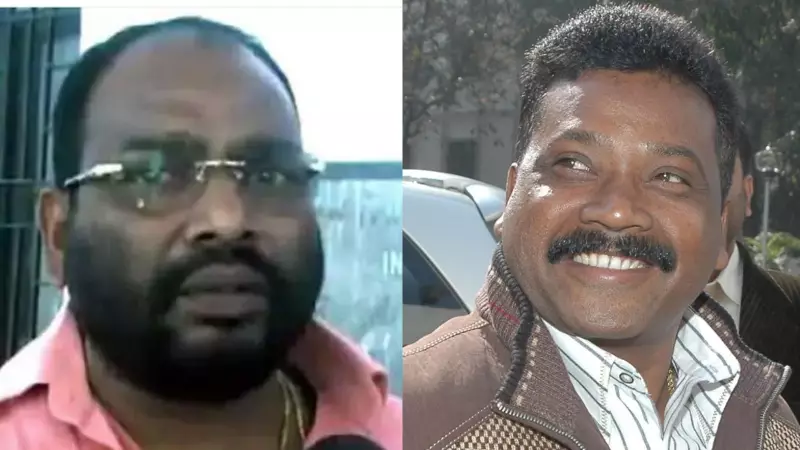
The political saga of two Jharkhand MLAs, convicted under anti-money laundering laws nearly a decade ago, has resurfaced at the centre of a crucial parliamentary debate on constitutional amendments concerning the removal of top elected leaders.
The Dramatic 2005 Chase and Political Kingmaking
In March 2005, a dramatic scene unfolded at Ranchi's Birsa Munda Airport. Jharkhand police stormed an aircraft ready for takeoff, searching for two newly elected Members of the Legislative Assembly (MLAs): Hari Narayan Rai, 42, and Enos Ekka, 35. Their location was critical, as they held the balance of power in a hung assembly following the state's first elections since its formation in 2000.
Rai, contesting as an Independent, had won his seat by 6,000 votes. Ekka, the sole winner from the Jharkhand Party among 27 candidates, had defeated his Congress rival by 4,000 votes. With no clear majority, both the NDA and UPA coalitions vied for the support of these five independent MLAs, including Rai and Ekka, to form the government.

After the Governor invited the UPA coalition to form the government, the NDA decided to fly its supporting MLAs to Delhi to prove its numbers to the President. Reports indicate the police boarded the plane to locate Rai and Ekka, who had pledged support to the NDA. However, the duo had already evaded checkpoints, driven 500 km to Bhubaneswar, and flown to Delhi to join the NDA MLAs at Rashtrapati Bhavan. Their support ultimately led to Arjun Munda becoming the Chief Minister.
From Kingmakers to Convicts: The PMLA Trap
Over the next five turbulent years, which saw three different Chief Ministers, Rai and Ekka adeptly switched allegiances between the NDA and UPA, retaining ministerial positions regardless of who was in power. They used these positions to amass assets far beyond their known sources of income.
A public interest litigation in 2008 led to corruption cases being filed against them. Investigations revealed they had purchased properties in relatives' names and routed illicit funds through firms they controlled. This money laundering brought the Enforcement Directorate (ED) into the picture. The ED, entrusted with enforcing the Prevention of Money Laundering Act (PMLA), 2002, began its probe.
In a significant legal milestone, Hari Narayan Rai became the first person against whom the ED secured a conviction under PMLA in 2017, receiving a seven-year jail sentence. Enos Ekka received a similar sentence in 2020. Notably, the government informed Parliament earlier this year that while the ED has charged 193 politicians in the past decade, convictions have been secured in only these two cases.
Parliament's New Scrutiny and Enduring Questions
The story of Rai and Ekka is acutely relevant today as Parliament has constituted a committee of MPs, chaired by Lok Sabha MP Aparajita Sarangi, to scrutinise the 130th Constitutional Amendment Bill. This proposed legislation provides for the removal of the Prime Minister, Chief Ministers, and ministers if they are arrested for a serious offence and remain in custody for 30 days.
The Opposition has refused to join the committee, arguing that such a law could empower agencies like the ED to destabilise elected governments by removing leaders before guilt is proven. As the committee begins its work, the Rai and Ekka case confronts lawmakers with two persistent issues: the long interval between allegations and final convictions, and the low conviction rate of prosecuting agencies in cases involving politicians.
The scrutiny of this bill and the shadow of these two convictions from Jharkhand will likely fuel a heated debate on the intersection of law, political accountability, and the powers of investigative agencies in India's democracy.