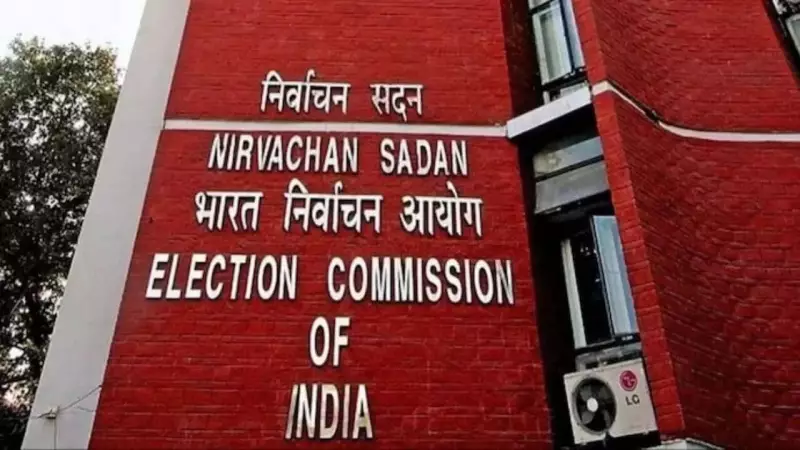
NEW DELHI: The Election Commission of India on Thursday strongly defended its decision to conduct a Special Intensive Revision (SIR) of electoral rolls in the Supreme Court, urging the dismissal of petitions challenging the process in Bihar. Appearing for the poll panel, senior advocate Rakesh Dwivedi presented arguments before a bench comprising Chief Justice Surya Kant and Justice Joymalya Bagchi.
EC's Stance on Fairness and Discretion
Dwivedi asserted that the revision exercise was "fair, just and reasonable", emphasizing that allowing a "roving and fishing enquiry" into the process at the behest of a few non-governmental organizations and politicians would be inappropriate. The Election Commission highlighted that none of the 66 lakh individuals whose names were deleted during the Bihar SIR approached the courts or filed complaints with the commission itself.
Legal Basis and Discretionary Powers
The commission clarified that it invoked its powers under Section 21(3) of the Representation of the People Act, 1950, which grants it discretion in conducting special revisions. It argued that there is no requirement under this provision for every SIR to be identical in nature, and it operates independently of routine revisions under Section 21(2).

Demographic Changes and Long Overdue Revision
EC further justified the need for the SIR by pointing out that Bihar had not undergone such a revision for nearly two decades. The panel cited significant demographic shifts, including urbanization and population movement, as compelling reasons for the exercise.
Supreme Court's Scrutiny and Observations
Chief Justice Surya Kant observed that if the Election Commission's claim of unfettered discretion under Section 21(3) were accepted, "the case would end there". This remark underscored the judicial scrutiny of the commission's authority.
Citizenship Act and Migration Issues
The Election Commission also referenced the Citizenship (Amendment) Act, 2003, which introduced stricter requirements for establishing citizenship. Justice Bagchi questioned whether this amended law triggered the current SIR, noting that the EC's order did not mention cross-border or illegal migration. The judge remarked, "The word 'migration' ordinarily refers to lawful movement. Inter-state migration is a constitutional right."
EC's Response on Legal Framework Updates
In response, the Election Commission stated that the citizenship amendment had not been operationalized earlier and that the current SIR provided an opportunity to account for the changed legal framework. This argument aimed to align the revision with updated statutory requirements.
The hearing highlighted the ongoing legal and procedural debates surrounding electoral roll revisions in India, with implications for voter integrity and administrative discretion.