

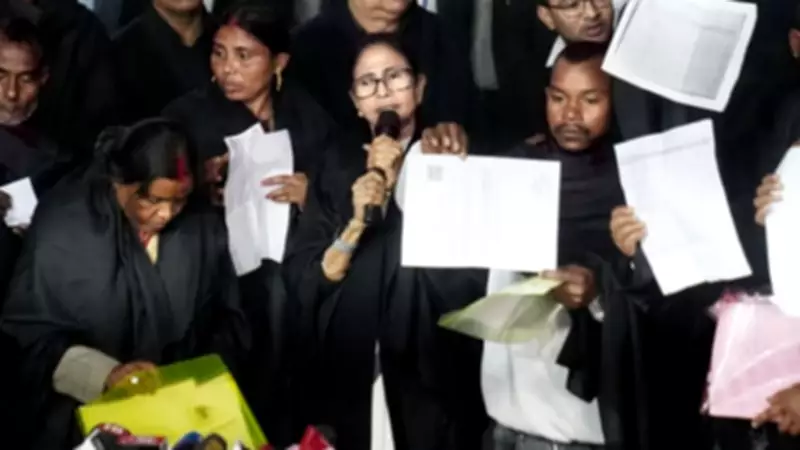
EC Accuses Bengal Government of Systematic Sabotage of SIR Exercise
The Election Commission of India (ECI) has leveled serious allegations against the Mamata Banerjee-led West Bengal government and the ruling Trinamool Congress (TMC), accusing them of making "deliberate and systematic attempts" to derail, paralyze, and frustrate the Summary Revision of Electoral Rolls (SIR) process currently underway in the state.
Constitutional Authority Under Attack
In a strongly-worded additional affidavit submitted to the Supreme Court, the poll body stated that while the SIR exercise is proceeding smoothly in 11 other states, "a controversy of the present nature where the ruling party in the state is actively involved in causing obstruction and issuing threats to officials is confined only to the state of West Bengal."
The ECI emphasized that this obstruction represents a direct challenge to a constitutional authority performing its constitutional duties, with material evidence showing proper planning and concerted action aimed at sabotaging the electoral revision process.

Widespread Complicity Alleged
The commission expressed particular concern that this resistance is not limited to fringe elements. "Regrettably, this confederacy is not confined to fringe elements," the affidavit stated. "The actions demonstrate the complicity of all key actors of the state, including the State Government, certain elected representatives of the ruling party, and party functionaries."
This represents an unprecedented situation where the constitutional body responsible for conducting free and fair elections faces coordinated resistance from the very state apparatus meant to facilitate its work.
Defiance of Supreme Court Directives
Despite the Supreme Court's January 19 order directing the West Bengal government to provide adequate manpower to the ECI and instructing state police and administrative officials to maintain law and order, the commission reported continued non-cooperation, obstruction, intimidation and interference.
The ECI highlighted that West Bengal stands alone as "the only state where the Central Government had to intervene and provide security to the Chief Electoral Officer," underscoring the exceptional nature of the resistance faced in the eastern state.
Political Leadership's Role
The affidavit specifically named several political leaders, alleging that "the incumbent Chief Minister, Members of Parliament, and other political functionaries of the ruling dispensation in West Bengal have made public statements and delivered speeches aimed at intimidating the election officials engaged in the SIR process."
Particular mention was made of TMC MP Mahua Moitra, who allegedly issued threats to Micro-Observers during a television interview, even while the matter remained sub judice before the Supreme Court.
Violence and Provocative Rhetoric
The situation has reportedly escalated with provocative public speeches by top-level ruling party leaders openly attacking both the Election Commission and the SIR process itself. According to the ECI, this rhetoric has directly contributed to:
- Attacks on hearing centers
- Vandalization of government offices
- Burning of statutory forms submitted by electors
- Threats to Micro-Observers
- Violence against Booth Level Officers
Underlying Motive: Preserving Flawed Electoral Roll
The ECI connected these obstructive actions to Chief Minister Mamata Banerjee's petition requesting that State Assembly elections be conducted using the unrevised 2025 electoral rolls. The commission argued that "when the conduct of deliberate inaction by the Government of West Bengal is viewed alongside the prayer seeking conduct of elections on the unrevised 2025 electoral roll, the underlying intent becomes evident."
This intent, according to the election body, is to abort the SIR process entirely and perpetuate an electoral roll already shown to contain serious infirmities, thereby potentially compromising the integrity of future elections in the state.

Broader Implications for Electoral Democracy
The confrontation between India's constitutional election authority and a state government represents a significant test for the country's democratic institutions. The Supreme Court's response to these allegations and its handling of the ongoing SIR process in West Bengal will set important precedents for the balance of power between constitutional bodies and state governments during electoral exercises.
As the legal battle continues, the fundamental question remains whether a constitutional authority can effectively perform its duties when facing coordinated resistance from the very state machinery meant to support its work.





