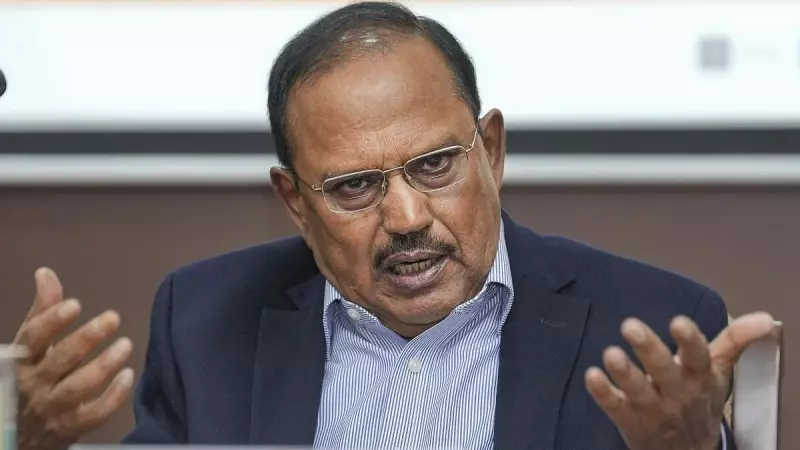
National Security Advisor Ajit Doval has found himself at the center of a digital authenticity storm after claiming a viral video showing his controversial remarks about ISI recruitment patterns is a deepfake. However, independent fact-checking investigations have revealed a different story.
The Controversial Claims and Deepfake Allegations
In a recent development that has captured national attention, NSA Ajit Doval asserted that a video clip circulating on social media, where he allegedly states that "more Hindus are recruited by Pakistan's ISI than Muslims," is artificially generated content. The controversy emerged on November 17, 2025, when Doval addressed the media through CNN News18, emphasizing the dangers of deepfake technology in spreading misinformation.
The NSA specifically denied ever making the statement about Hindu recruitment by the Inter-Services Intelligence, Pakistan's premier intelligence agency. His comments came during an exclusive interview with journalist Manoj Kumar Gupta, where he highlighted the growing threat of manipulated media in national security discourse.

Fact-Check Reveals Historical Truth
Contrary to Doval's deepfake claims, digital forensic analysis has confirmed the video's authenticity. The controversial clip originates from a YouTube video posted by the Australia India Institute in 2014, making the content over a decade old. This timeline directly contradicts the narrative of the video being a recent deepfake creation.
The fact-checking process involved multiple verification methods, including timestamp analysis, source authentication, and comparison with archival footage. Investigators confirmed that the video was indeed part of a legitimate public discussion hosted by the Australia India Institute, where Doval participated as a speaker on national security matters.
Broader Implications for National Security Discourse
This incident highlights several critical issues in India's digital information ecosystem. The ease with which historical content can be repurposed and the challenges in authenticating digital media have become significant concerns for policymakers and security experts alike.
The controversy also raises questions about accountability and transparency in national security discussions. As the country's top security official, Doval's statements carry considerable weight, making the accuracy of his public communications particularly important.
Security experts like General KK Sinha have weighed in on the discussion, sharing their perspectives about the evolving nature of information warfare and the need for robust verification mechanisms for sensitive content involving public figures.
The timing of this controversy is notable, coming at a period when the Indian government has been actively campaigning against misinformation and deepfake technologies. This incident demonstrates the complex challenges in distinguishing between genuine historical content and manipulated media, even for high-ranking officials.