

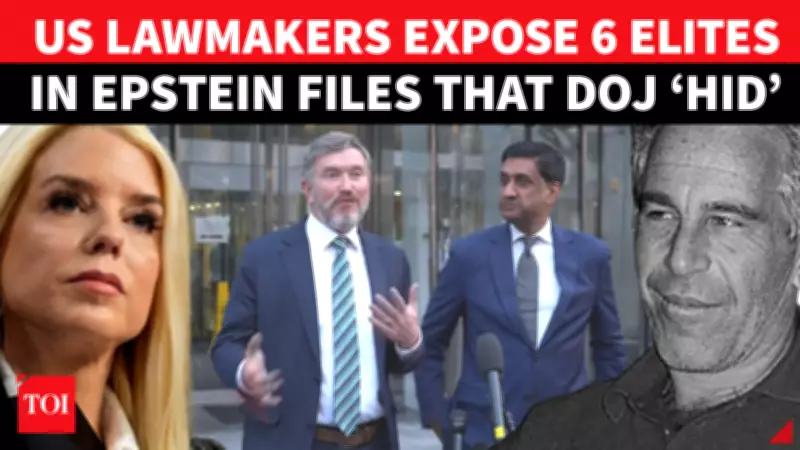
Lawmakers Accuse DOJ of Concealing Epstein Co-conspirators in Files
In a significant development concerning the Jeffrey Epstein case, United States lawmakers Ro Khanna and Thomas Massie have publicly accused the Department of Justice of improperly withholding critical information from the public. This accusation comes despite the passage of the Epstein Files Transparency Act by Congress, which was intended to ensure full disclosure of documents related to the financier's network.
Six Hidden Names Revealed in Secure Review
After reviewing less-redacted documents in a secure federal facility, Representatives Khanna and Massie stated they identified the names of six potential Epstein co-conspirators that remain hidden from public view. The lawmakers emphasized that these individuals include a senior foreign government official and a prominent public figure, raising serious questions about the extent of Epstein's connections.
"We were assured that lawmakers would see un-redacted files, but what we encountered were documents still filled with black boxes," Khanna explained. This lack of transparency has fueled concerns about whether the complete truth regarding Epstein's extensive network is being deliberately concealed.

Allegations of DOJ Misconduct and Missed Deadlines
Massie and Khanna have leveled multiple allegations against the Department of Justice, including:
- Improperly redacting names and faces in the Epstein files
- Missing statutory deadlines for document releases
- Failing to provide adequate justifications for the redactions made
These actions, according to the lawmakers, violate the spirit and letter of the transparency legislation passed by Congress. The continued secrecy undermines public trust and accountability in the investigation into one of the most notorious criminal cases in recent history.
Broader Implications for Transparency and Accountability
The revelations have sparked fresh debates about government transparency and the handling of sensitive investigations. The Epstein case, already shrouded in mystery due to the financier's death in jail, now faces additional scrutiny over whether powerful individuals are being protected through bureaucratic redactions.
As the controversy unfolds, pressure mounts on the Department of Justice to provide clearer explanations for its redaction practices and to comply fully with congressional mandates for transparency. The identification of six potential co-conspirators—including individuals with significant public profiles—suggests the Epstein network may have reached further into positions of power than previously acknowledged.






