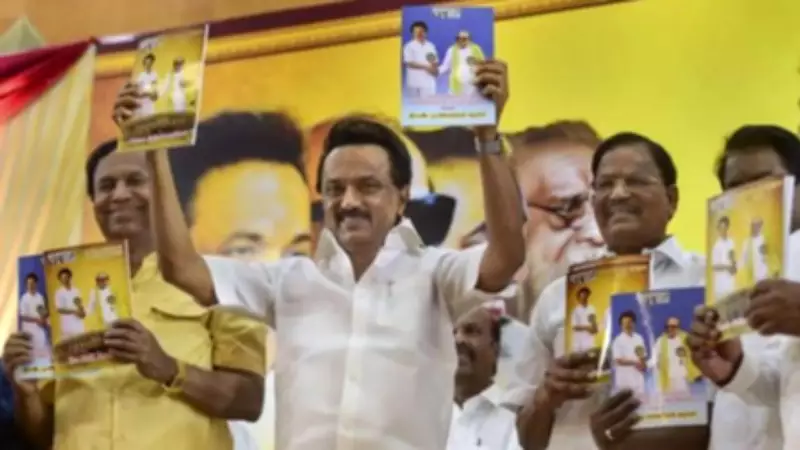
DMK Unveils Comprehensive Manifesto for 2026 Tamil Nadu Assembly Elections
The Dravida Munnetra Kazhagam (DMK) has officially launched its manifesto for the upcoming 2026 Tamil Nadu Assembly elections, placing a strong emphasis on welfare initiatives aimed at improving the daily lives of ordinary citizens. Under the leadership of Chief Minister MK Stalin, the party has outlined a detailed plan focusing on financial support, education, healthcare, and infrastructure, steering clear of contentious issues like NEET abolition or liquor bans.
Enhanced Financial Support for Women and Families
In a significant move, the DMK has pledged to increase the monthly financial assistance for women from Rs. 1,000 to Rs. 2,000. This initiative is designed to alleviate the burden of household expenses and medical bills, providing a crucial safety net for families across the state. Additionally, homemakers will benefit from the "Illa Tharasi" coupon scheme, offering Rs. 8,000 worth of vouchers to purchase essential kitchen appliances such as mixers and grinders, thereby simplifying daily chores.
Boosting Education and Youth Empowerment
The manifesto includes a major educational push, with a promise to distribute free laptops to approximately 35 lakh college students. This measure aims to bridge the digital divide, enabling students from underprivileged backgrounds to participate in online classes and job applications without reliance on borrowed devices. Furthermore, the existing Chief Minister’s Breakfast Scheme will be expanded to include students up to Class 8, ensuring that more children in government schools start their day with a nutritious meal.

Youth welfare is also a priority, with the continuation and refinement of schemes like Pudhumai Penn and Tamil Pudhalvan. These programs will provide around Rs. 1,500 per month to 5 lakh young individuals, helping them stay in school and avoid dropping out for temporary employment.
Housing and Agricultural Support for Farmers
Farmers are set to receive substantial benefits, including a commitment to construct about 10 lakh new houses over the next five years. This initiative targets replacing inadequate living conditions with decent, basic homes. On the agricultural front, the DMK has promised higher procurement prices, with paddy at Rs. 3,500 per quintal and sugarcane at specified rates per tonne. Additionally, more than 20 lakh farmers will receive free modern pump sets without meters, complementing the existing free electricity scheme.
Healthcare and Transportation Initiatives
Healthcare coverage will see a significant upgrade, with health insurance increased to up to Rs. 10 lakh annually for eligible families, benefiting an estimated 2 crore people. In transportation, the manifesto proposes free bus travel for women on state buses, linked to the Vidiyal Payanam welfare framework. This measure is expected to reduce the financial strain of commuting for work, education, or medical purposes.
Job Creation and Infrastructure Development
The DMK has outlined ambitious economic goals, aiming to attract Rs. 18 lakh crore in foreign investment over five years, which is projected to create about 50 lakh new jobs. Infrastructure improvements include a Rs. 10,000 crore allocation for rural roads, along with enhanced urban amenities such as CC roads, safer footpaths, parks, and increased green cover. The plan also involves building 50 "Semmozhi Poonga" botanical gardens across Tamil Nadu.
Support for Differently Abled Individuals
The manifesto proposes to raise the monthly pension for differently abled persons from Rs. 2,500 to a higher level, while increasing the maintenance allowance for severely affected individuals to Rs. 4,000 per month. These adjustments aim to provide more stable financial support for daily care and treatment needs.
A Welfare-First Approach
Overall, the DMK's 2026 manifesto is characterized by a welfare-first strategy, focusing on tangible benefits like cash assistance, housing, health, and education subsidies. By avoiding polarizing topics, the party aims to address the practical concerns of Tamil Nadu's residents, making daily life more manageable and secure for families throughout the state.