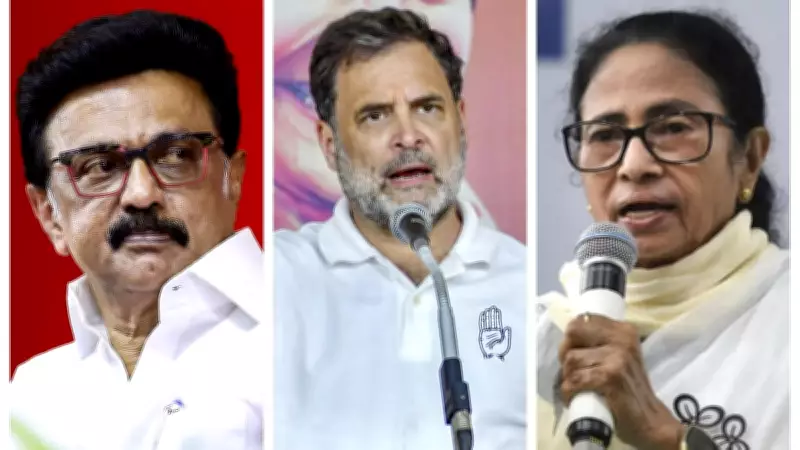
The uneasiness within the I.N.D.I.A. bloc has intensified following the DMK's decision to seek separate seats and a cryptic social media post by Samajwadi Party chief Akhilesh Yadav. This development comes nearly two years after the Aam Aadmi Party (AAP) exited the opposition alliance. The growing rift among bloc parties could reflect in the upcoming Monsoon Session of Parliament.
DMK's Demand and Akhilesh's Post
The Dravida Munnetra Kazhagam (DMK) has announced its intention to contest elections on separate seats, signaling a departure from the earlier understanding within the alliance. Meanwhile, Akhilesh Yadav took to Twitter on May 8, 2026, posting a cryptic message: "Hum woh nahi jo mushkilon mein saath chhod den" (We are not those who abandon companions in difficulties). The post, accompanied by a video, has been interpreted as a veiled criticism of the Congress party's recent alliance with the Tamilaga Vettri Kazhagam (TVK) in Tamil Nadu.
Impact on the I.N.D.I.A. Bloc
The DMK's move and Akhilesh's remarks have exposed the fragile unity of the opposition coalition, which was formed to counter the ruling National Democratic Alliance (NDA). Political analysts suggest that these fissures could undermine the bloc's effectiveness in Parliament, especially during the Monsoon Session where key legislative business is expected. The Congress party, which has been trying to hold the alliance together, now faces the challenge of reconciling divergent regional interests.

Background of the Rift
The tensions within the I.N.D.I.A. bloc have been brewing for some time. The AAP's exit earlier had already weakened the coalition. The DMK's demand for separate seats is seen as a response to the Congress-TVK tie-up, which the DMK perceives as encroaching on its traditional vote base in Tamil Nadu. Akhilesh Yadav's post, while not directly naming any party, has added to the speculation about internal disagreements.
As the Monsoon Session approaches, the opposition parties will need to address these differences to present a united front. However, the recent developments indicate that the path to cohesion remains fraught with challenges.