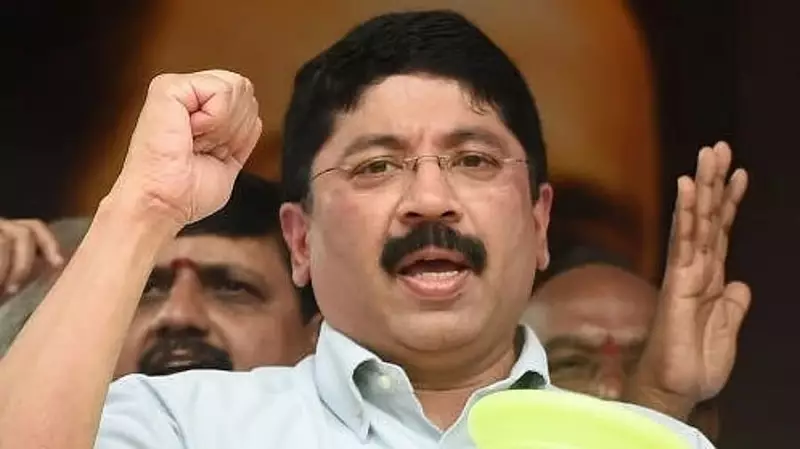
DMK MP Dayanidhi Maran's Comments on North India Stir Controversy
Dayanidhi Maran, a prominent DMK Member of Parliament, has sparked a significant political row with his recent statements about the status of girls in North India. His remarks have drawn sharp reactions from various quarters, highlighting deep-seated regional and social issues.
Maran's Allegations About Girls' Roles
Maran claimed that in many northern states of India, girls are primarily asked to perform household chores. He suggested that this practice limits their opportunities for broader education and personal development. The MP did not mince words, using strong language to describe the situation.
He specifically alleged that girls are often kept as "slaves" in these regions. This characterization has added fuel to the fire, making his comments particularly contentious. Maran's choice of words has been criticized by some as inflammatory and exaggerated.

Criticism of English Education in North India
Beyond household duties, Maran also targeted the educational policies in northern states. He asserted that these states do not actively promote education in English. According to him, this lack of emphasis on English-language learning further disadvantages girls.
Maran argued that without proficiency in English, girls face additional barriers in accessing higher education and employment opportunities. His comments touch on a long-standing debate about the role of English in India's education system and its impact on social mobility.
Political and Social Reactions
The reaction to Maran's statements has been swift and polarized. Supporters of his views argue that he is shedding light on genuine issues of gender inequality and educational disparities. They point to data showing lower female literacy rates in some northern states compared to southern regions like Tamil Nadu.
However, critics have accused Maran of making sweeping generalizations. They argue that his comments unfairly stereotype entire regions and ignore progress made in girls' education across North India. Some political opponents have called for an apology, labeling his remarks as divisive.
Context and Implications
This controversy comes at a time when issues of women's empowerment and education are at the forefront of national discourse. Maran's comments have reignited discussions about:
- Regional disparities in educational outcomes and gender norms.
- The role of language in education and its impact on future prospects.
- Political rhetoric and its effect on social harmony.
As the debate continues, it remains to be seen how this will affect broader political dynamics and policy discussions on education and women's rights in India.