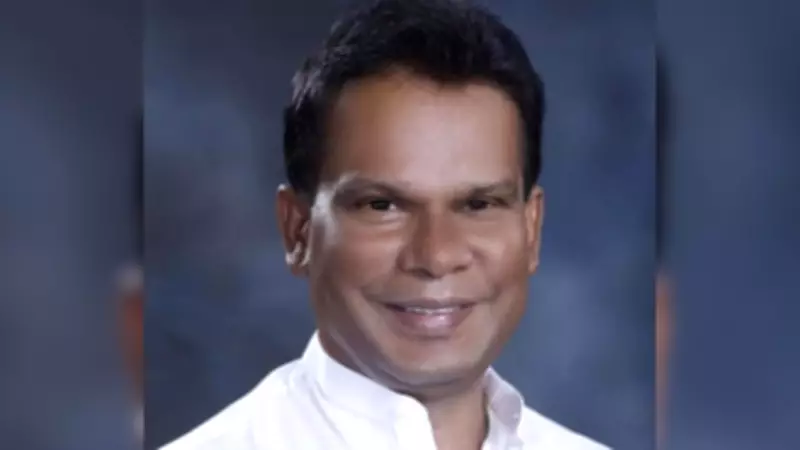
Former Union Minister Dilip Ray Announces Independent Rajya Sabha Bid with BJP Support
In a significant political development in Odisha, former Union Minister Dilip Ray declared on Tuesday that he will contest the upcoming Rajya Sabha elections as an Independent candidate. This announcement came as state BJP President Manmohan Samal confirmed the party's support for Ray, effectively setting the stage for a competitive race for one of the four Rajya Sabha seats from Odisha that are falling vacant.
Political Dynamics and Seat Calculations
Of the four seats set to become vacant on April 2, which are part of the 37 seats going to polls on March 16, the BJP has the numerical strength to secure two seats, while the BJD is positioned to win one. However, no political party holds a clear majority for the fourth seat, making it a focal point of contention.
BJD President Naveen Patnaik has nominated eminent urologist Dr. Datteswar Hota as the "common candidate" for this fourth seat, a move that has received backing from the Congress party. With Ray now entering the fray with the support of the BJP, the contest for this crucial seat has become wide open and highly unpredictable.

Confidence and Strategic Calculations
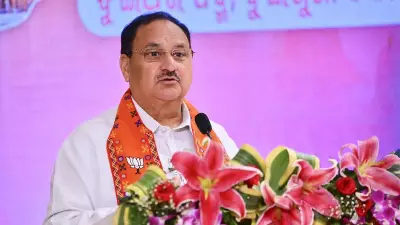
State BJP chief Manmohan Samal expressed strong confidence in Ray's potential victory, stating emphatically, "If we were not sure about his victory, we would not have come forward for support." The BJP's strategic calculations reveal that after securing two seats, which requires 60 votes, the party will have 22 surplus votes. This leaves them eight votes short of what Ray would need to win.
Similarly, the BJD, after winning one seat, will have 18 surplus votes available for Hota. With additional support from the Congress, which commands 14 MLAs, the BJD-backed Hota could potentially gather 32 votes. This could be sufficient for victory if there is no cross-voting among legislators.
Dilip Ray's Political Journey and Legal Background
Hotelier-politician Dilip Ray last won a Rajya Sabha election from Odisha in 2002 as an Independent candidate, following his expulsion from the BJD. That victory was made possible through large-scale cross-voting by both BJD and BJP MLAs, demonstrating his ability to navigate complex political landscapes.
Ray began his political career in 1985 as chairman of the then Rourkela Notified Council and was elected MLA the same year from Rourkela, serving from 1985 to 1990. He was re-elected in 1990 and served as Industries Minister in the Biju Patnaik-led Janata Dal government from 1990 to 1995.
He was nominated to the Rajya Sabha in 1996 and served two consecutive terms from 1996 to 2002 and 2002 to 2008. Ray joined the BJP in 2009 and won the Rourkela assembly seat on a BJP ticket in 2014. Interestingly, he also played a key role in the formation of the BJD, adding another layer to his political legacy.
On October 6, 2020, a Special CBI court convicted Ray in a 1999 coal block allocation case from his tenure as Minister of State for Coal in the Vajpayee government. However, the Delhi High Court stayed his conviction in April 2024, which has cleared the path for his current political aspirations.
Historical Context and Other Candidates
The last contest for a Rajya Sabha seat in Odisha occurred in 2014, when Congress nominee Ranjib Biswal defeated BJD-backed Independent Raghunath Mohapatra, who was also supported by the BJP at that time. This historical precedent adds intrigue to the current electoral dynamics.
For the two seats where it has the necessary numbers, the BJP has named state unit chief Manmohan Samal and renominated outgoing Rajya Sabha MP Sujeet Kumar. Meanwhile, the BJD has fielded corporate-leader-turned-politician Santrupt Misra for one seat, for which the party is comfortably placed to secure victory.
The upcoming Rajya Sabha polls in Odisha promise to be a closely watched political event, with the fourth seat particularly drawing attention due to the entry of Dilip Ray as an Independent candidate with BJP backing. The outcome will depend heavily on party discipline, potential cross-voting, and strategic alliances in the state assembly.