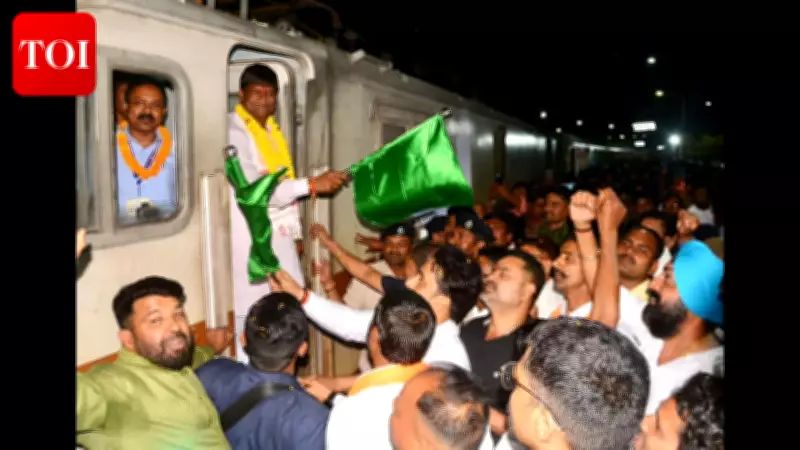
New Dhanbad-Mumbai Weekly Train Launched Amid Political Controversy
In a significant development for rail connectivity, MP Dulu Mahto officially flagged off a new weekly train service linking Dhanbad to Lokmanya Tilak Terminus in Mumbai on Monday night. The train, which departed from platform number 7 shortly after 11 PM, marks the first direct rail link between these two important cities, promising enhanced travel options for passengers.
Political Absence Sparks Controversy
However, the celebratory event was quickly overshadowed by controversy as Dhanbad Mayor Sanjeev Singh and his wife, Jharia MLA Ragini Singh, notably skipped the programme. Sources reveal that both were formally invited on April 3, but their names were mysteriously removed from event posters just one day before the launch.
Mayor Sanjeev Singh addressed the issue on Tuesday, stating that railway officials contacted him merely two hours before the event and urged him not to attend. "No clear reason was provided despite repeated queries. The officials appeared evasive," he claimed. He further reported that railway officials visited his home the following day to apologize, citing concerns about potential overcrowding at the event as their justification.

MLA Demands Inquiry
In a strong response, MLA Ragini Singh wrote to Railway Minister Ashwini Vaishnaw, labeling the incident as an insult to elected representatives. Her letter sharply questioned the functioning of the Dhanbad railway division and called for a high-level inquiry into the entire episode to uncover the truth behind the exclusion.
Railway Officials Remain Silent
Adding to the intrigue, railway officials have maintained a conspicuous silence on the matter. Attempts to reach Dhanbad Divisional Railway Manager Akhilesh Mishra for comments were unsuccessful, leaving many questions unanswered about the decision-making process leading up to the train's inauguration.
This incident has cast a shadow over what should have been a momentous occasion for improved regional connectivity, highlighting underlying political tensions and administrative issues within the railway system.