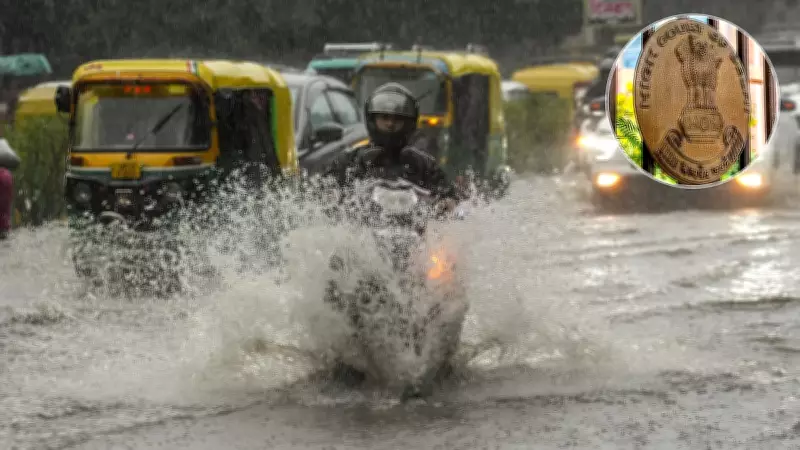
PIL Challenges Recurring Monsoon Chaos in Delhi
A public interest litigation (PIL) has been filed in the Delhi High Court, arguing that the capital's annual waterlogging and urban flooding during monsoon is no longer a seasonal nuisance but a recurring civic and constitutional crisis. The petition seeks court-monitored structural reforms to address the systemic failure that leaves large parts of Delhi submerged every rainy season.
Constitutional Crisis, Not Just Inconvenience
According to the PIL, filed by advocate Ashish Tripathi on 7 July 2026, the repeated flooding violates citizens' fundamental rights to life, livelihood, and free movement under Article 21 of the Constitution. The petition notes that every monsoon, key roads, residential colonies, and commercial areas face severe waterlogging, disrupting daily life and causing economic losses running into crores. The petitioner argues that despite multiple government announcements and past court orders, no lasting solution has emerged.
Court-Monitored Reforms Sought
The PIL requests the Delhi High Court to form a monitoring committee comprising experts from urban planning, drainage engineering, and environmental fields. It demands a time-bound action plan for cleaning and upgrading the city's stormwater drainage network, which has been choked by encroachments and solid waste. The petition also calls for strict enforcement of building bylaws to prevent constructions that block natural water channels.

Data and Impact of Urban Flooding
Quoting data from the Delhi Urban Development Authority, the petition states that over 200 low-lying points in the city are prone to waterlogging, with some areas recording more than 2 feet of standing water for over 48 hours during heavy rains. The PIL highlights that in July 2025 alone, waterlogging caused an estimated ₹500 crore in damages to public and private property, besides disrupting transport and essential services. It points out that climate change is increasing the frequency of extreme rainfall events, making the problem worse.
Previous Efforts and Failures
The petition references earlier directions from the National Green Tribunal and the Delhi High Court to desilt drains and remove encroachments, but notes that implementation has been sporadic. It argues that the lack of a coordinated approach between multiple agencies – including the Municipal Corporation of Delhi, Public Works Department, and the Delhi Jal Board – leads to finger-pointing and inaction. The PIL seeks a single-window accountability mechanism under court supervision.
Conclusion: Urgent Need for Systemic Change
The PIL concludes that without judicial intervention, the annual crisis will continue to deepen, affecting millions of residents. It urges the High Court to treat urban flooding as a public health and safety emergency, mandating pre-monsoon preparedness and post-monsoon audits. The matter is expected to be heard in the coming weeks.