

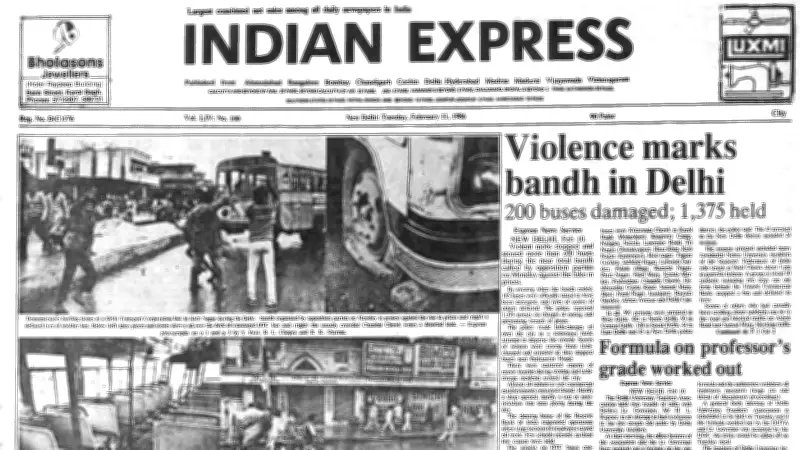
Delhi Bandh Erupts in Violence Over Price Hike Protests
On February 11, 1986, the capital city of Delhi was gripped by severe unrest as violent mobs took to the streets during a near-total bandh called by opposition parties. The protests were a direct response to the government's decision to increase prices, sparking widespread anger among citizens.
Extensive Damage and Arrests Reported
During the day-long bandh, more than 200 buses were targeted by protesters who stopped and stoned the vehicles. By the evening, when the bandh concluded, official reports indicated that 185 buses had sustained significant damage. Additionally, tyres on numerous other buses were deflated, crippling public transportation across the city.
The police response was swift, with authorities reporting a total of 1,375 arrests made in connection with the violence. This incident highlighted the intense political tensions and public dissatisfaction prevalent at the time.

Government Moves on Punjab Village Transfer Commission
In a separate development, the government announced plans to appoint a new commission with updated terms of reference. This commission is tasked with identifying Hindi-speaking villages in Punjab that could be transferred to Haryana as part of a settlement in lieu of Chandigarh.
The commission is expected to be established by February 20, 1986. Prime Minister Rajiv Gandhi, while en route to the Maldives, assured journalists that there would be no reversal on the Punjab accord, emphasizing the government's commitment to resolving territorial disputes.
Kerala Assembly Mid-Term Poll Considerations
Political deliberations were also underway regarding Kerala, where a decision on holding a mid-term poll to the state Assembly was imminent. Chief Minister K. Karunakaran engaged in detailed discussions with Prime Minister Rajiv Gandhi and Congress-I vice-president Arjun Singh to weigh the pros and cons of such a move.
This indicates the strategic planning within the Congress-I party to address regional political dynamics and maintain stability in the state.
Continued Support for Jammu and Kashmir Ministry
Prime Minister Rajiv Gandhi extended assurances of ongoing support to the G. M. Shah ministry in Jammu and Kashmir. According to sources close to Chief Minister Shah, this move aimed to bolster secular forces within the state.
During a 70-minute meeting, Shah and his wife Begum Khalida Shah, who led the ruling National Conference (K), briefed the Prime Minister on the political landscape. They discussed various steps to strengthen the alliance between the National Conference and the Congress (I), highlighting efforts to foster cooperation and governance in the region.
This article is based on historical reports from The Indian Express, providing a detailed look at the political and social events of February 11, 1986.






