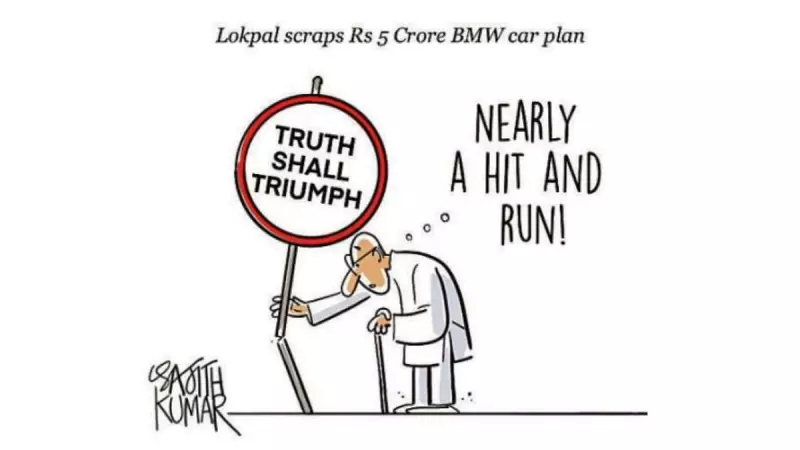
In its latest edition, Deccan Herald has published a pointed editorial cartoon that delves into the timeless theme of truth's resilience. The artwork, simply yet powerfully captioned "Truth Shall Triumph," serves as a visual commentary on the current socio-political climate, where narratives often clash and facts are frequently contested.
The Cartoon's Visual Narrative and Symbolism
The cartoonist employs classic symbolic imagery to convey a complex message. The central figure, often representing truth or honesty, is depicted in a moment of struggle or challenge, surrounded by opposing forces that seek to obscure or suppress it. The style is reminiscent of traditional editorial satire, using exaggeration and metaphor to highlight the absurdities and tensions present in public discourse. The stark contrast and bold lines in the drawing emphasize the clarity of the message, cutting through the noise of daily news cycles.
The core assertion of the cartoon is the unwavering belief that despite immense pressure, manipulation, or obfuscation, truth ultimately prevails. This is not presented as a naive hope but as a fundamental principle, a north star for journalistic integrity and public accountability. The artwork implicitly critiques mechanisms that distort reality, urging viewers to reflect on the sources of their information and the importance of a free press in safeguarding democratic values.

Context and Relevance in Modern Indian Media
This piece arrives at a time when media ecosystems globally, and in India, are grappling with issues of misinformation, deepfakes, and polarized reporting. Editorial cartoons have long been a vital part of Indian journalism, offering a succinct, often humorous, and always sharp perspective on current affairs. Deccan Herald, through this cartoon, aligns itself with a legacy of publications that use art as a tool for critique and reflection.
The choice of the phrase "Truth Shall Triumph" is particularly resonant. It echoes a universal ideal while speaking directly to local concerns about transparency and justice. The cartoon does not name specific events or individuals, which broadens its applicability and allows readers from various backgrounds to project their own understandings of the "forces" arrayed against truth. This universality is a hallmark of effective political satire.
The Enduring Power of Editorial Satire
Beyond the immediate reaction it may provoke, the cartoon serves a deeper purpose. It reinforces the role of newspapers as platforms for diverse forms of expression, not just written reports. In an age of digital overload, a single powerful image can sometimes communicate more effectively than a thousand-word article. It acts as a catalyst for conversation, prompting discussions about credibility, resilience, and the ethical foundations of society.
Ultimately, the Deccan Herald toon is more than just a drawing; it is a statement of principle from the publication. It reaffirms a commitment to seeking and presenting truth, regardless of the challenges involved. For the reader, it is a reminder to be vigilant, critical, and hopeful—acknowledging the struggle while holding onto the conviction that clarity and honesty will, in the end, win out. This piece of visual journalism stands as a small but significant act of faith in the fundamental tenets of an informed democracy.