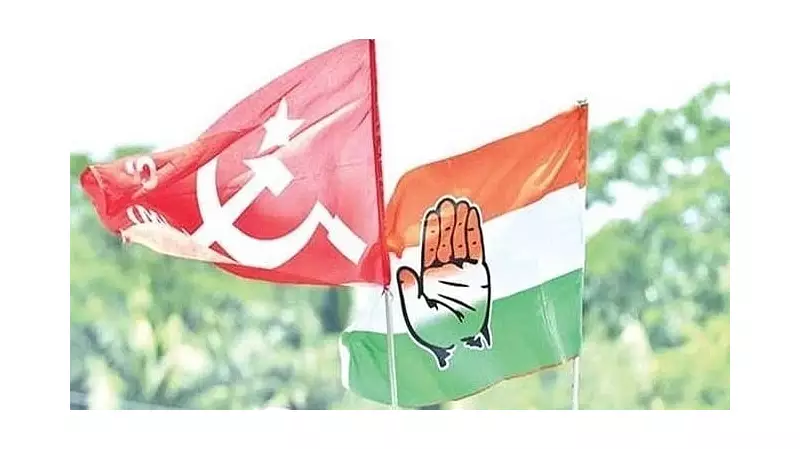
The Communist Party of India (Marxist) has made a significant political move. The party announced its readiness to form electoral alliances with the Congress party in three crucial regions. These regions are West Bengal, Assam, and the Union Territory of Puducherry.
Strategic Decisions from Thiruvananthapuram Meeting
The CPI(M) Central Committee held a three-day meeting in Thiruvananthapuram. This important gathering concluded on Sunday. During the meeting, party leaders conducted a thorough review of election preparations in states facing upcoming polls.
Targeting Political Rivals
The primary objective of these alliances is clear. The CPI(M) aims to present a united opposition against two major political forces. In West Bengal, the alliance will directly challenge the ruling Trinamool Congress (TMC). In Assam and Puducherry, the focus shifts to countering the Bharatiya Janata Party (BJP).

This decision marks a notable shift in political strategy for the CPI(M). The party has historically maintained a complex relationship with the Congress. Now, they are choosing cooperation over confrontation in specific electoral battlegrounds.
Reviewing Poll Preparations
The Central Committee spent considerable time assessing ground realities. They examined organizational strength, voter sentiment, and campaign readiness. The review covered all states scheduled for elections in the near future.
Party insiders suggest the alliance decisions emerged from practical considerations. Electoral mathematics and the need to consolidate anti-incumbent votes played crucial roles. The CPI(M) believes united fronts offer the best chance to defeat dominant regional and national parties.
Political analysts view this development as significant. It could reshape electoral dynamics in West Bengal, where the TMC has enjoyed prolonged dominance. In Assam and Puducherry, it introduces new coalition politics against the BJP's organizational machinery.
The coming weeks will reveal how these alliances materialize on the ground. Seat-sharing arrangements, campaign coordination, and joint manifestos will need careful negotiation. Both the CPI(M) and Congress will have to manage internal dissent from factions skeptical of such partnerships.
For now, the political landscape in these three regions has received a jolt. The CPI(M)'s Central Committee has drawn clear battle lines. They are preparing for electoral contests with renewed alliances and a focused strategy.