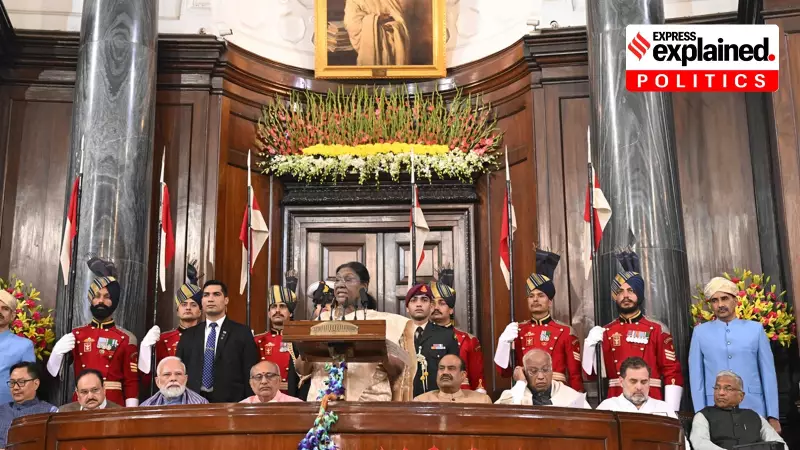
As India celebrates Samvidhan Divas on November 26, we look back at the historic day in 1949 when the Constituent Assembly adopted the Constitution of India. The document that would shape the world's largest democracy was the result of nearly three years of intense deliberation and debate.
The Constitution was adopted on November 26, 1949, and came into effect on January 26, 1950, which we now celebrate as Republic Day. Since 2015, November 26 has been officially observed as Constitution Day of India.
The Final Day of Adoption
When the Constituent Assembly gathered for its final meeting on November 26, 1949, two crucial resolutions were passed. The first declared that "the Constitution as settled by the Assembly be passed," while the second stated that "the Constituent Assembly do adjourn till such date before the 26th of January, 1950 as the President may."

Before these historic votes, Sardar Vallabhbhai Patel made a significant announcement that states across India had accepted the Constitution that the Assembly was about to adopt. President Rajendra Prasad then delivered a memorable speech congratulating members on their achievement, with special recognition given to Dr. B.R. Ambedkar, Patel, and Jawaharlal Nehru.
Key Highlights from Prasad's Speech
The Language Question
One of the first questions raised during the final session came from United Provinces member Algu Rai Shashtri, who asked when the Constitution would be available in Hindi. This prompted President Prasad to address the language issue directly.
Prasad explained that while some articles had been adopted specifying official language use, English would remain the language for central government work for the next 15 years. He assured members that arrangements were being made to publish a Hindi translation of the Constitution by January 26, 1950, with translations in other Indian languages to follow as soon as possible.
The Financial Cost
In his speech, President Prasad revealed the substantial financial investment required to create India's founding document. The total expenses for the Constituent Assembly up to November 22, 1949, amounted to Rs. 63,96,729 - a significant sum at the time, but one Prasad considered reasonable given the magnitude of the task.
Two Major Problems Solved
Prasad highlighted two "intractable problems" that the Constitution successfully addressed. The first was the integration of various territories that the British had conquered at different times. He credited Sardar Vallabhbhai Patel's States Ministry and the cooperation of the Princes and people of the States for achieving this remarkable unification.
The second major issue was the communal problem. Prasad celebrated the end of separate electorates and noted that even reservation of seats on communal basis had been given up by the communities concerned. The Constitution provided reservation only for depressed classes who are Hindus and tribal people, based on their educational and social backwardness.
President Prasad's Two Regrets
Despite the overall success, Prasad expressed two significant regrets in his speech. His first concern was the lack of qualifications for members of legislatures. He found it anomalous that while high qualifications were required for those administering the law, no such requirements existed for those making the laws beyond their election.
His second regret was more poignant - the inability to draft India's first Constitution in an Indian language. Prasad acknowledged that practical difficulties had proven insurmountable, but this didn't lessen his disappointment about presenting the document in English rather than an indigenous language.
The Constituent Assembly's journey to create India's Constitution spanned two years, eleven months, and seventeen days, during which it held 11 sessions covering 165 days. Assembly members submitted approximately 7,600 amendments to the draft Constitution, demonstrating the thoroughness and democratic nature of the process that gave India its foundational document.