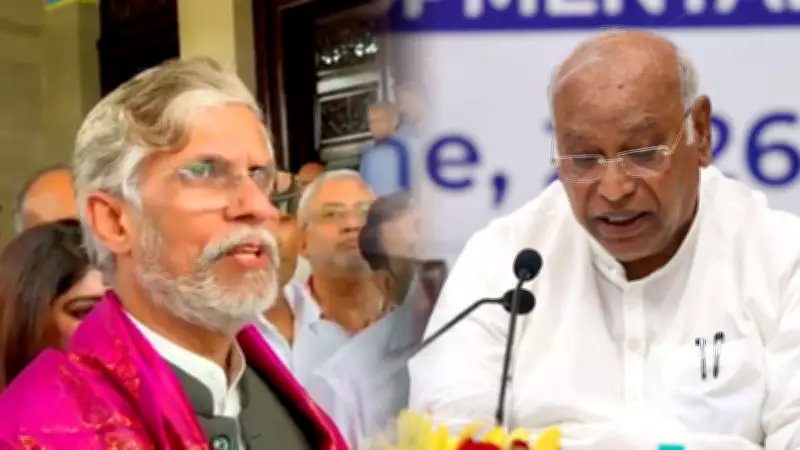
Three Congress candidates, including Mallikarjun Kharge, and one BJP nominee were elected unopposed to the Rajya Sabha from Karnataka. Along with Kharge, Congress leaders Mansoor Ali Khan and Pawan Khera secured seats, while BJP candidate M Nagaraja also won. Elections were scheduled for June 18 to fill four vacancies, but the contest became unnecessary after an independent candidate's nomination was rejected during scrutiny. With only four candidates remaining for four seats, all were declared elected unanimously.
Background of the Election
The Rajya Sabha elections in Karnataka were initially set for June 18 to fill four vacancies. However, the political landscape shifted when an independent candidate's nomination was rejected during the scrutiny process. This left only four candidates in the fray for the four available seats, making the election a formality.
Congress Candidates
The Congress party fielded three prominent leaders: Mallikarjun Kharge, Mansoor Ali Khan, and Pawan Khera. Kharge, a veteran politician and former Congress president, is a seasoned parliamentarian. Mansoor Ali Khan is a known face in Karnataka politics, while Pawan Khera has been active in national politics as a party spokesperson.

BJP Candidate
The Bharatiya Janata Party nominated M Nagaraja, a lesser-known figure compared to his Congress counterparts. His election was assured once the independent candidate's nomination was invalidated.
Political Implications
This development strengthens Congress's representation in the Rajya Sabha from Karnataka, giving the party a stronger voice in the upper house. The BJP, despite losing out on a potential second seat, managed to retain one seat. The unopposed election reflects the current political dynamics in the state, where Congress holds a significant majority in the legislative assembly.
Rejection of Independent Candidate
The rejection of the independent candidate's nomination was a key turning point. While the exact reason for rejection has not been officially disclosed, it is common for nominations to be rejected due to procedural errors or lack of proper documentation. This move effectively cleared the path for the four major party candidates.
Conclusion
The unopposed election of four Rajya Sabha members from Karnataka underscores the dominant position of Congress in the state. With three seats, the party has bolstered its presence in the upper house, while the BJP maintains a foothold. The election, though without contest, highlights the strategic maneuvering and political calculations that precede such polls.