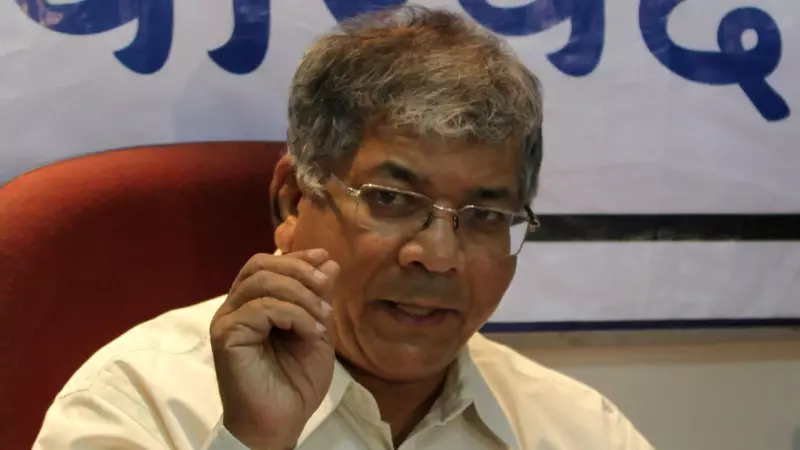
Congress Sleeper Cell Sabotaged VBA Alliance, Claims Prakash Ambedkar
Vanchit Bahujan Aghadi chief Prakash Ambedkar has made a startling accusation against the Congress party. He claims a sleeper cell within the Congress actively sabotaged their alliance ahead of the Brihanmumbai Municipal Corporation polls. Ambedkar spoke exclusively about the failed partnership and its implications for Maharashtra politics.
Golden Opportunity Lost for Congress
Prakash Ambedkar believes the Congress has squandered a golden opportunity in these municipal corporation elections. The alliance with VBA appeared strategically sound, especially for countering the BJP in Mumbai. However, Ambedkar reveals the partnership never gained proper traction on the ground.
"While the party set aside 62 seats for us in Mumbai, the talks were half-hearted in the rest of Maharashtra," Ambedkar stated. "Even in Mumbai, the top Congress leadership did not hold a single meeting with us to discuss the roadmap. There was no joint rally or campaign."

The VBA chief expressed frustration that their attempts to raise substantive issues were dismissed. These included questions about increased beef exports during the NDA government and tariff impositions by the United States.
Internal Sabotage Within Congress
Ambedkar directly blamed internal Congress elements for undermining the alliance. He identified what he called a "sleeper cell" within the party that worked against the partnership. According to Ambedkar, certain Congress leaders deliberately avoided sharing political space with the VBA.
"There is a sleeper cell within the Congress which sabotaged the alliance," Ambedkar asserted. "Its leaders did not want to share space with the VBA. And I have reasons to believe that they had their own political motives and interests to guard."
The VBA leader declined to name specific individuals but maintained his assessment of internal resistance.
Opposition Unity and Vote Bank Politics
When questioned about broader opposition unity, Ambedkar noted the Congress made a calculated decision. The party chose not to align with Shiv Sena (UBT) after it partnered with Maharashtra Navnirman Sena. Ambedkar explained this stemmed from vote transfer concerns.
"The Congress knows that in a broader alliance, its votes get transferred to Uddhav Thackeray's party," he observed. "But the Hindu votes of the Thackerays don't come to the Congress. In that sense, it appears the Congress wanted to retain its own vote bank of North Indians, Muslims, etc."
Dalit Votes and Constitutional Concerns
Ambedkar expressed confidence about securing substantial Dalit support in the BMC elections. He highlighted disillusionment among Dalit communities with both traditional parties and current ruling establishments.
"The sizeable Dalit vote bank will drift to us," Ambedkar predicted. "We have our electoral base of Dalits and OBCs. The Dalits, who aligned with the Republican Party of India are also disillusioned with the ruling BJP as they have been kept out of power-sharing in the civic polls."
He emphasized that backward communities perceive right-wing forces as threatening constitutional values. This concern, according to Ambedkar, remains a significant electoral issue.
Thackeray Reunion and Political Impact
Regarding the much-discussed reunion of Uddhav and Raj Thackeray, Ambedkar offered a nuanced perspective. While acknowledging the emotional significance for Marathi loyalists, he doubted it would dramatically reshape political equations.
"The union of the Thackeray brothers has given the people a good feeling, especially old-time Marathi manoos who believe the family's divide was unfortunate," Ambedkar noted. "However, I doubt this reunion will drastically alter politics as the Marathi vote bank is unlikely to consolidate in favour of any one party or bloc."
Hindutva Politics and Electoral Strategies
Ambedkar analyzed the prominence of Hindutva in local body elections as a deliberate BJP strategy. He described it as an attempt to polarize voters along religious lines while compensating for the party's inability to attract Muslim voters.

"The RSS-BJP believes Hindutva is the best bet to polarise people along Hindu versus Muslim lines," Ambedkar explained. "The BJP banks on Hindu consolidation. If we look at their politics, they have always adopted the divide-and-rule formula."
He pointed to alternating strategies that sometimes pit Hindus against Muslims and other times OBCs against Marathas.
Development Versus Identity Politics
When asked whether development or identity issues would dominate voting patterns, Ambedkar highlighted Mumbai's cosmopolitan character. He maintained that constitutional concerns remain relevant for voters who dislike political high-handedness.
"Mumbai is a cosmopolitan city and Mumbaikars have always believed in inclusive and accommodative politics," Ambedkar stated. "I still believe that the threat to the Constitution is an issue. People do not like the political high-handedness of ruling parties."
Broader Democratic Concerns
Beyond immediate electoral calculations, Ambedkar raised fundamental questions about Indian democracy. He expressed concern about opposition leaders switching to the BJP and what this signifies for the political system.
"It is not about who is joining whom, or who is aligning with whom," Ambedkar reflected. "The larger issue is democracy. Do those in power want democracy? That is the real concern. If things continue like this, one wonders if there will be elections in the future."
As Maharashtra votes across 29 municipal corporations, these revelations from a key political player shed light on the complex dynamics shaping India's financial capital and beyond.