Congress Confronts BJP Over Concealed Dalit Crime Statistics and Protest Restrictions
In a scathing indictment following the horrific abduction of a Dalit girl and the brutal murder of her mother in Uttar Pradesh's Meerut district, the Congress party has launched a fierce attack on the Bharatiya Janata Party (BJP)-led governments. The opposition party has made serious allegations about the systematic suppression of data concerning crimes against Scheduled Castes (SCs) and the deliberate obstruction of protest rights.
Four-Year Data Blackout on Dalit Atrocities
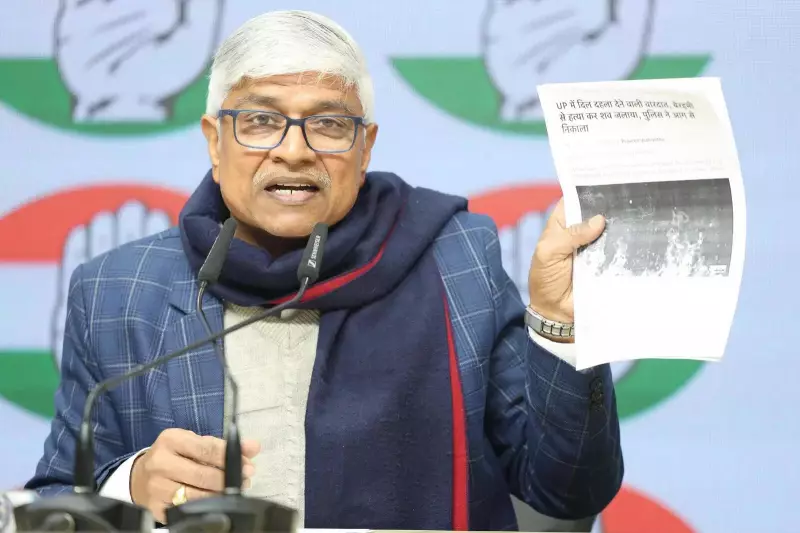
Former Delhi minister and Congress SC department chairman Rajendra Pal Gautam revealed a concerning pattern of information concealment during a press conference on Monday. He disclosed that the National Crime Records Bureau (NCRB), which falls under the Union home ministry, has not released comprehensive data on Dalit atrocities for the past four years, with the last official statistics dating back to 2022.
"The Centre has created a deliberate information vacuum regarding crimes against Scheduled Castes," Gautam asserted. "This data blackout coincides precisely with the period when atrocities have shown a disturbing upward trajectory across BJP-ruled states."

Alarming Statistics from Available Data
The Congress leader presented troubling figures from the last available NCRB report, highlighting that between 2019 and 2022, crimes against SCs registered a massive growth of 13.1% nationwide. Uttar Pradesh, currently governed by the BJP, topped this distressing chart with the highest number of reported atrocities.
Gautam further emphasized that five BJP-governed states—Uttar Pradesh, Madhya Pradesh, Rajasthan, Maharashtra, and Bihar—collectively "account for 76% of total atrocities against Dalits" according to the 2022 data. This concentration in states under the ruling party's administration raises serious questions about governance and protection mechanisms.
Protest Rights Under Siege
The controversy deepened as Gautam detailed how Delhi Police, operating under the Union home ministry, denied permission for Congress to hold a peaceful dharna protesting the Meerut abduction-murder case. The administration cited an obscure regulation requiring a 10-day advance notice for protest permissions.
"This bureaucratic hurdle is both absurd and unconstitutional," Gautam argued passionately. "When a heinous crime like rape or murder occurs, and there is urgent need to highlight systemic failures, should we wait for ten days to express our anguish? What kind of democratic norm is this that suppresses immediate response to injustice?"
Constitutional Rights and Justice Delivery
The former minister accused the BJP government of systematically eroding fundamental constitutional rights. "The right to protest and seek justice is being taken away through administrative roadblocks," he stated. "This suppression of dissent directly contributes to rising atrocities because when people cannot demand action, reluctant administrations face no accountability."
The Stark Reality Behind Official Numbers
Gautam presented a shocking disparity between registered cases and ground reality through helpline data. While 57,582 cases were officially registered nationally in 2022, a central government-launched helpline for Dalit atrocities received over 6.5 lakh calls in 2021 alone, indicating massive underreporting.
The state-wise breakdown revealed even more concerning patterns:
- In Uttar Pradesh, only 825 cases were registered despite 3.33 lakh helpline calls
- In Bihar, merely 718 cases were lodged from 58,000 calls
"These numbers expose the vast chasm between reported and actual incidents of discrimination and violence," Gautam emphasized.
Selective Application of 'Bulldozer Justice'
In a particularly sharp criticism of Uttar Pradesh's governance approach, the Congress leader accused the state of practicing "bulldozer justice" with clear caste biases. "The bulldozer becomes remarkably efficient when the alleged culprits belong to Dalit, minority, or backward communities, with houses razed within hours," he noted.

"However, that same bulldozer appears to develop rust and mechanical failures when the perpetrators of atrocity come from upper caste backgrounds. This selective application of justice reveals deep-seated prejudices within the system."
The Congress's allegations come amid growing concerns about the safety and rights of marginalized communities in India, with the Meerut tragedy serving as a catalyst for broader discussions about data transparency, protest rights, and equitable justice delivery mechanisms.