Congress-Left Alliance Faces National Strain Amid Assembly Election Season
As India gears up for the crucial Assembly Elections season, the political landscape is witnessing significant turbulence within the opposition ranks. The Congress party, a key player in national politics, finds itself embroiled in a public war of words with its traditional allies, notably the Communist Party of India (Marxist) or CPI(M). This conflict has escalated beyond state-level skirmishes, threatening to undermine opposition unity on a national scale.
Escalation of Tensions by Senior Congress Leaders
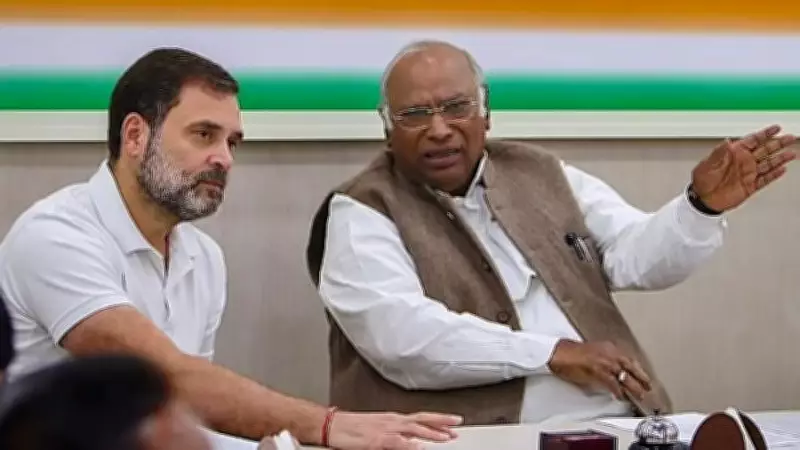
The situation took a sharp turn when Congress president Mallikarjun Kharge and Leader of the Opposition in the Lok Sabha Rahul Gandhi launched pointed criticisms against the CPI(M) and the broader Left front. Their remarks have not only highlighted existing fissures but have also queered the pitch for collaborative efforts in upcoming electoral battles. This marks a departure from past practices where such disagreements were often contained within state boundaries.
Historically, contests between Congress and its allies in specific states were not uncommon, as witnessed during the recent Lok Sabha polls. However, the current scenario is distinct because the attacks are emanating from the highest echelons of the Congress leadership and are being framed in a national context. This shift indicates a strategic recalibration or perhaps a deepening of ideological and tactical divides that could have far-reaching implications for opposition cohesion.

Impact on National Opposition Unity
The public spat between Congress and the Left comes at a critical juncture, with multiple state Assembly Elections on the horizon. Analysts suggest that this infighting could weaken the opposition's collective bargaining power and electoral prospects. The CPI(M), as a national ally, has been a significant partner in various coalitions, and its strained relationship with Congress might lead to fragmented opposition strategies.
Key points of contention include:
- Differences in electoral strategies and seat-sharing agreements.
- Ideological clashes on economic and social policies.
- Leadership dynamics and public posturing ahead of elections.
This development underscores the challenges of maintaining alliance discipline in a diverse political ecosystem like India's. As both parties prepare for the Assembly Elections, the resolution—or escalation—of these tensions will be closely watched by political observers and voters alike.