The Indian National Congress has launched a sharp political attack on Prime Minister Narendra Modi, seizing upon recent comments made by United States Commerce Secretary Gina Raimondo regarding the progress of a trade deal between the two nations. The opposition party used the remarks to mock the Prime Minister's much-publicized personal diplomacy on the global stage.
The Trigger: Raimondo's Candid Assessment
The controversy stems from an interview given by US Commerce Secretary Gina Raimondo to Bloomberg News. When questioned about the potential for a trade agreement between India and the US, Secretary Raimondo provided a frank response. She stated that while both countries are actively working on a roadmap for deeper cooperation, a comprehensive free trade deal is not currently under negotiation.
Raimondo emphasized that the bilateral relationship is strong and that discussions are ongoing, but she clarified the immediate focus is on smaller, targeted agreements rather than a single, sweeping pact. This candid assessment, diverging from domestic political narratives in India about an imminent major deal, provided ammunition to the opposition.

Congress's 'Hug, Hug Na Raha' Barb
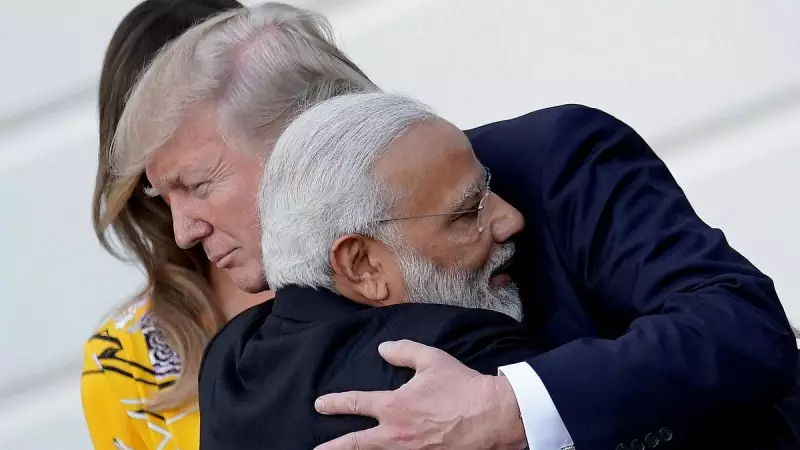
The Congress party swiftly responded with a biting critique, directly targeting Prime Minister Modi's signature style of building personal rapport with world leaders, often characterized by warm embraces. In a post on social media platform X, the party wrote, "Hug, hug na raha, dhakka mil raha hai" (The hugging has stopped, now we are getting pushed).
This phrase is a clear dig at Modi's well-documented 'hug diplomacy' with figures like former US President Barack Obama and others. The Congress's implication is that the personal camaraderie has not translated into concrete diplomatic or economic gains, specifically pointing to the stalled progress on a trade deal that has been discussed for years.
The party's communication framed Raimondo's statement as evidence that the Modi government's foreign policy boasts lack substantive outcomes. They questioned the effectiveness of high-profile visits and photo-ops if they fail to secure key agreements that benefit the Indian economy and create jobs.
Broader Political and Economic Context
This exchange occurs against a backdrop of prolonged negotiations between India and the United States on trade issues. While strategic and defense ties have deepened significantly, trade disagreements on tariffs, market access, and data localization have persisted. Both the Trump and Biden administrations have pressed India for greater concessions.
For the Modi government, a trade deal with the US has been a long-standing goal, often hinted at as a major achievement in the making. The Congress party's attack aims to puncture this narrative ahead of crucial national elections, painting the government as strong on imagery but weak on delivery.
The political jab also seeks to resonate with sections of industry and agriculture that have been anticipating improved access to the vast American market. By highlighting the delay, Congress positions itself as holding the government accountable for its promises on the economic front.
Implications for India-US Ties and Domestic Politics
Experts note that while Raimondo's comments reflect the current, pragmatic state of negotiations, they do not indicate a downturn in the overall relationship. The two countries continue to collaborate closely through forums like the Indo-Pacific Economic Framework (IPEF) and the iCET (Initiative on Critical and Emerging Technology).
However, domestically, the Congress's taunt is designed to score political points. It fits into a broader opposition strategy of challenging the government's narrative of unparalleled foreign policy success. The use of the memorable "hug" phrase is intended to make the critique stick in public discourse.
The government has yet to issue a formal counter to the Congress's specific barb. Typically, BJP leaders highlight the strengthened strategic partnership with the US, pointing to defense deals, technology transfers, and shared democratic values as markers of success beyond just a trade agreement.

This episode underscores how international diplomacy can quickly become fodder for domestic political battles. As India navigates complex global trade dynamics, statements from foreign officials will likely continue to be parsed and weaponized by political rivals seeking an edge.