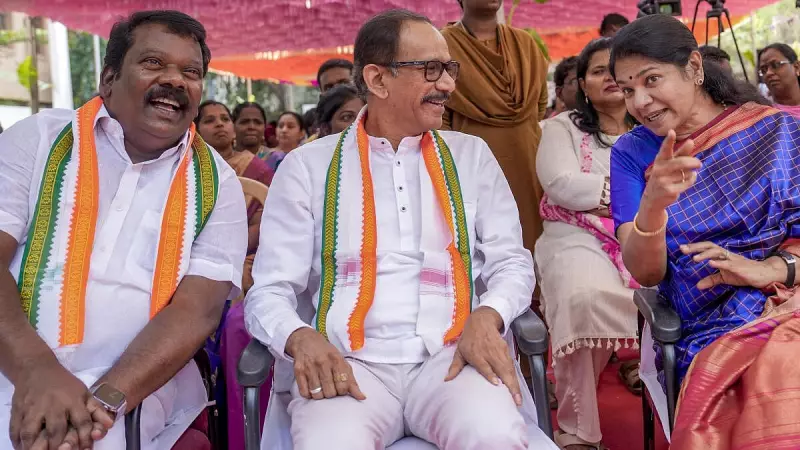
Congress-DMK Seat-Sharing Negotiations Hit Impasse for Tamil Nadu Assembly Elections
The crucial seat-sharing discussions between the Congress party and the Dravida Munnetra Kazhagam (DMK) for the upcoming Tamil Nadu Assembly elections have descended into a prolonged stalemate, casting uncertainty over the opposition alliance's electoral strategy. As the top leadership of both political entities continues to deliberate and delay decisive action, the vacuum has sparked visible tensions among their second-rung leaders and cadre on the ground and across digital platforms.
Leadership Hesitation Fuels Grassroots and Social Media Conflicts
With the high-level negotiations failing to yield a breakthrough, the impasse has trickled down to the party workers and mid-level functionaries, who are now openly clashing over prospective constituencies and alliance dynamics. This internal friction is manifesting in heated exchanges at local party offices and through aggressive social media campaigns, where supporters from both sides are leveraging platforms to assert their demands and criticize perceived intransigence.
The deadlock primarily revolves around the allocation of seats, with both parties holding firm on their respective claims and strategic interests. The Congress, aiming to reclaim its foothold in Tamil Nadu politics, is pushing for a substantial number of constituencies, while the DMK, as the dominant regional force, is cautious about conceding too much ground that might dilute its own electoral prospects.

Implications for the Opposition Alliance in Tamil Nadu
This ongoing stalemate threatens to undermine the cohesion of the opposition alliance, which is crucial to mounting a credible challenge against the ruling party in the state. Political analysts suggest that the delay in finalizing seat-sharing could hamper campaign planning, candidate selection, and resource allocation, potentially giving an advantage to their political adversaries.
Moreover, the public display of discord through social media and local confrontations risks alienating voters who seek stability and unity from their political representatives. As the election dates draw nearer, the pressure is mounting on the senior leadership of both the Congress and DMK to resolve their differences swiftly and present a united front to the electorate.
The situation remains fluid, with behind-the-scenes negotiations reportedly ongoing, but the lack of a formal agreement continues to fuel speculation and anxiety among party workers and political observers alike. The outcome of these talks will significantly shape the political landscape of Tamil Nadu in the lead-up to the Assembly polls.