Congress Demands Immediate Apology from Himanta Sarma Over 'Madman' Remark
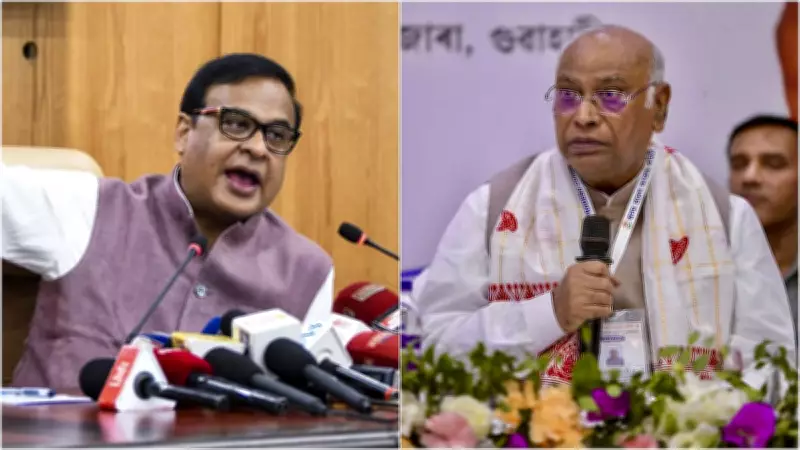
The Indian National Congress has launched a scathing attack on Assam Chief Minister Himanta Biswa Sarma, demanding an unconditional apology for his derogatory comments directed at party president Mallikarjun Kharge. The political firestorm erupted after Sarma referred to Kharge as a "madman" during a recent public address, a remark that has drawn widespread condemnation from opposition circles.
Escalating Political Tensions in National Discourse
Congress leaders have characterized Sarma's statement as "disgraceful beyond any limit," asserting that such language has no place in civilized political discourse. The party's official communication emphasized that personal attacks undermine democratic decorum and reflect poorly on the standards of public leadership. This incident marks a significant escalation in the ongoing verbal sparring between the ruling Bharatiya Janata Party (BJP) and the principal opposition party.
Senior Congress figures have pointed out that Kharge, as the elected president of India's oldest political party, deserves respect regardless of political differences. They argue that Sarma's comment represents a dangerous trend of using inflammatory rhetoric to sideline substantive policy debates. The controversy has quickly gained traction across media platforms, with analysts noting its potential impact on upcoming electoral battles.

Broader Implications for Political Conduct
This confrontation highlights growing concerns about the coarsening of political language in India's public sphere. Observers note that personal insults have increasingly replaced policy critiques in political exchanges, potentially eroding public trust in democratic institutions. The Congress demand for apology is framed not just as a party issue, but as a stand for maintaining minimum standards of political conduct.
The BJP has yet to issue an official response to the Congress demand, though party insiders suggest the remark may have been taken out of context. However, opposition parties beyond the Congress have also expressed disapproval, suggesting the incident could galvanize broader criticism of the ruling coalition's communication style. As the controversy unfolds, all eyes remain on whether Sarma will retract his statement or double down on his criticism of the Congress leadership.
Political analysts suggest this episode may influence voter perceptions in states where both parties are competing aggressively. The demand for apology represents not just a reaction to one comment, but a broader opposition strategy to highlight what they characterize as the ruling party's disregard for parliamentary norms and respectful debate.