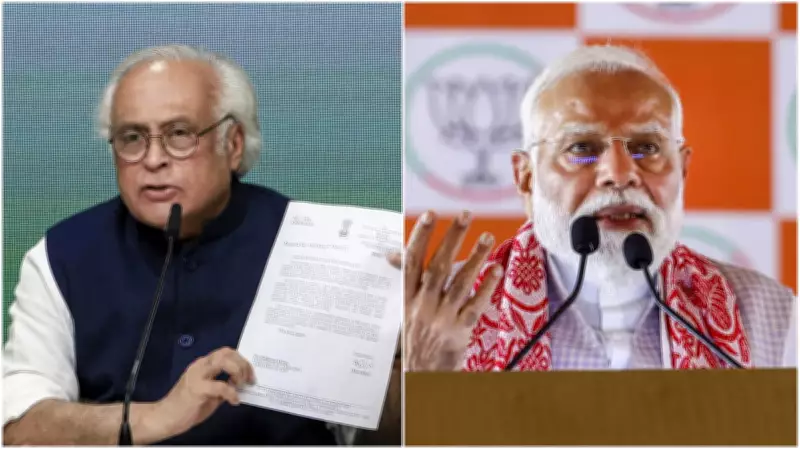
Congress Assails PM Modi's 'Vishwaguru' Persona Amid Pakistan's Diplomatic Moves
The Indian National Congress has unleashed a pointed political attack on Prime Minister Narendra Modi, directly challenging his self-proclaimed status as a 'Vishwaguru' or global leader. This criticism stems from recent international developments, specifically Pakistan's active role in facilitating ceasefire negotiations between the United States and Iran. The opposition party contends that this situation starkly exposes a perceived decline in India's diplomatic clout and strategic positioning on the world stage.
Pakistan's Mediation Role Sparks Political Firestorm in India
According to reports, Pakistan has been instrumental in brokering dialogue and de-escalation efforts between Washington and Tehran, particularly concerning regional tensions in the Middle East. This involvement has not gone unnoticed in New Delhi, where it has ignited a fierce debate about India's foreign policy efficacy. The Congress party seized upon this development, arguing that it undermines the narrative of India's rising global leadership under the current administration.
The core of the Congress's argument hinges on the assertion that a 'true Vishwaguru' would ensure India is at the forefront of such critical international peace processes, not a neighboring nation with which India has historically strained relations. The party's spokespersons have emphasized that this episode reveals a significant gap between the government's projected image and the on-ground realities of geopolitical influence.

Political Rhetoric and National Security Implications
In its statements, the Congress has not minced words, labeling the situation as an 'exposure' of the Prime Minister's foreign policy claims. The critique extends beyond mere political point-scoring, touching upon broader concerns about national security and regional stability. Analysts note that Pakistan's mediation role, especially in matters involving the US and Iran, could have direct implications for South Asian dynamics and India's strategic interests.
The timing of this political offensive is particularly noteworthy, as it comes amid ongoing domestic debates about India's international standing. The Congress has called for a serious reevaluation of the government's diplomatic strategies, urging a more proactive and substantive approach to global affairs rather than relying on symbolic gestures.
Government's Response and Broader Context
While the government has yet to issue a formal rebuttal to these specific allegations, supporters of the ruling party have previously defended India's foreign policy achievements, citing enhanced bilateral ties and a stronger voice in multilateral forums. However, the Congress's latest salvo adds fuel to an already contentious political discourse, highlighting the deep divisions in how India's global role is perceived by different political factions.
This incident underscores the intense scrutiny that accompanies high-profile international engagements and the domestic political ramifications they can trigger. As the debate unfolds, it remains to be seen how this will impact public perception and future policy directions regarding India's pursuit of a leadership position in global diplomacy.