The Congress party on Wednesday intensified its political offensive against Prime Minister Narendra Modi, seizing upon renewed claims by former US President Donald Trump that he was personally responsible for ending last year's India-Pakistan conflict. The opposition party declared that Trump has now made this assertion a staggering seventy times, marking a significant escalation in their criticism of the Prime Minister's foreign policy approach.
Trump's Repeated Claims During White House Press Conference
The controversy erupted after Donald Trump, during a comprehensive White House press conference, highlighted ending the India-Pakistan conflict as one of the major accomplishments of his administration's final year. The former president made dramatic claims about the potential consequences of the conflict, stating that both nuclear-armed nations "were going to go nuclear" and that his intervention had saved millions of lives.
Trump specifically mentioned that "eight planes shot down" during the hostilities and emphasized the nuclear dimension of the confrontation. He quoted what he claimed were words from the Pakistani Prime Minister during a Washington visit last year: "President Trump saved 10 million people, and maybe much more than that."

Congress Counts Seventy Assertions
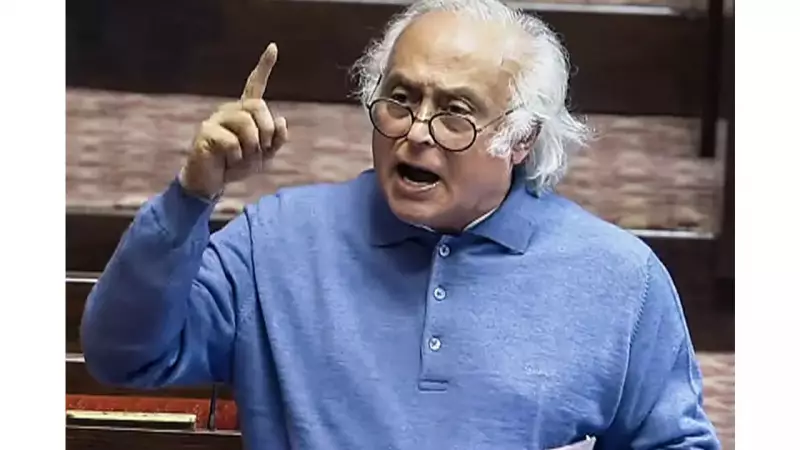
Congress general secretary in-charge communications Jairam Ramesh responded sharply to Trump's latest remarks, revealing that the party has been meticulously tracking these claims. "Before yesterday the count stood at 68," Ramesh stated in a social media post. "Yesterday itself the count shot up not to 69 but to 70 - once in the opening statement of his White House Press Conference and later in the Q&A session."
The Congress leader specifically referenced what he called the "sudden and unexpected halt of Operation Sindoor on May 10, 2025," directly challenging the narrative of third-party intervention in the ceasefire agreement. Ramesh pointedly described Trump as the Prime Minister's "good friend" and "the recipient of his many forced hugs," adding a personal dimension to the political criticism.
Trump's Broader Claims of Conflict Resolution
During the extensive 105-minute press conference, Trump expanded his claims beyond the India-Pakistan situation, asserting that he had ended "eight unendable wars in 10 months." He listed multiple international conflicts including:
- Cambodia and Thailand
- Kosovo and Serbia
- The Congo and Rwanda
- Israel and Iran
- Egypt and Ethiopia
- Armenia and Azerbaijan
The former president specifically addressed questions about the Nobel Peace Prize, arguing that his conflict resolution efforts deserved recognition. "If you add up the numbers, just if you look at any one of those wars, you're talking about millions of people," Trump stated. "You multiply it eight times. But when you look at India and Pakistan, that could have been 10,15,20 million people. It could have been more than that. So I saved millions of people."
India's Consistent Position on Third-Party Intervention
The Indian government has maintained a consistent position regarding Trump's claims, repeatedly denying any third-party intervention in the India-Pakistan ceasefire agreement. Official sources have emphasized that the cessation of hostilities was achieved through bilateral channels and diplomatic engagement between the two neighboring nations.
Trump's assertions date back to May 10 last year when he first announced on social media platforms that India and Pakistan had agreed to a "full and immediate ceasefire" following what he described as Washington-mediated talks. Since that initial declaration, the former US president has repeated this claim on numerous occasions across various platforms both in the United States and during international engagements.
The Congress party's decision to highlight Trump's seventieth claim represents a strategic political move, attempting to leverage international statements to question the Modi government's handling of national security and foreign relations. The opposition has positioned this as part of a broader critique of what they characterize as the Prime Minister's foreign policy approach and personal diplomacy.