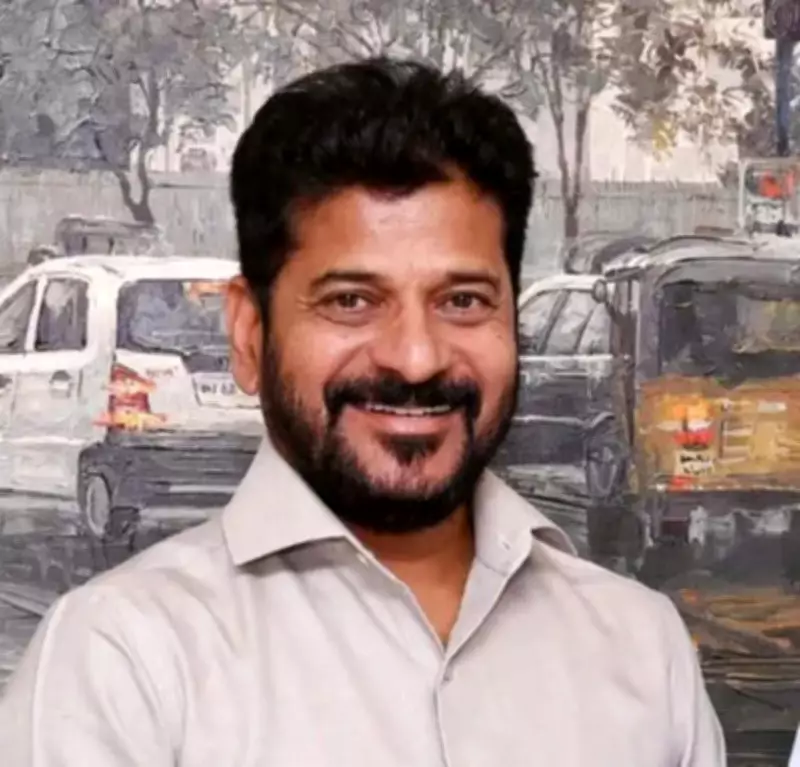
CM Revanth Reddy Challenges PM Modi on Women's Reservation Implementation
In a bold political move, Telangana Chief Minister A Revanth Reddy has directly challenged Prime Minister Narendra Modi to demonstrate the BJP's commitment to women's empowerment by implementing the 33% women reservation in the Uttar Pradesh assembly elections scheduled for 2027. Speaking at a press conference in Delhi on Saturday, Reddy accused the National Democratic Alliance (NDA) government of lacking genuine sincerity in advancing women's representation in legislative bodies.
Allegations of Constitutional Conspiracy
The Chief Minister leveled serious allegations against the central government, claiming there is a deliberate conspiracy to abolish reservations for all marginalized sections. He specifically referenced the BJP's election slogan 'Char Sau Paar' (crossing the 400-seat mark) from the 2024 general elections, suggesting this numerical target was aimed at securing enough parliamentary strength to amend the Constitution against quota protections for various communities.
"The BJP's true intentions are revealed in their electoral ambitions," stated Reddy. "Their talk of women's reservation is merely a smokescreen while they plot to dismantle the entire reservation framework that protects disadvantaged groups across India."

Proposed Legislative Solution
Revanth Reddy presented a concrete legislative proposal, urging the immediate drafting of new women's reservation legislation to be presented before Parliament by Monday with implementation beginning Tuesday. His proposed bill would mandate that one-third of the current 543 Lok Sabha seats and one-third of all state assembly seats be reserved for women candidates.
"If such a genuine bill is introduced, the INDIA Bloc will extend its full support just as we did in 2023," affirmed the Chief Minister, highlighting potential cross-party cooperation on the issue.
Practical Implementation Timeline
The Telangana leader outlined a feasible implementation timeline, noting that the Election Commission already possesses the necessary 2011 Census data and other relevant information required for the reservation process. Since the last delimitation exercise was conducted in 2009 using these figures, Reddy argued that 33% women's reservation could realistically be implemented by August 15, 2026.
"This would enable the policy to be effectively applied in the crucial 2027 Uttar Pradesh elections," he emphasized, "the very state from which Prime Minister Modi himself was elected to the Lok Sabha."
Southern States Alliance Building
Demonstrating proactive leadership, CM Revanth Reddy announced his readiness to initiate discussions with chief ministers of southern states to build consensus around the women's reservation bill. He specifically mentioned reaching out to Tamil Nadu's M.K. Stalin, Kerala's Pinarayi Vijayan, Karnataka's Siddaramaiah, Andhra Pradesh's Chandrababu Naidu, and Puducherry's N. Rangasamy to garner their support for the proposed legislation.
Parliamentary Procedure Critique
Reddy recalled Union Home Minister Amit Shah's claim that the government could modify the bill if granted just one hour of parliamentary time. Countering this assertion, the Chief Minister pointed out that sufficient time exists until Monday for proper legislative consideration.
"If the BJP introduces a genuine Women's Reservation Bill based on the current 543 parliamentary seats," he asserted, "we will ensure its passage as early as Tuesday through cooperative parliamentary processes."
Opposition to Pro-Rata Delimitation
The Chief Minister reiterated the Congress party and Telangana government's firm opposition to constituency delimitation based on a pro-rata population basis. Instead, he advocated for what he termed a "hybrid model" that would increase legislative assembly seats in consultation with respective state governments while protecting regional representation balances.

Reddy recommended that the central government convene an all-party meeting to discuss delimitation matters comprehensively. He stressed the importance of consulting experts, considering every state government's perspective, and seeking public opinion across all Lok Sabha constituencies before making any final decisions on constituency boundaries.
Historical Context and Current Stakes
The Chief Minister recounted how Congress, with support from other opposition parties, has previously thwarted BJP attempts to amend the Constitution under the guise of bills concerning women's reservations, constituency delimitation, and constituency expansion. He positioned the current debate as part of this ongoing constitutional protection effort.
Reddy's challenge represents a significant escalation in the political discourse surrounding women's representation, setting the stage for potential legislative action and testing political commitments to gender equity in India's democratic institutions.