

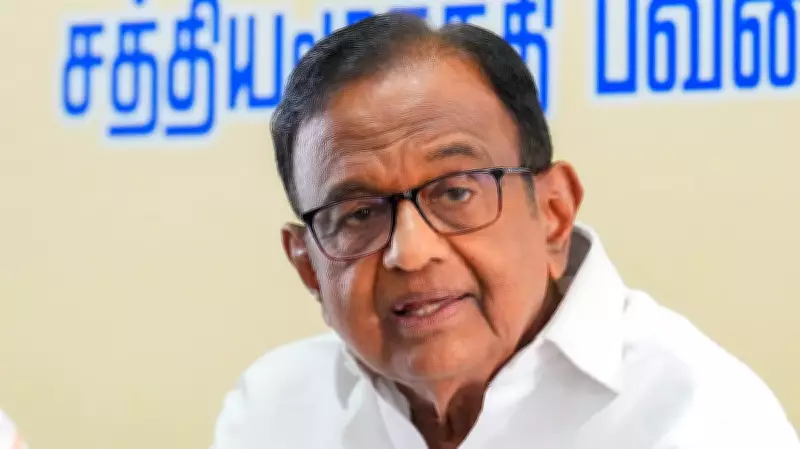
Congress Leader P Chidambaram Slams SIR, Questions Supreme Court's Response to Bengal
Senior Congress leader and former Union Minister P Chidambaram has launched a sharp critique of the Special Intensive Revision (SIR) of electoral rolls, asserting that it significantly weakens democratic participation across India. In a pointed statement, Chidambaram emphasized that the recent Supreme Court order concerning this matter does not adequately address the substantial grievances raised by the West Bengal state government.
Electoral Roll Revision: A Core Democratic Issue, Not Just Administrative
Chidambaram maintained that the issue of revising electoral rolls transcends mere administrative procedure. He argued that it strikes at the very heart of democratic governance and citizen engagement. The process directly impacts who gets to vote and how representative our elections truly are, making it a fundamental pillar of a functioning democracy.
"This is not just about updating a list; it is about ensuring every eligible citizen has a voice," Chidambaram implied, highlighting the profound implications of the SIR exercise. His comments suggest a deep concern that the revision could disenfranchise voters or alter electoral demographics without proper oversight or addressing state-level objections.

Supreme Court Order Falls Short on Addressing State Concerns
Despite judicial intervention, Chidambaram contends that the Supreme Court's directive fails to resolve the core complaints from West Bengal. The state government has reportedly expressed serious reservations about the implementation and potential consequences of the SIR within its jurisdiction.
The senior Congress leader's critique points to a perceived gap between legal rulings and on-ground political realities. He suggests that the court's order may have overlooked or insufficiently considered the specific, legitimate grievances put forth by Bengal's administration, which claims the revision process could be unfair or politically motivated.
Broader Implications for Federalism and Electoral Integrity
This development raises critical questions about the balance of power and the health of India's democratic institutions:
- Federal Tensions: The situation underscores ongoing tensions between the central government's initiatives and state governments' autonomy, particularly in matters of electoral administration.
- Participatory Democracy: Chidambaram's warning about weakened participation highlights fears that technical revisions could erode public trust in the electoral system.
- Judicial Role: The episode invites scrutiny of how the judiciary intervenes in politically sensitive administrative processes and whether such interventions fully address all stakeholder concerns.
As the debate continues, the focus remains on how electoral roll management can be conducted transparently and inclusively, without compromising the principles of democratic representation or ignoring the legitimate concerns of state governments like West Bengal.






