Chhattisgarh Takes Major Step Towards Uniform Civil Code Implementation
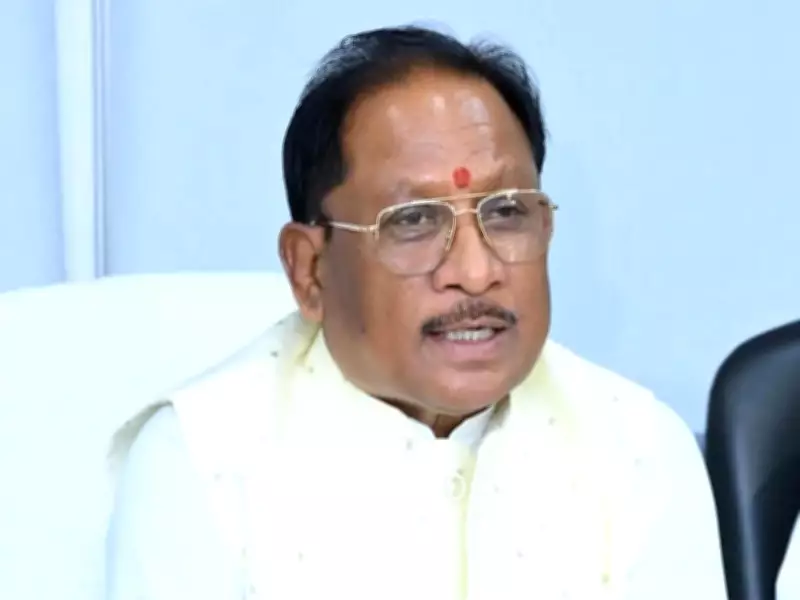
In a significant policy development, the Chhattisgarh cabinet has decided to initiate the process for implementing a Uniform Civil Code (UCC) within the state. The decision was made during a cabinet meeting chaired by Chief Minister Vishnu Deo Sai at Mahanadi Bhavan in Raipur on Wednesday.
High-Level Committee to Draft UCC Framework
The cabinet authorized Chief Minister Vishnu Deo Sai to appoint members to a high-level committee that will be responsible for drafting the UCC framework. The committee will be headed by retired Supreme Court judge Ranjana Prakash Desai, bringing substantial judicial expertise to this complex legal undertaking.
The committee's mandate includes seeking suggestions from citizens, organizations, and legal experts throughout the drafting process. Officials indicated that feedback may be collected through a dedicated web portal before the committee prepares a final draft for legislative approval.

Addressing Legal Complexities and Promoting Equality
Currently, personal laws governing marriage, divorce, inheritance, and adoption vary significantly across different religions in India, creating legal complexities and sometimes unequal outcomes. The proposed Uniform Civil Code aims to establish legal uniformity while simplifying legal processes and promoting both social and gender equality.
Following the cabinet meeting, Chief Minister Vishnu Deo Sai emphasized the importance of this initiative. "The decision to initiate the process for UCC is an important step towards addressing long-standing questions of legal uniformity," he stated. "For years, different personal laws have led to complexity and, in some cases, unequal outcomes."
The Chief Minister further explained that the government is acting in accordance with Article 44 of the Indian Constitution, which directs the state to secure a uniform civil code for citizens. "Our government is ensuring that every citizen is treated equally before the law," he affirmed. "The intent is not to override traditions, but to bring greater coherence to civil laws, particularly in areas where disparities have affected women and vulnerable sections."
Broad Support and Additional Cabinet Decisions
State Waqf Board Chairman Salim Raj welcomed the move, describing it as a step toward equality and national unity. "Supporting the UCC is the duty of every citizen as it promotes equality and development," he remarked. "This initiative is not against any religion but in favor of national integration."
In addition to the UCC decision, the Chhattisgarh cabinet approved several other significant measures:
- Property Registration Fee Reduction: A 50% reduction in registration fees for properties purchased in the name of women, aimed at boosting financial empowerment despite an estimated revenue loss of Rs 153 crore.
- Stamp Duty Concession: A 25% concession in stamp duty on property purchases up to Rs 25 lakh for serving and retired soldiers and widows.
- Industrial Land Reforms: Amendments to the Chhattisgarh Industrial Land and Building Management Rules, 2015, designed to streamline land allocation, improve access to finance, and enhance ease of doing business.
- Mining Regulation: Amendments to industrial land allocation norms and mining rules to improve transparency, curb illegal mining, and introduce stricter penalties including fines up to Rs 5 lakh for violations.
- Pension Recovery: Agreement to recover Rs 10,536 crore in excess pension payments made by Chhattisgarh to Madhya Pradesh following state reorganization, with Rs 2,000 crore already received and the remaining Rs 8,536 crore to be paid in six annual installments.
Comprehensive Economic and Governance Reforms
The industrial land reforms include several specific improvements:

- Clearer eligibility criteria for service sector land allotments
- Provision for approach roads to land bank plots
- Inclusion of Non-Banking Financial Companies (NBFCs) for better credit access to businesses
- Enhanced clarity in shareholding norms and Public-Private Partnership (PPP) frameworks to attract private investment
These comprehensive decisions reflect the Chhattisgarh government's multi-faceted approach to governance reform, addressing both social justice through the UCC initiative and economic development through business-friendly policies and women's empowerment measures.
The UCC committee's formation marks a significant milestone in Chhattisgarh's legal landscape, with the potential to influence broader national conversations about civil law uniformity while maintaining what Chief Minister Sai described as "a consultative and lawful process where every stakeholder will have an opportunity to be heard."