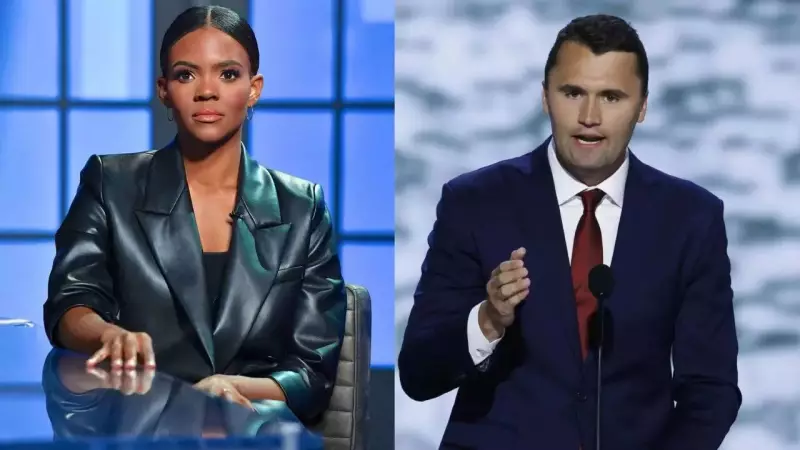
Candace Owens' Time Travel Claim About Charlie Kirk Ignites Online Firestorm
Conservative commentator Candace Owens has once again set the internet ablaze. This time, she presented a truly extraordinary theory about the death of Charlie Kirk. The claim did not emerge quietly. It spread with incredible speed, clipped and shared across social media platforms where disbelief often travels much faster than verifiable facts.
What made people so angry was not just the idea itself, but the absolute certainty with which Owens delivered it. The controversy arrives at a moment when viewers are already deeply suspicious of speculative stories that rush to fill the void created by tragedy. Under increased public scrutiny, even some of her longtime supporters seemed rattled. They are left wondering when commentary crosses the line into pure fantasy, driven more by fear than by factual reporting.
The Core of the Controversial Theory
Owens suggested in her remarks that Charlie Kirk once told her he was a time traveler. She claimed he had been pursued by shadowy forces since his childhood. According to Owens, this shocking revelation came through text messages that left her questioning reality itself. These remarks triggered immediate and widespread criticism, especially because she provided no evidence to support them.

In a now-viral video clip, Owens escalated her theory with a sweeping assertion. "They knew something about Charlie, and that's why they had him marked, had him martyred, and had him followed since he was young," she stated firmly. According to her narrative, unnamed actors believed that killing Kirk could somehow alter a future outcome.
She continued with another dramatic statement. "For the first time in his life, Charlie picked his head up and began to push back in a meaningful way," Owens added. She claimed this newfound resistance caused panic among those she vaguely described as being part of a deep state or shadowy establishment.
Swift and Sharp Online Reaction
The online reaction was both swift and remarkably sharp. Many viewers mocked the cinematic and conspiratorial tone of her claims. One social media user noted sarcastically, "My favorite thing about Candace's show is you can tell what movies have made an impression on her." Replies to this comment were flooded with references to films like The Matrix and Inception.
Other critics were far more direct in their condemnation. One blunt comment read, "Candace will end in disgrace." Another user summed up the prevailing mood with a simple, cutting remark: "One hell of an imagination." The backlash highlights a growing fatigue with unsubstantiated claims in political discourse.
A Broader Debate on Commentary and Credibility
As the controversial clip continues to circulate online, this episode has reopened a critical debate about responsibility in political commentary. For many observers and media analysts, the core issue is no longer just about political ideology. It has shifted fundamentally to questions of credibility and trust.
The central question now is whether provocative storytelling and attention-grabbing theories have crossed a dangerous line. Has this style of commentary moved into territory that is far more damaging to public discourse? The episode with Candace Owens serves as a potent case study, forcing both commentators and audiences to reflect on the boundaries between speculation, entertainment, and responsible journalism.