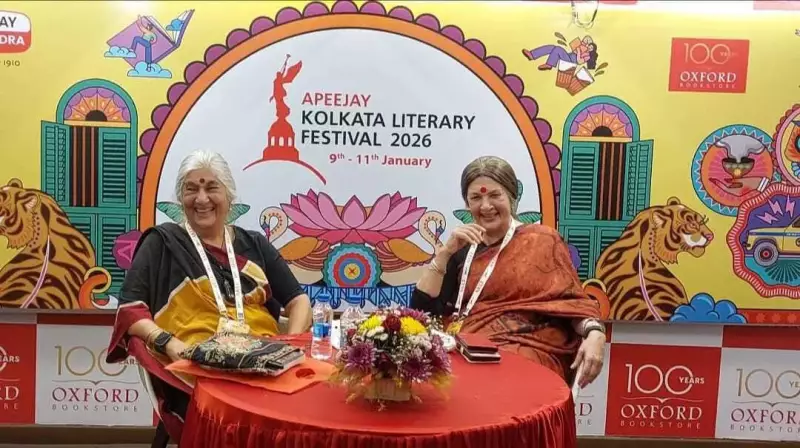
Brinda Karat Reflects on Decade of Political Awakening in Memoir Session
Political leader and activist Brinda Karat recently engaged in a profound conversation with fellow activist Subhashini Ali. The session, titled 'On Being Brinda,' focused on Karat's memoir An Education for Rita: A Memoir, 1975–1985. This dialogue provided a deep, reflective look into a crucial decade that shaped Karat's political identity, influenced women's movements, and impacted India's social consciousness.
A Turbulent Yet Formative Period
The discussion centered on the years between 1975 and 1985. This period was marked by significant turbulence but also served as a formative time for many activists. Karat traced her personal transformation during these years. She moved from her life in Kolkata to immersing herself in trade union work among textile workers in Delhi.
"It was the easiest thing," Karat remarked about that decisive shift. She emphasized how a clear sense of purpose made the transition feel effortless. Karat recalled specific moments that highlighted her commitment. For instance, she described collecting funds on Kolkata's streets while holding a red flag and a donation box.
Her father expressed concern about this public activism. However, Karat noted that his unease stemmed not from her political beliefs but from the high social visibility of her actions. This anecdote illustrated the personal challenges faced by activists during that era.
Preserving Working-Class Brilliance
Through her memoir, Karat aims to preserve what she calls "the human potential and intellectual brilliance of working-class people." She argued that society often dismisses these qualities. Karat pointed to structural inequality as a major factor wasting much of society's talent.
She shared vivid memories of workers who memorized complex legal codes. These individuals displayed profound generosity, patience, and dignity in their daily struggles. Karat's recollections served as a powerful testament to the unrecognized capabilities within marginalized communities.
Feminist Movements of the 1970s
The conversation also explored the feminist movements of the 1970s. This was a time of global resistance that found unique expression in India. The discussion highlighted the dual strands of autonomous feminism and left-aligned feminism that characterized the Indian context.
Subhashini Ali, a veteran activist herself, reflected on the spirit of collective engagement that defined those years. Both speakers examined writing as a form of testimony. They discussed how memoirs record not only political events but also interior emotions like fear, resolve, hope, and endurance.
More Than an Autobiography
The session underscored that An Education for Rita is more than a simple autobiography. It stands as a chronicle of political becoming. The memoir documents how consciousness evolves through solidarity, shared struggle, and personal reflection.
Audience questions toward the end of the session opened a wider meditation on several key themes. These included courage, the role of women in public life, and the feminist imagination. Both Karat and Ali affirmed that feminism, at its core, is neither narrow nor elitist.
They emphasized that true feminism is rooted in class struggle, collective joy, and an unrelenting commitment to justice. The memoir, they suggested, serves as both a record and a reminder. It shows that transformation begins in lived experience and endures through collective memory.
This engaging session offered valuable insights into a pivotal decade in Indian history. It highlighted the ongoing relevance of grassroots activism and feminist solidarity in today's social and political landscape.