

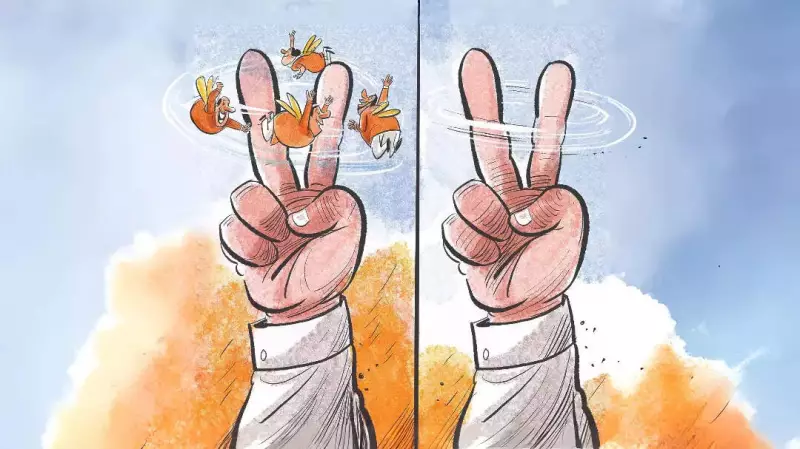
As the calendar flips towards another crucial electoral cycle, India's political landscape is once again being painted in the distinct hues of saffron. The Bharatiya Janata Party (BJP), fresh from its historic third consecutive triumph in the Lok Sabha elections, is now pivoting its formidable machinery towards a series of impending state assembly battles. The period from September to December is set to be a defining phase, testing the party's momentum and organizational strength beyond the national narrative.
The Upcoming Electoral Battlegrounds
The BJP's immediate focus is laser-sharp on three major states: Maharashtra, Haryana, and Jharkhand. Each presents a unique set of challenges and opportunities. In Maharashtra, the party must navigate the complexities of its alliance with the Shiv Sena factions and the Nationalist Congress Party (NCP), aiming to consolidate its position in India's political heartland. Haryana, traditionally a tough contest, will see the BJP defending its turf against a resurgent opposition. Jharkhand, currently under an opposition government, is a prime target for the saffron party to reclaim.
Beyond these, the political winds will also blow through Delhi and Jammu & Kashmir, where the BJP is keen to make significant inroads or solidify its presence. The outcomes in these states are not just about local governance; they are perceived as critical indicators of public sentiment leading up to the next national election cycle, setting the tone for the political discourse in the coming years.

The Modi-Shah Blueprint and Campaign Arsenal
At the helm of this massive electoral exercise remains the indomitable duo of Prime Minister Narendra Modi and Home Minister Amit Shah. Their strategy is expected to be a blend of robust organizational groundwork and high-decibel campaigning centered on national themes. The party is likely to leverage its success in the Lok Sabha polls, projecting a narrative of continuity, stability, and strong leadership.
Key campaign planks will include the government's welfare schemes, national security credentials, and the vision of a 'Viksit Bharat' (Developed India) by 2047. The BJP's extensive network of grassroots workers, coupled with its sophisticated use of technology and data analytics, will be deployed to identify and mobilize voters. However, the party is acutely aware that state elections often revolve around local issues, and a key challenge will be to effectively marry national messaging with regional aspirations.
Internal Dynamics and Leadership Challenges
Despite the Lok Sabha victory, the BJP's performance revealed certain vulnerabilities, particularly in traditional strongholds like Uttar Pradesh. This has sparked internal discussions about leadership and strategy at the state level. The upcoming polls will be a testing ground for new and incumbent Chief Ministers alike. Their ability to deliver on local promises and manage anti-incumbency will be under intense scrutiny.
Furthermore, the party must carefully manage succession planning in states where veteran leaders have held sway for decades. Balancing the old guard with the aspirations of a new generation of leaders is a delicate task. The effectiveness of state unit presidents and their coordination with the central leadership will be a critical factor in converting the 'Modi wave' into concrete seat gains.
The Road Ahead: Opportunities and Obstacles
The BJP enters this 'saffron season' with significant advantages: a popular central leadership, a well-oiled party organization, and substantial financial resources. The morale within the cadre is high following the national victory. However, the path is not without obstacles. Anti-incumbency in states where the BJP is in power, potent opposition alliances, and pressing local issues like inflation, unemployment, and agrarian distress could pose significant hurdles.

The opposition, though fragmented at the national level, is capable of mounting a serious challenge in individual states by forming strategic coalitions. The BJP's response to these alliances and its ability to craft compelling state-specific narratives will determine its success. The results of these elections will ultimately shape the balance of power in the Rajya Sabha and influence the central government's ability to push through key legislative reforms.
In conclusion, the coming months represent a critical juncture for the BJP. It is a season that will demonstrate whether the party's saffron dominance is a pan-Indian phenomenon or if it faces formidable checks at the state level. The strategies deployed, the leaders empowered, and the messages conveyed in this period will not only decide the fate of several state governments but also recalibrate the coordinates for India's future political battles.





