

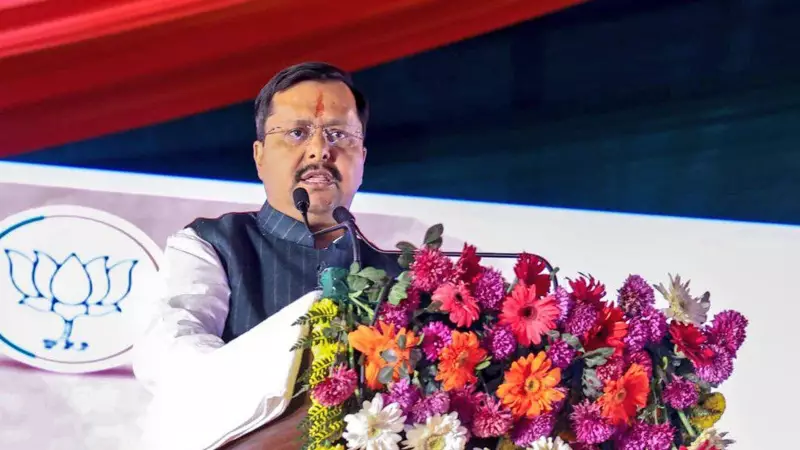
Nitin Nabin Takes Charge as BJP President in Smooth Transition
Nitin Nabin officially assumed the role of Bharatiya Janata Party national president on Tuesday. This move formally concludes J P Nadda's extended tenure. The party has now returned to its longstanding "one person, one post" principle. Nadda's entry into the Narendra Modi Cabinet after the 2024 Lok Sabha elections made this transition inevitable. Nabin's elevation signals the BJP's clear intention to consolidate organizational control under a leader closely aligned with the central leadership.
The party's decision emphasizes the leadership's preference for continuity and decisiveness at the highest level. It reflects a carefully managed transition rather than an open contest.
The BJP Presidential Election Process Explained
The BJP follows a well-established organizational route for selecting its national president. The process begins with a membership drive. Elections then proceed through multiple levels:

- Local committees
- Mandal committees
- District committees
- Regional committees
- State committees
At each level, the elected president nominates their team of office-bearers. The national president election occurs only after organizational elections complete in at least half of the states. This practice has remained consistent for years.
K Laxman, the party's National Returning Officer, recently confirmed this process. He stated that the BJP National President Election process began after the election of 30 State Presidents out of 36 States. This number significantly exceeds the required minimum of 50 percent completion.
A History of Uncontested Leadership Transitions
Nabin's elevation continues a remarkable pattern. Since the BJP's formation in 1980, the party has never witnessed a contest for the national president position. This remains true despite clear provisions for elections in the party constitution.
Every single time, only one candidate has filed nomination papers. Each candidate has been elected unopposed. The BJP maintains a firm commitment to consensus-based leadership transitions.
This approach differs significantly from other major parties. The Congress party, for instance, saw a presidential contest as recently as 2022 between Mallikarjun Kharge and Shashi Tharoor.
The BJP's only brief hint of a possible contest occurred in 2013. Yashwant Sinha obtained nomination papers but ultimately chose not to pursue the challenge. The constitutional provision for a formal electoral contest has never been invoked.
How Electoral Strength Influences Presidential Selection
The extent of influence in selecting the BJP president has historically depended on the party's electoral performance. When the BJP faced electoral weakness, particularly after the 2009 Lok Sabha elections, the RSS played a more pronounced role in determining the party chief.
This dynamic became evident when Union Minister Nitin Gadkari moved from Maharashtra to Delhi to take over party leadership. This transition followed the BJP's reduced tally of 116 seats.
In contrast, when the BJP enjoys electoral dominance and holds power at the Centre, the decision-making process changes significantly. Over the past decade, the Prime Minister and a small group of senior confidants have largely driven these decisions.
Nabin's rise perfectly fits this pattern. It reflects a leadership-driven consensus rather than an organizational contest. The decision emerges from concentrated power centers within the party structure.
The Parliamentary Board's Role in Finalizing Appointments
Nabin's appointment was finalized by the BJP's Parliamentary Board. This body retains significant flexibility in such matters. The Board can meet formally or arrive at decisions through consultations, including telephonic discussions.
In urgent situations, the Board can even appoint a full-time president directly. Such appointments require ratification by the National Council within six months.
The BJP constitution entitles the national president to two consecutive terms of three years each. This provision was introduced in 2012 when the RSS backed a second term for Gadkari. However, the party eventually chose Rajnath Singh, who led the BJP through its 2014 Lok Sabha victory before handing over charge to Amit Shah.

The BJP's Organizational Structure and Membership Requirements
The organizational backbone supporting this process rests on the BJP's membership structure. Any Indian citizen above 18 can become a primary member by paying a prescribed subscription for six years.
To qualify as an active member, individuals must meet specific requirements:
- Complete three years as a primary member
- Pay a non-refundable fee of Rs 100
- Participate in party programmes
- Subscribe to the party's official publications
Active membership is essential for contesting organizational elections beyond the local level.
The BJP's committee structure begins with local committees of at least 25 members. Each committee caters to a population of no more than 5,000. Above these local committees exist mandal, district, regional and state committees.
Cities with populations exceeding five lakh receive district status. Those above 20 lakh may be divided into multiple districts by the state executive.
Core Principles Expected from BJP Members
All BJP members must affirm their commitment to specific principles. These include Deen Dayal Upadhyaya's philosophy of integral humanism, nationalism, and democracy. Members also embrace a Gandhian approach to socio-economic issues, positive secularism, and value-based politics.
The membership form requires allegiance to the idea of a secular state. It emphasizes a nation not defined by religion. The form also commits members to non-discrimination based on caste, gender, or faith.
These principles form the ideological foundation that guides the party's selection processes and organizational decisions.





