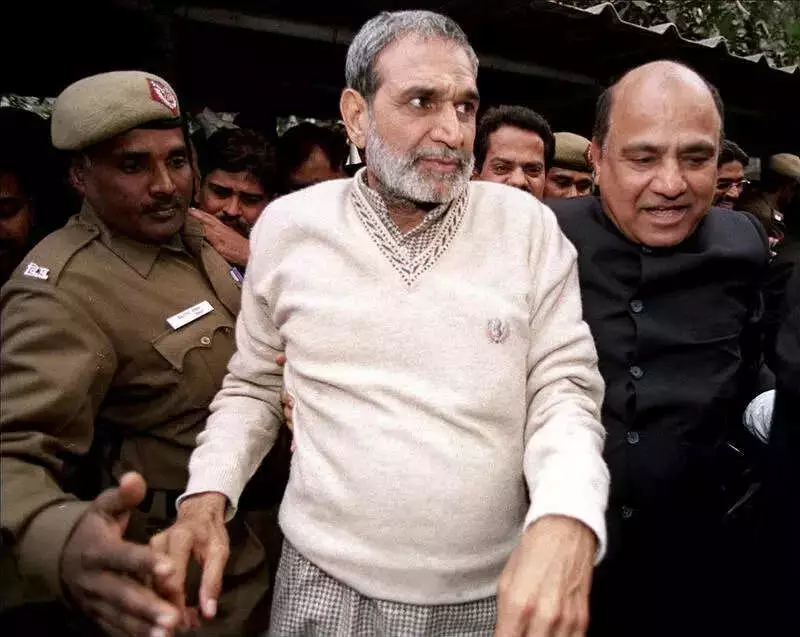
In a rare display of unity on a sensitive historical issue, political adversaries the Bharatiya Janata Party (BJP) and the Shiromani Akali Dal (SAD)-backed Shiromani Gurdwara Parbandhak Committee (SGPC) have voiced strong, identical criticism following the acquittal of former Congress Member of Parliament Sajjan Kumar. The verdict was delivered on Thursday by Delhi's Rouse Avenue Court in a case concerning alleged instigation of violence during the tragic 1984 anti-Sikh riots.
Court's Ruling and Immediate Reactions
The court acquitted Sajjan Kumar due to a lack of sufficient evidence in a specific case related to the riots that occurred in the Janakpuri and Vikaspuri areas of Delhi. This legal decision has sparked widespread condemnation from key Sikh religious and political bodies, highlighting the deep wounds that remain unhealed nearly four decades later.
Political Voices Demand Justice
Punjab BJP spokesperson Sarchand Singh and SGPC president Harjinder Singh Dhami both described the verdict as a severe injustice to the families of the victims, who have endured a 41-year-long wait for closure and accountability. Singh explicitly called upon the central government, central investigative agencies, and the Delhi government to immediately file Special Leave Petitions (SLPs) in higher courts against all individuals acquitted in cases connected to the 1984 anti-Sikh riots. He emphasized the need to pursue these cases with utmost seriousness to ensure justice is not further delayed.

Harjinder Singh Dhami echoed these sentiments, stating that the acquittal has inflicted profound mental anguish not only on the victims' families but also on the entire Sikh community. He stressed that such legal outcomes undermine faith in the judicial process and reopen historical traumas that require sensitive handling.
Akal Takht Questions Verdict's Implications
Adding to the chorus of disapproval, the Akal Takht, the highest temporal seat of Sikhism, has also raised serious questions about the verdict. Officiating Jathedar Giani Kuldip Singh Gargaj challenged the government and courts to clarify who bears responsibility for the massacre of Sikhs in Delhi during those dark days. He pointed out that while Sajjan Kumar is currently serving sentences in two other Sikh massacre cases and will remain incarcerated, his acquittal in this particular case raises alarming questions about the sincerity and seriousness of government investigative agencies.
Giani Gargaj described the acquittal as tantamount to rubbing salt into the wounds of the Sikh community, exacerbating their pain rather than offering solace. He further noted that the official death toll from the November 1984 Sikh massacre stands at 2,733, but the actual number of killings was significantly higher. In light of this, he urged the government to fix accountability in every single case, both in Delhi and other states, to genuinely assuage Sikh sentiments and foster reconciliation.
Broader Context and Community Impact
The unified response from the BJP and SGPC, despite their frequent disagreements on other political matters, underscores the profound and lasting impact of the 1984 anti-Sikh riots on India's social and political fabric. This case highlights ongoing challenges in delivering justice for historical atrocities, with victims' families continuing to seek closure and accountability. The reactions from political and religious leaders reflect a broader demand for thorough investigations and transparent legal processes to address grievances that have persisted for over four decades.