BJP Calls in Reinforcements from Hindi Heartland for Bengal Campaign
As West Bengal prepares for crucial Assembly elections, the Bharatiya Janata Party is taking significant steps to strengthen its organizational structure. The party has deployed a team of experienced leaders from other states to manage campaign preparations and resolve internal differences within its Bengal unit.
Who Are These 'Pravasi Sadasyas'?
The BJP has brought in what it calls "pravasi sadasyas" or migrant members from Hindi-speaking states. These are seasoned politicians with substantial electoral experience in their home regions. They now find themselves in West Bengal, tasked with a critical mission ahead of the state polls.
The team includes several prominent figures:

- J P S Rathore, a minister from Uttar Pradesh
- Dhan Singh Rawat, a minister from Uttarakhand
- Kailash Choudhary, Rajasthan BJP Kisan Morcha president
- Suresh Rana, former Uttar Pradesh minister
- Sanjay Bhatia, Haryana BJP general secretary
- C T Ravi, former Karnataka minister
These leaders report directly to Sunil Bansal, the BJP national general secretary overseeing West Bengal operations.
Specific Responsibilities and Assignments
Each leader has received specific geographical responsibilities within West Bengal. J P S Rathore, who managed Uttar Pradesh Assembly elections in 2017 and 2022, now oversees 35 Assembly seats. His areas include Contai and Tamluk in Purba Medinipur district, plus Ghatal and Medinipur city in Paschim Medinipur district.
Suresh Rana from Shamli district in western UP handles 28 constituencies, including Barrackpore, Barasat, and Bongaon in North 24 Parganas district. He recently visited Sandeshkhali, an area that witnessed significant political controversy in 2024.
Sanjay Bhatia focuses on Hooghly district, covering Arambagh subdivision, Sreerampore, and Howrah town. Meanwhile, Kailash Choudhary supervises party preparations in Cooch Behar, Jalpaiguri, Siliguri, and other North Bengal districts.
The Primary Mission: Conflict Resolution
A senior pravasi leader explained their main objective. "We are looking after political and organizational management, given our experience in our own states," he said. "The larger focus, however, is on resolving the differences between local party workers."
These leaders believe their outsider status provides an advantage. "Since we are not local, we are not biased towards any individual party leader of the state," another pravasi member noted. "They can freely speak to us and discuss their issues and problems."
The approach involves bringing together conflicting leaders, convincing them to end disputes, and focusing on the common goal of winning elections. Complex issues get noted for discussion with superiors, while simpler matters get resolved during meetings.
High-Level Direction from Delhi
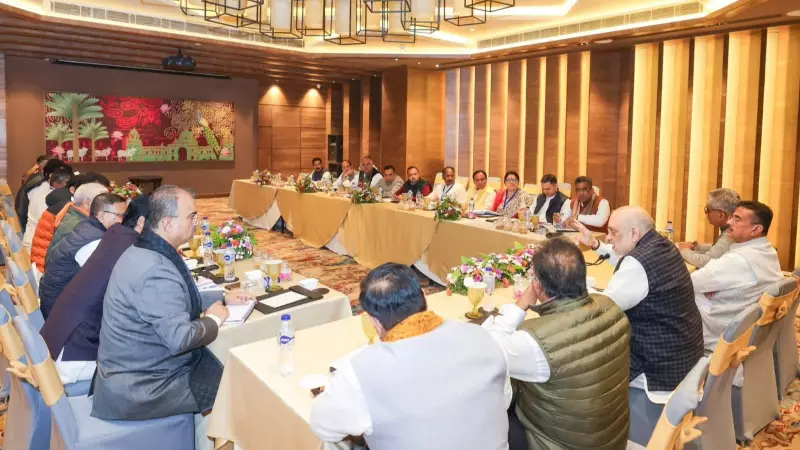
Union Home Minister Amit Shah recently held a meeting with Bengal BJP leaders, directing them to "keep aside all differences" ahead of the Assembly polls. Party insiders described this meeting as an attempt to bridge gaps between old and new state leadership.
The deployment of Hindi-speaking leaders presents both opportunities and challenges. While they bring fresh perspectives and conflict resolution skills, the Trinamool Congress has previously painted the BJP as a party of outsiders. How the BJP counters this narrative remains a crucial question.
Electoral Mathematics and Strategy
Party calculations suggest the BJP needs to increase its vote share by approximately 5% to secure victory. In the 2021 elections, the BJP received 37.97% of votes compared to the Trinamool Congress's 48.02%. A 5% swing from TMC to BJP would bring both parties to nearly equal footing.
The BJP believes several factors work in its favor:
- The party is organizationally stronger in 2026 than in 2021
- Anti-incumbency sentiment against the TMC government has grown
- Targeted focus on low-margin constituencies
These pravasi leaders concentrate particularly on constituencies with narrow victory margins. One example is Dinhata in Cooch Behar, which the BJP won by just 57 votes in 2021.

Ground-Level Implementation
Since their deployment over the past month, these leaders have conducted numerous meetings with party office-bearers at mandal, Assembly, and district levels. They work alongside local leaders who assist with translation during interactions with grassroots workers and the general public.
The leaders also manage organizational campaigns and programs, attempting to strengthen the party's presence in polling booths where it has traditionally been weak. Their experience from managing elections in states like Uttar Pradesh, Haryana, Delhi, Tripura, and Madhya Pradesh informs their approach in West Bengal.
As election preparations intensify, these Hindi heartland leaders continue their peacekeeping mission, hoping to create a united front that can challenge the ruling Trinamool Congress effectively.