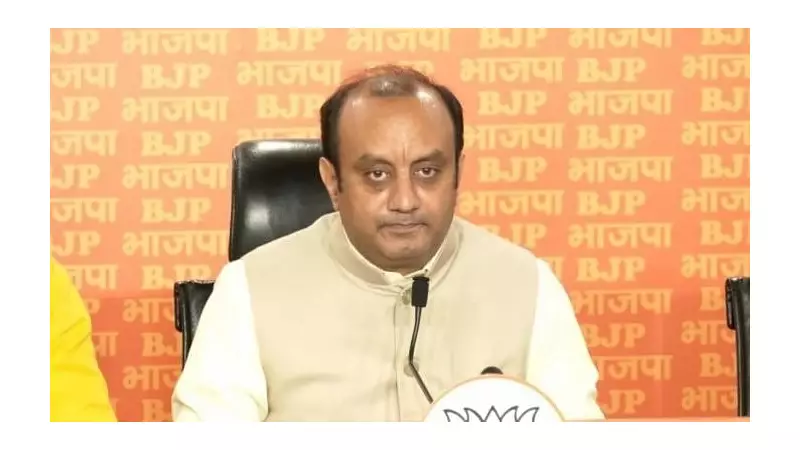
Bharatiya Janata Party (BJP) national spokesperson Sudhanshu Trivedi has launched a sharp critique against India's first Prime Minister, Jawaharlal Nehru. Trivedi alleged that Nehru harbored a deep-seated aversion to the reconstruction of the iconic Somnath Temple in Gujarat while simultaneously glorifying Muslim invaders who attacked it. He framed this as a historical example of "blind appeasement" politics.
The Core Allegations Against Nehru
Addressing the media, Sudhanshu Trivedi presented a specific historical narrative. He claimed that Jawaharlal Nehru was "completely opposed" to the grand ceremony planned for the temple's reconstruction in the 1950s. According to Trivedi, Nehru even tried to dissuade then President Rajendra Prasad from attending the consecration event, viewing such participation as contrary to the secular principles of the state.
Trivedi contrasted this stance with what he described as Nehru's admiration for historical figures like Mahmud of Ghazni, who looted and destroyed the original Somnath Temple in 1026 CE. The BJP leader asserted that Nehru, in his book The Discovery of India, portrayed such invaders in a glorified manner, referring to them as "great" for bringing new cultural and religious influences to the subcontinent. This duality, Trivedi argued, exposes a political mindset focused on minority appeasement at the cost of Hindu sentiments.

Linking History to Contemporary Politics
The BJP spokesperson did not stop at historical analysis. He directly connected Nehru's alleged actions to the current political discourse, particularly targeting the opposition Indian National Congress. Trivedi accused the Congress party of inheriting and perpetuating this philosophy of "blind appeasement." He suggested that this approach has been a consistent electoral strategy, implying it prioritizes vote-bank politics over national integration and equal treatment of all communities.
This criticism comes amidst ongoing political battles where the BJP positions itself as a champion of Hindu heritage and cultural pride, often juxtaposing its actions with those of previous Congress-led governments. The narrative around the Somnath Temple's reconstruction is a potent symbol in this ideological contest, representing resilience and revival.
Context and Political Repercussions
The remarks are likely to fuel further debate about historical interpretation and secularism in India. The Somnath Temple's restoration, led by leaders like Sardar Vallabhbhai Patel and K.M. Munshi, was a major post-independence project symbolizing cultural resurgence. Nehru's reported reservations about state involvement in a religious event have long been a point of contention.
By reviving this issue, the BJP aims to underscore a fundamental difference in ideology. The party frames its own initiatives, such as the recent Ram Temple consecration in Ayodhya, as corrections of historical wrongs and rejections of what it calls "appeasement." Trivedi's comments reinforce this narrative, painting the Congress's foundational leadership as being out of sync with Hindu cultural aspirations.
Political analysts expect the Congress and other opposition parties to reject these allegations, defending Nehru's legacy of secularism and arguing that the BJP selectively interprets history to serve its majoritarian politics. This exchange ensures that historical symbolism will remain a central battlefield in the run-up to future elections.