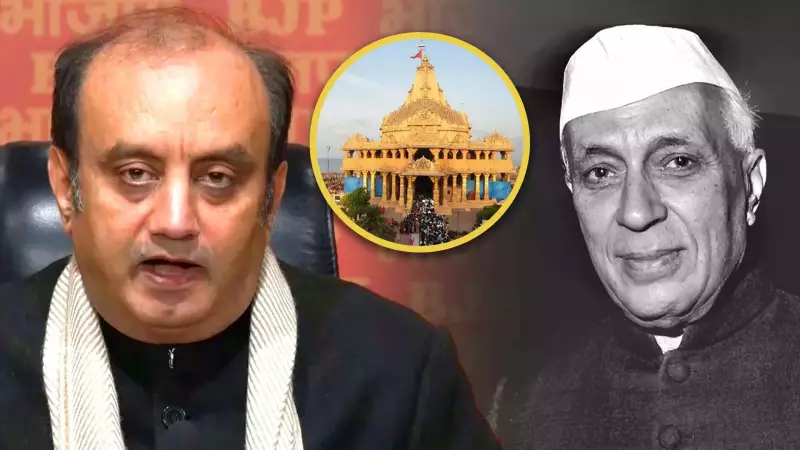
Bharatiya Janata Party (BJP) Member of Parliament Sudhanshu Trivedi has launched a sharp critique against India's first Prime Minister, Jawaharlal Nehru, framing the current political criticism as a deep-rooted ideological battle rather than a personal attack. The remarks were made on January 7, 2026, in Delhi.
Questioning Nehru's Ideological Foundations
Trivedi asserted that Nehru represented a specific school of thought which, in his view, actively weakened the nation's cultural and civilisational bedrock. He stressed that the BJP's ongoing criticism stems from these fundamental historical and ideological disagreements, not from personal animosity towards the late leader.
To substantiate his claims, the BJP MP referenced historical letters and official publications from the Congress era. He specifically raised doubts about Nehru's rejection of the narrative concerning the gates of the Somnath temple. Furthermore, he cited a government book from the Congress period on Maharaja Ranjit Singh to question the historical perspective promoted under Nehru's influence.

Allegations of Ideological Proximity
Trivedi made a significant allegation, claiming there was an ideological proximity between the Nehru government and the Muslim League, as well as with Maoist thought. He pointed to Nehru's relationship with Pakistan's first Prime Minister, Liaquat Ali Khan, suggesting it was indicative of this alignment.
The MP argued that this particular mindset, which he perceives as hostile to Sanatan Hindu traditions, did not end with Nehru's era. He claimed it continues to influence and shape political discourse in India today, presenting a persistent challenge to the cultural values his party seeks to uphold.
The Enduring Political Debate
This critique from a senior BJP figure reignites the long-standing debate over the interpretation of India's modern history and the legacy of its founding leaders. Trivedi's comments position the current political divide as a direct continuation of an old ideological conflict over the nation's identity.
By invoking specific historical incidents like the Somnath temple issue and relationships with figures like Liaquat Ali Khan, the BJP MP aims to provide a factual basis for what the party often describes as a civilisational correction in contemporary Indian politics. The speech underscores the BJP's continued strategy of contrasting its worldview with that of the Congress party's foundational ideology.