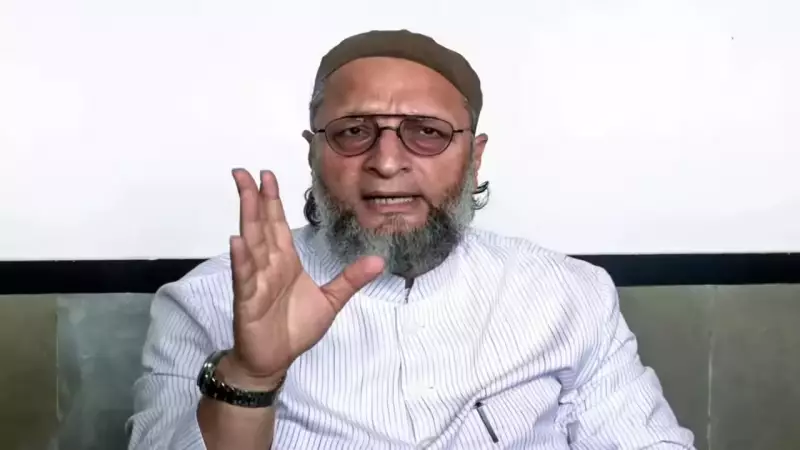
A political firestorm erupted on Saturday after the BJP-led National Democratic Alliance (NDA) launched a fierce attack on All India Majlis-e-Ittehadul Muslimeen (AIMIM) chief Asaduddin Owaisi. The controversy was triggered by Owaisi's recent statement that a woman wearing a hijab could one day become the Prime Minister of India.
Union Minister's Sharp Rebuke
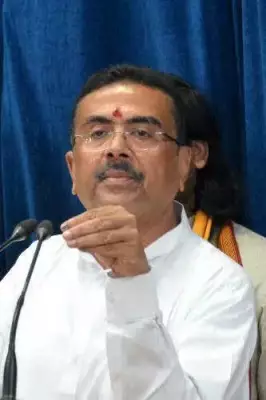
Union Minister Giriraj Singh led the charge, accusing the Hyderabad MP of promoting divisive ideologies. In a strong condemnation, Singh alleged that Owaisi harbors ambitions of 'Ghazwa-e-Hind', a term often interpreted as the conquest of India. The minister linked the remark to historical policies, vowing to prevent a repeat of past scenarios. "Whatever happened in the past because of Congress's appeasement policy will not be allowed again. There will be no second Pakistan," Singh asserted, framing the issue as a matter of national integrity.
Assam CM's Civilisational Assertion
Adding a nuanced yet firm perspective, Assam Chief Minister Himanta Biswa Sarma addressed the constitutional and cultural dimensions of the debate. While acknowledging the legal framework, Sarma presented a civilisational viewpoint. "Constitutionally, there is no bar on anyone becoming the PM. But India is a Hindu nation and we strongly believe the PM will always be a Hindu," the Assam CM stated. This comment highlighted the tension between constitutional provisions guaranteeing equality and the majoritarian cultural sentiment often emphasized by the ruling dispensation.

The Core of the Controversy
The sharp exchange brings to the forefront several enduring debates in Indian politics:
- The intersection of religious identity and political representation.
- The interpretation of secularism and constitutional rights versus majoritarian beliefs.
- The political rhetoric around minority appeasement and national identity.
Owaisi's original remark, seen by his supporters as an affirmation of constitutional equality and the potential for inclusive leadership, was interpreted by NDA leaders as a provocative statement challenging the prevailing socio-political order. The incident, reported by veteran journalist Jai Narain Pandey, underscores the highly charged atmosphere where statements about religion and power are instantly weaponized for political mobilization.
The debate is likely to resonate further, especially in the context of ongoing discussions about secularism, representation, and the nature of Indian democracy. The NDA's coordinated response signals the political significance attached to countering narratives that challenge the dominant cultural-political paradigm.