BJP Leaders Stage Protest at Rahul Gandhi's Residence Over Failed Women's Reservation Bill
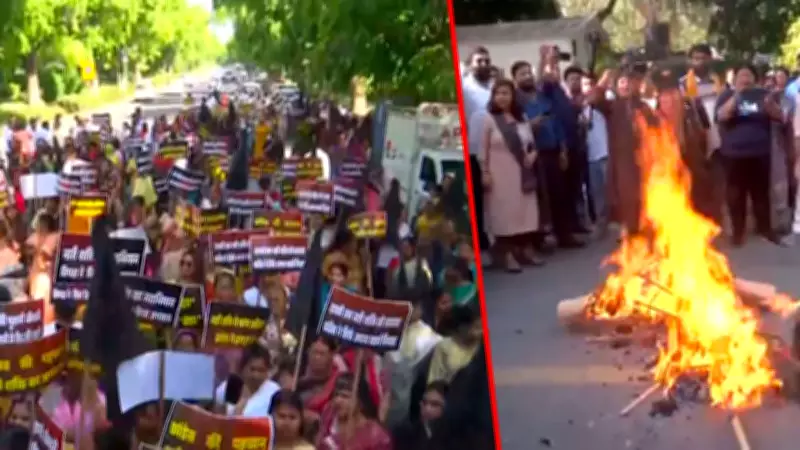
Tensions flared in the national capital as Bharatiya Janata Party (BJP) leaders, including prominent figures Hema Malini and Bansuri Swaraj, organized a protest march towards the residence of Congress leader Rahul Gandhi. This demonstration was a direct response to the failure of the 131st Constitution Amendment Bill, which aimed to establish women's reservation in the Lok Sabha. The political confrontation has escalated into a heated exchange between the BJP and the Congress-led INDIA bloc, with accusations flying over the intent behind the legislative setback.
Protest Details and Political Accusations
The protest, which saw effigies being burnt and slogans raised against the Congress party, was led by BJP MPs who accused the opposition of obstructing a historic step towards women's political empowerment. Hema Malini, a veteran actress and MP, and Bansuri Swaraj, a rising political figure, were at the forefront, mobilizing supporters to voice their discontent. During the event, Delhi Police detained two BJP MPs, adding to the drama and highlighting the intensity of the situation.
The Congress party has issued a clarification, stating that it does not oppose the principle of women's reservation. However, it objected to specific provisions in the bill that were linked to delimitation, arguing that these clauses could undermine the effectiveness of the reservation. This nuanced stance has not quelled the BJP's criticism, with leaders alleging that the Congress is using technicalities to block progress on gender equality in politics.

Broader Political Conflict and Implications
The issue has now intensified into a broader political conflict, with both sides exchanging sharp accusations. The BJP claims that the Congress is deliberately stalling women's empowerment for political gain, while the Congress counters that the BJP's bill was flawed and needed revision. This standoff reflects deeper ideological divides and strategic maneuvering ahead of upcoming elections, making it a focal point in national politics.
The protest outside Rahul Gandhi's residence symbolizes the growing polarization over women's representation in Indian democracy. As the debate rages on, it raises critical questions about the future of gender quotas and the political will to implement them. Observers note that such confrontations could influence public opinion and shape legislative agendas in the coming months.In summary, the BJP's protest led by Hema Malini and Bansuri Swaraj has thrust the women's reservation bill back into the spotlight, igniting a fierce political battle. With detentions and heated rhetoric, the episode underscores the challenges in achieving consensus on progressive reforms in India's vibrant yet contentious political landscape.