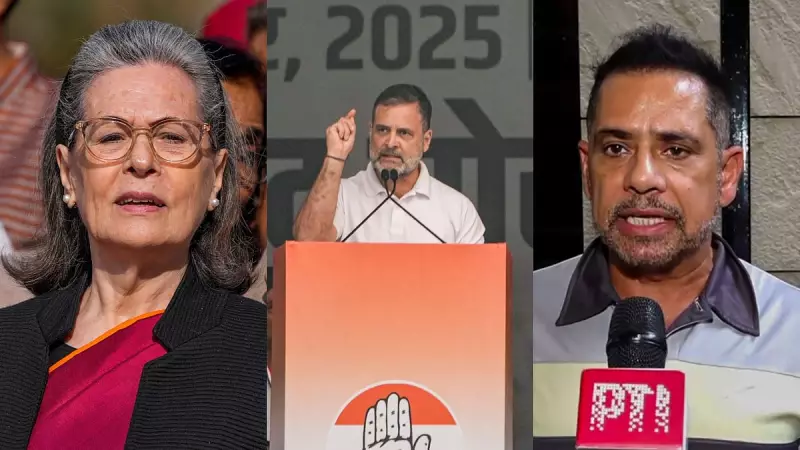
In a sharp political attack, the Bharatiya Janata Party (BJP) has alleged that the Congress party's primary motivation for protesting against a proposed rural employment bill is the personal interests of its top leadership. The BJP's national spokesperson, Gaurav Bhatia, stated that the Congress's only concern is the progress of Sonia Gandhi, Rahul Gandhi, and Robert Vadra.
BJP's Allegations and Modi's Vision
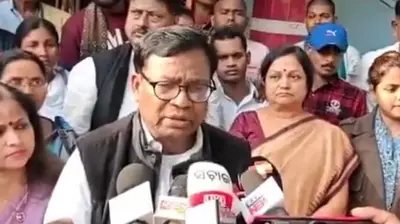
Gaurav Bhatia made these remarks while addressing the ongoing parliamentary disruptions. He dismissed the Congress's objections to the legislation, framing them as politically motivated rather than policy-driven. Bhatia emphasized that regardless of the obstructions created by the opposition, the nation's development trajectory under Prime Minister Narendra Modi remains unwavering.
Prime Minister Narendra Modi has taken a solemn vow to transform India into a developed nation before the year 2047, Bhatia declared. He expressed confidence that this ambitious goal would be achieved with the steadfast support of the Indian people, implying that political hurdles from the Congress would not derail the national mission.
The Core of the Political Confrontation
The controversy centers on a bill related to rural employment, a critical issue for India's vast agrarian and labor sectors. The Congress party has been staging protests, arguing that the proposed legislation undermines social security and job guarantees for workers. However, the BJP's counter-narrative, as presented by Bhatia, seeks to redirect the debate towards the alleged self-interest of the Gandhi family.
By invoking the names of Sonia Gandhi, Rahul Gandhi, and Robert Vadra, the BJP aims to personalize and intensify the political clash. This strategy is often employed to galvanize the party's base and shift public discourse away from technical policy critiques towards broader allegations of dynastic politics and privilege.
The Road to 2047: A Developed India
Amidst the heated exchange, the BJP spokesperson reiterated the government's long-term commitment. The vision for a developed India by 2047—the centenary year of the country's independence—is a central pillar of the Modi administration's rhetoric and policy planning. Bhatia's statement serves to reinforce this message, positioning the current government as the sole architect of the nation's future prosperity, while painting the opposition as an impediment to progress.
The political standoff, as reported on 17 December 2025, highlights the deep ideological and personal fractures within the Indian political landscape. As both sides dig in, the passage of the rural employment bill and the broader narrative of national development remain contentious issues playing out in the public arena.