Bihar's Democratic Milestone: Record Voter Turnout Versus Persistent Gender Disparity
The recently concluded Bihar Assembly elections have been hailed as a significant democratic achievement, marked by an unprecedented overall voter participation rate of 66.91%. This figure represents the highest turnout recorded in the state since the historic elections of 1951, signaling what appears to be a quiet yet profound transformation in electoral engagement patterns across Bihar.
Women Lead Electoral Surge But Face Political Barriers
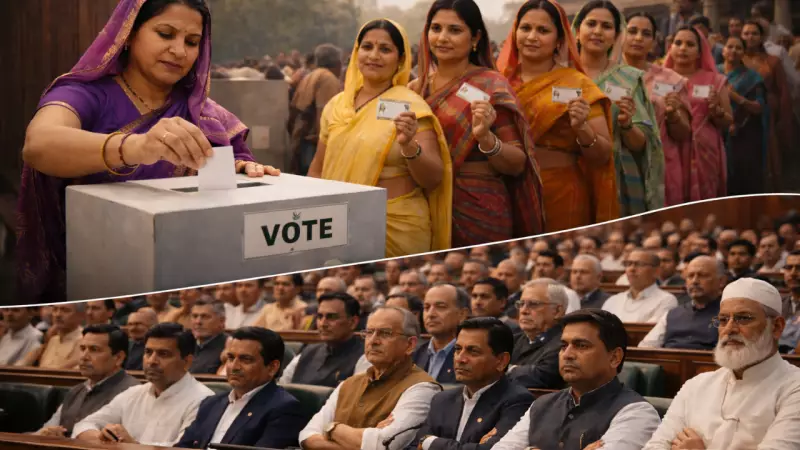
Perhaps the most remarkable aspect of this electoral exercise was the extraordinary participation of women voters, who turned out in numbers that far surpassed their male counterparts. Female voter turnout reached an impressive 71.6%, significantly exceeding the male turnout rate of 62.8%. On the surface, these statistics suggest a clear victory for women's political participation and agency in the democratic process.
However, a closer examination of the actual distribution of political power in Bihar reveals a more complex and troubling reality. Despite women driving this electoral surge, their representation in the legislative assembly remains severely limited. Of the 243 elected Members of the Legislative Assembly, only 29 are women, constituting just under 12% of the total membership.

The Representation Gap: From Ballot Box to Legislative Halls
This disparity reflects a longstanding pattern in Indian politics: women demonstrate decisive participation at the ballot box but encounter significant obstacles when attempting to cross the gatekeeping barriers of party nominations and electoral success. The executive branch presents an even starker picture, with the Nitish Kumar cabinet featuring only three women ministers out of 27, amounting to a mere 11% representation.
In essence, while women voters powered what has been described as a historic election, men continue to dominate the very institutions that shape policy and governance in Bihar. This imbalance begins at the candidate selection stage, where structural exclusion ensures that even record-breaking voter turnout cannot substantially alter electoral outcomes.
Candidate Landscape and Structural Challenges
According to data from the Association for Democratic Reforms, only 254 women contested the 2025 Bihar elections, representing approximately 10% of all candidates. This figure stands in stark contrast to the 2,344 male candidates who participated in the electoral process. Notably, this percentage has shown minimal change from the 2020 elections, where women similarly comprised just 10% of candidates.
The representation of the third gender remains virtually nonexistent, with only two candidates contesting the elections. Furthermore, the quality of political choices available to voters raises additional concerns, with ninety-four candidates declaring cases related to crimes against women, including five individuals accused of rape.
National Context: The Long Road to Political Parity
The parliamentary numbers reveal the broader scale of democratic under-representation that women continue to face across India. While women constitute nearly half of the country's population, they occupy only about 14% of seats in the Lok Sabha. This journey toward political equality has been characterized by slow and incremental change.
In 1957, women made up just 3% of candidates contesting general elections. By 2024, this figure had risen to 10%, demonstrating modest progress over nearly seven decades. Electoral success has improved gradually, with the number of women in the Lok Sabha increasing from 22 in the First Lok Sabha and 27 in the Second, to 78 in the 17th Lok Sabha and 75 in the 18th.
The Nari Shakti Vandan Adhiniyam: Promise and Deferral
In 2023, India took a significant legislative step toward addressing gender imbalance in politics with the passage of the Constitution (One Hundred and Sixth Amendment) Act, popularly known as the Nari Shakti Vandan Adhiniyam. This landmark legislation mandates the rotational reservation of one-third of seats for women in the Lok Sabha and all State Legislative Assemblies, including that of the National Capital Territory of Delhi.

Framed as a historic corrective to decades of underrepresentation, the amendment seeks to institutionalize women's presence in legislative decision-making across the federal structure. However, the reform's impact remains deferred, as the legislation is scheduled to come into force only after the publication of the next national census, the timing of which has yet to be announced.
Grassroots Success Versus National Marginalization
India has achieved remarkable success at the grassroots level, with approximately 14.5 lakh elected women representatives in Panchayati Raj Institutions, forming nearly 46% of all local representatives. This achievement remains unmatched globally, with twenty-one states exceeding the constitutional minimum of 33% reservation by allocating 50% of PRI seats for women.
Yet this impressive grassroots success has not translated upward to state and national legislatures, creating a paradox at the heart of Indian democracy: women lead locally but remain marginal nationally. This disconnect highlights the structural barriers that continue to impede women's political advancement beyond local governance.
Global Perspective: Persistent Gender Gaps in Political Leadership
The global landscape reveals similar patterns of gender disparity in political representation. According to the Women in Politics: 2025 map released by the Inter-Parliamentary Union and UN Women, women serve as heads of state or government in just 25 countries worldwide. In national legislatures, women account for 27.2% of MPs globally, representing improvement over previous decades but still far from parity.
The imbalance becomes even more pronounced within executive branches, where fewer than one in four cabinet ministers globally are women, with women holding only 22.9% of such positions. Furthermore, the distribution of power within cabinets reveals structural inequities, with women more likely to be assigned portfolios related to human rights and social protection, while men overwhelmingly control ministries shaping national security and economic direction.
Regional Disparities and Future Prospects
Recent global assessments suggest that progress has not only stalled but slightly reversed in some areas. The Global Gender Gap Report 2025 ranks India 131st, with an overall gender parity score of 64.4%, representing a drop of three places from the previous year. Political empowerment remains a key area of concern, with female representation in Parliament declining from 14.7% to 13.8% in 2025.
Regional disparities remain stark, with Europe and the Americas showing higher levels of women's political representation, while large parts of Asia, Central Asia, and the Pacific continue to record very low participation by women in executive leadership. As Professor Zoya Hasan of Jawaharlal Nehru University noted, increased female representation in politics in Europe and the United States has been facilitated by enhanced representation in decision-making roles within political parties.
Against this backdrop, the women's reservation law represents both a long-awaited promise and a test of political will, with its eventual implementation likely to shape India's gender parity trajectory in the years ahead. The journey toward meaningful political representation for women continues, both in Bihar and across the nation, as democratic institutions grapple with the challenge of translating electoral participation into genuine political power.