Bihar's Historic Leap: Six Women Poised to Drive Change as First Female Bus Drivers
This Republic Day, a groundbreaking moment unfolds in Bihar as six women from the state are set to drive into the annals of history. These trailblazers, hailing from the marginalized Musahar community, will become the first women bus drivers for the Bihar State Road Transport Corporation (BSRTC). Their journey culminates in a prestigious feature at the Republic Day parade in Patna, symbolizing a significant stride towards gender equality and social empowerment in the region.
Meet the Pioneers: Stories of Resilience and Determination
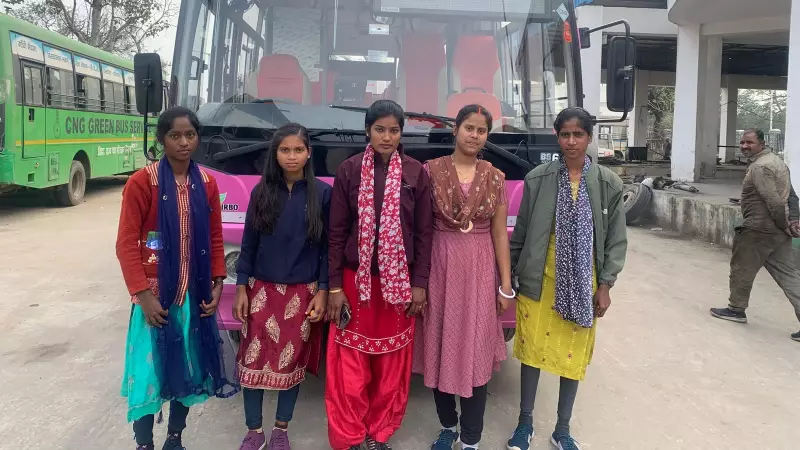
The six women—Anita Kumari (22), Baby Kumari (22), Gayatri Kumari (22), Aarti Kumari (21), Saraswati Kumari (21), and Ragini Kumari (21)—are all from the Musahar community, one of Bihar's most disadvantaged Dalit groups. Their paths to this historic role are marked by personal struggles and unwavering support from social workers and their families.
Anita Kumari, at just 22, demonstrates remarkable skill as she maneuvers a bubblegum-pink bus through the Parivahan Parisar in Patna. "Slightly to the left," she instructs while adjusting the mirror, showcasing the precision honed during rehearsals for the Republic Day parade. Similarly, Baby Kumari, standing under five feet tall, defies stereotypes with her confident driving. "I can drive vehicles like trucks—something people twice my height wouldn't even dare to think of," she asserts, reflecting the newfound confidence instilled by their training.

Training and Empowerment: A Structured Pathway to Success
All six women obtained their Light Motor Vehicle (LMV) licences in 2023 and Heavy Motor Vehicle (HMV) licences in 2024. They underwent a comprehensive two-week residential training programme at the Institute of Driving and Traffic Research (IDTR) in Aurangabad, with additional support in Patna. This initiative, part of the Mukhyamantri Nari Shakti Yojana, aims to skill women from low-income families.
The training programme includes:
- Heavy vehicle handling using simulators and real buses.
- Technical instruction on engine operation, maintenance, and basic repairs.
- Soft-skill modules focused on road safety, confidence building, and leadership.
BSRTC provides accommodation and meals during training, with successful candidates appointed on a contractual basis to operate the Pink Buses. Currently, around 100 Pink Buses operate across Bihar, catering exclusively to women passengers, but until now, they were driven by men.
Overcoming Barriers: Community Support and Family Backing
The women credit Sudha Varghese, a former nun and social worker, for guiding them through the application process. "Sudha Didi helped us get our licences and encouraged us to enrol for the training programme," Anita shares. Varghese's NGO, Nari Gunjan, has long worked with the Musahar community, sensitizing families to prioritize career-building over early marriage.
For Saraswati Kumari, married last May, gaining her in-laws' approval was a hurdle. "They were worried about what society would say," she explains, but with Varghese's intervention, her husband now proudly supports her ambition. Aarti Kumari, with a degree in Geography, highlights her family's unwavering support, while Gayatri Kumari, a BSc Psychology graduate, notes mixed societal reactions, including taunts about her labourer background.
Economic and Social Impact: A New Dawn for Marginalized Women
Baby Kumari, the first graduate in her family, emphasizes the dual benefits of the programme: "Money matters. It will help me support my family and myself. But this training gave me something bigger—confidence." Her story echoes that of her peers, all from households reliant on daily wage labour, now poised to break the cycle of poverty.
As these six women prepare to drive in the Republic Day parade, they represent not just a milestone for BSRTC but a beacon of hope for countless others. Aarti Kumari captures the sentiment perfectly: "Coming from our background, we never imagined we would stand before the Governor. This time, people will come to watch us." Their journey underscores the transformative power of skill development and community support in fostering inclusive growth in Bihar.