Bhopal Gas Tragedy Memorial Plan Faces Toxic Waste Challenge
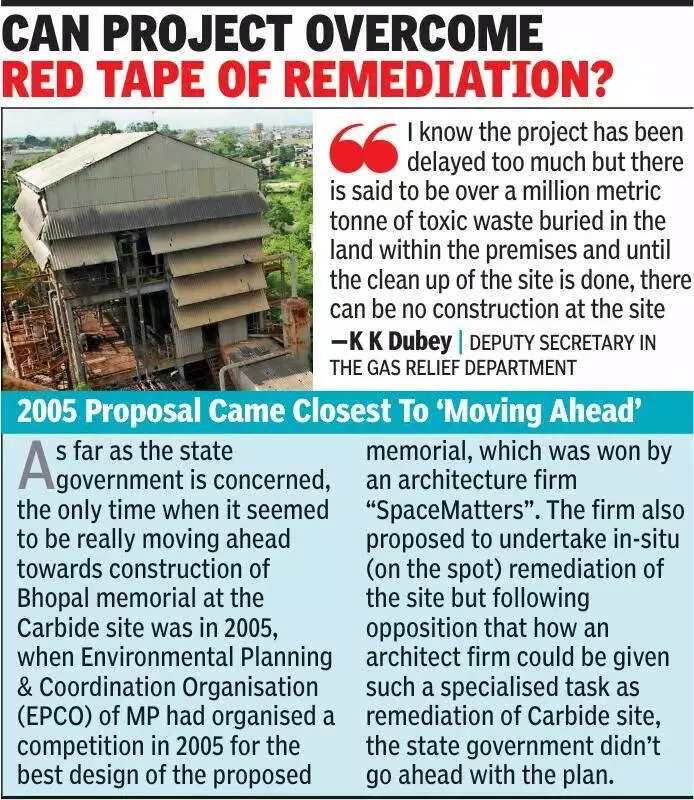
The Madhya Pradesh government recently announced plans to develop the 87-acre deserted Union Carbide factory premises in Bhopal. This announcement has brought renewed attention to the long-pending proposal for constructing a memorial dedicated to the victims of the Bhopal gas tragedy at the site. However, a massive obstacle remains. Approximately 1.2 million tonnes of toxic waste still contaminates the land, casting a shadow over the entire project.
Decades of Delay and Unresolved Issues
The idea for a memorial was first proposed in the 1990s by then Chief Minister Digvijaya Singh. Since that time, the plan has largely remained on paper. Translating the concept into a physical reality faces significant glitches. The most critical issue is the remediation of the polluted factory site. Activists point out that excitement about the memorial surfaces periodically but quickly fades when confronted with the daunting task of cleaning up the toxic waste.
K K Dubey, Deputy Secretary in the Gas Relief Department, commented on the situation. He stated it is too early to confirm anything regarding the memorial's construction. Dubey acknowledged the long delays and highlighted the core problem. Over a million metric tonnes of toxic waste are buried within the premises. Construction cannot begin until a thorough cleanup occurs. He mentioned a 2010 study by NEERI, IITR, and NGRI that confirmed the presence of about 1.2 million tonnes of waste. The matter currently rests with the High Court.

Dubey added that 337 metric tonnes of packaged waste collected from above ground have been incinerated at the Peethampur facility. Future actions now depend on further directions from the High Court. Regarding the memorial's design, he indicated it would occupy 15-20 acres of the 87-acre plot. A broader development plan for the entire premises is necessary, which is likely what the Chief Minister referenced.
Activists and Survivors Voice Concerns
Rachna Dhingra, co-convener of the Bhopal Group for Information and Action (BGIA), expressed skepticism. She noted that every time a Chief Minister visits the Carbide site, media questions prompt promises about the memorial. These promises generate temporary excitement. The fundamental fact, she stressed, is that no construction can happen without first remediating the factory site.
Dhingra also drew parallels with memorials in Hiroshima and Nagasaki. She emphasized that true memorialization requires people's participation. She questioned whether the government would admit to its mistakes and the perceived betrayal of gas victims over the last forty years, as the Japanese government did regarding World War II.
NGOs working with gas survivors report that the victims' immediate priorities are practical needs. When asked about visualizing the tragedy, survivors typically speak of medical care, clean drinking water, and employment. A memorial is not their first concern.
Political Support and Escalating Costs
Former Gas Relief Minister and local MLA Vishwas Sarang welcomed the Chief Minister's initiative. He claimed a broad plan for the memorial is ready. During his tenure as minister, he secured sanction for Rs 100-150 crore for the project.
The project's funding history reveals significant cost escalations and delays over the years. In December 2005, the state government submitted an initial proposal with an estimated cost of Rs 70 crore. They were directed to seek funding from the Planning Commission. Subsequently, the Planning Commission sanctioned a one-time central assistance of Rs 10 crore during 2006-07.
By November 2009, the state government presented a revised proposal, increasing the estimated cost to Rs 116.18 crore. While former minister Sarang mentioned a sanction of Rs 100-150 crore, official sources indicate a promise of Rs 100 crore in addition to the earlier Rs 10 crore. As the project faces further delays, its overall cost is likely to escalate even more.
The renewed government announcement has once again spotlighted the Bhopal gas tragedy memorial. Yet, the spectre of massive toxic waste cleanup continues to be the primary hurdle. Until this environmental and legal challenge is resolved, the memorial remains a distant vision for Bhopal.