Assam Chief Minister Reveals He Was Victim of Gandhi Family Rift During Congress Tenure
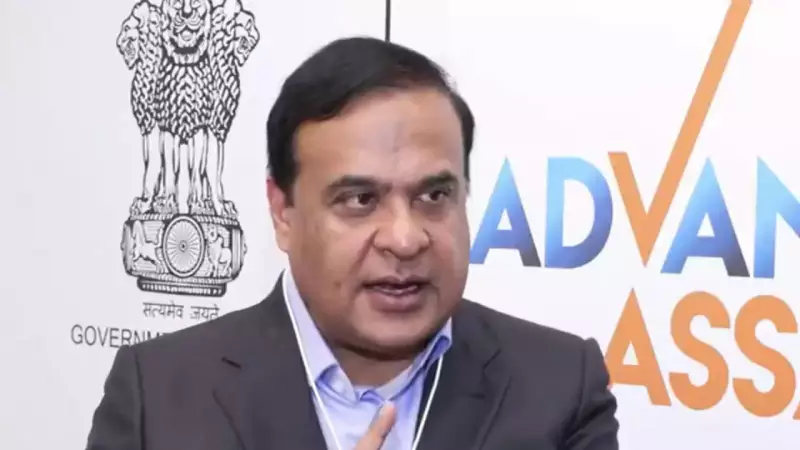
Assam Chief Minister Himanta Biswa Sarma has made startling revelations about his time in the Congress party, claiming he became a victim of the alleged rift between Rahul Gandhi and Priyanka Gandhi Vadra. In an exclusive interview with NDTV, Sarma, who spent 22 years in Congress before switching to the BJP, provided what he called inner information about the dynamics within the first family of Indian politics.
The Rahul-Priyanka Power Dynamics
Sarma elaborated on the supposed tensions, stating Rahul Gandhi doesn't want Priyanka in Kerala due to existing power structures. He doesn't want to disturb KC Venugopal and his axis, and Priyanka is an outsider to that axis, the Chief Minister explained. That's why he transferred her to Assam. Sarma pointed out the irony that an MP from Kerala has not been assigned responsibility in Kerala, questioning how else this situation could be interpreted.
Scathing Criticism of Gandhi Family
Taking direct aim at the Congress leadership, Sarma didn't mince words, labeling the Gandhi family as the world's biggest flop family. In a personal comparison, he added, I think my family is better than theirs. We grew up struggling, highlighting his humble beginnings in contrast to what he portrayed as the privileged political dynasty.

National Security Concerns and Gaurav Gogoi Allegations
The Chief Minister addressed his ongoing conflict with Assam Congress president Gaurav Gogoi, denying any personal rivalry but emphasizing his constitutional duty. When the link is to an enemy country, and I do not forward it to the Government of India, then as a chief minister, I will be doing a disservice to the Constitution and people, Sarma stated firmly.
He reiterated serious accusations against Gogoi and his wife, claiming connections with Pakistani intelligence agency ISI. Drawing a clear distinction, Sarma emphasized, Pakistan is an enemy country and a hostile neighbour. Links with Pakistan cannot be compared with a corruption charge. Quoting from the Hindi spy thriller Dhurandhar, he posed the rhetorical question: If you catch a spy, will you not expose him?
Regional Security and Bangladesh Relations
Sarma expressed significant apprehensions about changing relations with Bangladesh, crediting former Prime Minister Sheikh Hasina's regime for assisting Assam in tackling extremism. He issued a stark warning that any hostility from Dhaka could allow militants to establish a base across the 800 km border, highlighting the delicate security balance in the northeastern region.
Economic Vision for Assam's Future
On economic development, the Chief Minister outlined an ambitious vision to transform Assam beyond traditional hydrocarbon industries. He identified promising opportunities in the semiconductor sector as part of India's broader technological advancement.
India is a diverse country. We must take care of every state, Sarma emphasized, warning against regional imbalances. If one part becomes developed only to cater to the global ecosystem, and there's nothing on the other side, then the country will collapse, he cautioned, advocating for equitable development across all regions.
Despite describing Assam as landlocked and tucked away near the border, Sarma proudly noted it has become one of the fastest-growing big states in India, demonstrating significant economic progress under his administration.
Identity, Demographics and Upcoming Elections
With state elections approaching, Sarma addressed critical issues of identity and demographic concerns in Assam. In Assam, we need development. For us, national security and the identity of the Assamese people are paramount, he declared, highlighting the dual challenges facing the state.

The Chief Minister identified demographic change as a huge concern, stating unequivocally, We are fighting for both our identity and development, positioning these issues as central to his political agenda and the BJP's platform in the region.
Comparative Peace and Regional Stability
In a pointed comparison with neighboring states, Sarma took a dig at West Bengal, claiming Assam remains relatively peaceful with no fear of stones being thrown. This remark subtly contrasted the political climates of the two eastern states while promoting Assam as a model of stability and governance.
The comprehensive interview reveals Sarma's multifaceted approach to governance, combining political strategy, security concerns, economic development, and cultural preservation as he positions himself as a key leader in both Assam and national politics.