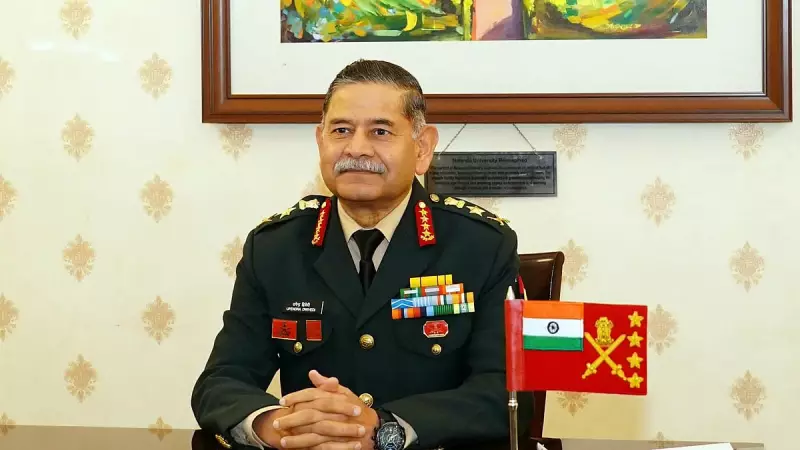
The Indian Army Chief has made a significant statement regarding last year's military confrontation with Pakistan. He clarified that during Operation Sindoor, the Pakistan military never resorted to nuclear rhetoric. This revelation addresses a common perception about nuclear threats in regional conflicts.
Operation Sindoor: A Conventional Military Engagement
Operation Sindoor was an intense 88-hour conflict that occurred in May of last year. The Indian Army Chief emphasized that this engagement demonstrated an expansion of space for conventional warfare. Many analysts and observers had previously believed that the room for conventional military operations was shrinking in the region.
Dispelling Misconceptions About Nuclear Threats
The Army Chief's comments directly challenge a widespread assumption. He stated clearly that Pakistan did not use nuclear rhetoric during the entire Operation Sindoor. This is an important point because it shows that not all India-Pakistan conflicts automatically escalate to nuclear posturing.

The military leadership explained that the conflict remained within conventional boundaries throughout its duration. This development suggests that both nations maintained certain red lines during the tense confrontation.
The Reality of Modern Warfare Dynamics
According to the Army Chief's assessment, Operation Sindoor proved that conventional warfare options still exist and can be effectively utilized. The 88-hour engagement showed how modern militaries can operate within defined parameters without crossing into nuclear threat territory.
This perspective offers valuable insights into current military thinking and strategy. It indicates that professional militaries can manage conflicts without immediately resorting to the most extreme forms of deterrence.
The statement comes as part of ongoing discussions about military doctrine and regional security. By clarifying what actually happened during Operation Sindoor, the Army Chief provides important context for understanding India-Pakistan military relations.