Army Chief Details Decisive Military Actions That Compelled Pakistan to Seek Conflict Suspension
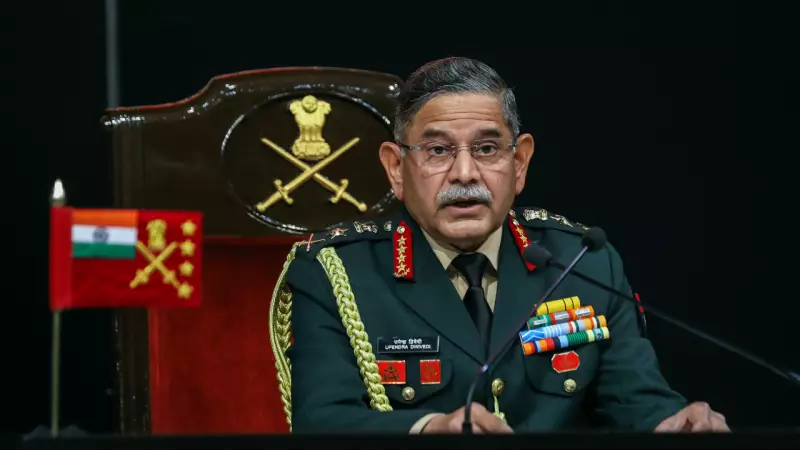
Army Chief General Upendra Dwivedi stated on Tuesday that coordinated movements by the Indian Army, Air Force, and Navy on the morning of May 10 played a decisive role in prompting Pakistan to seek a suspension of hostilities. These actions followed clear government directives to prepare for a potential escalation of Operation Sindoor.
The Two Critical Turning Points in the Conflict
General Dwivedi identified two major turning points during the three-day conflict, which began after India targeted terror camps deep inside Pakistan and Pakistan-occupied Kashmir on May 7 last year. This strike was a direct retaliation for the jihadi terror attack in Pahalgam, Jammu and Kashmir, during April.
The first pivotal moment was the precise 22-minute strike on terrorist targets. "This strike derailed the opposite side's decision-making process," General Dwivedi explained. "They required time to fully comprehend the situation. This created confusion within their ranks, leading to mismanaged responses which we met with our own calibrated countermeasures."

The second decisive moment occurred on May 10. "On that morning, India's tri-forces received specific directions regarding potential war escalation," the Army Chief revealed. "Pakistan clearly understood these preparations. Consequently, they contacted our Director General of Military Operations (DGMO) to seek a pause." This statement provides the first formal confirmation of the government's decision to prepare for a full-scale conflict.
Pakistan's Satellite Surveillance and Decision to Halt
General Dwivedi elaborated on Pakistan's awareness of Indian military movements. "They possessed complete information from satellite imagery about which Indian ships, strike units, core formations, and aircraft were moving and where," he said. "When they connected all these movements, they concluded the time had come to stop this war."
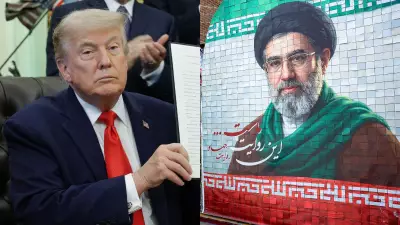
The General's observations also serve as a direct repudiation of former US President Donald Trump's repeated claims about brokering the pause in the India-Pakistan conflict in May last year.
Operation Sindoor: A Model of Tri-Services Synergy
Emphasizing the success of Operation Sindoor, General Dwivedi called it "the best example of tri-services synergy under clear political direction with full operational freedom." He reported that the Army successfully destroyed seven out of nine designated targets and played a pivotal role in ensuring measured responses to Pakistan's actions.
The Army Chief provided specific operational details:
- Approximately 100 individuals associated with Pakistan were killed along the Line of Control (LoC) and International Border (IB) during the operation.
- Regarding nuclear rhetoric from Pakistani politicians during the critical four days (May 7-10), Dwivedi clarified: "No nuclear issues were discussed in the DGMO talks. The nuclear rhetoric came from Pakistani politicians and the public. We have no indication such talk originated from their military."
Current Security Situation: Terror Camps and Cross-Border Activity
General Dwivedi provided a detailed assessment of current security threats. He confirmed that eight terrorist camps remain active on the Pakistani side of the border.
- Six terror camps are located along the Line of Control (LoC).
- Two terror camps operate along the International Border (IB).
"Our intelligence indicates a presence of 100 to 150 terrorists at these locations," he stated. "We will definitely respond to any mischievous activities we observe."
Addressing recent incidents, the General mentioned sightings of multiple suspected Pakistani drones along the LoC and IB on January 10 and 11. "India has conveyed a clear warning to Pakistan," he said. "New Delhi has informed Islamabad that such activities are completely unacceptable."
Improved Security in Jammu and Kashmir
The Army Chief presented encouraging data about security improvements in Jammu and Kashmir. He revealed that 65% of terrorists eliminated in the Union Territory last year were Pakistani nationals.

Under Operation Mahadev in 2025, security forces eliminated 31 terrorists. This number includes the three perpetrators of the April 22 Pahalgam terror attack.
"The number of active local terrorists has now reduced to single digits," General Dwivedi reported. "Terrorist recruitment is almost non-existent, with only two recorded cases in 2025."
He highlighted clear indicators of positive change in Jammu and Kashmir:
- Robust development activity is underway across the region.
- The tourism sector has experienced a significant revival.
- The Amarnath Yatra proceeded peacefully with over 400,000 pilgrims, exceeding the five-year average.
General Dwivedi's comprehensive briefing underscores India's strategic military posture, the effectiveness of coordinated operations, and the improving security landscape in Jammu and Kashmir following decisive actions against cross-border terrorism.