

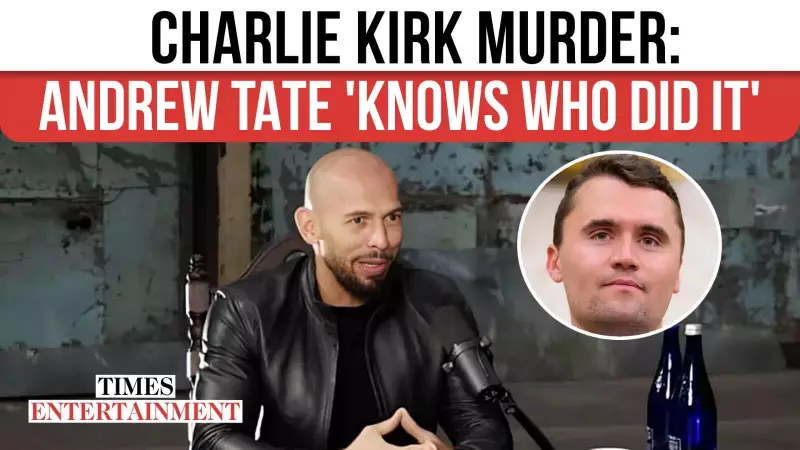
Andrew Tate Alleges Knowledge of Charlie Kirk Murder, Claims It's "Too Dangerous" to Reveal
In a development that has sent shockwaves through online circles, controversial internet personality Andrew Tate has made explosive claims regarding the murder of conservative activist Charlie Kirk. During a recent podcast appearance, Tate asserted that he possesses specific knowledge about who is responsible for Kirk's killing but stated unequivocally that disclosing this information would be "too dangerous."
Tate's Cryptic Comments Hint at Powerful Forces and Selective Silencing
The discussion, which grew increasingly tense, saw Tate allude to the existence of powerful, shadowy forces that allegedly control public narratives and determine which voices are amplified or suppressed. He suggested a pattern of selective silencing, questioning why certain individuals are permitted to speak freely while others face consequences. Tate's remarks extended beyond the Kirk case, touching on figures like Candace Owens and broader themes of alleged narrative manipulation in media and public discourse.
Explosive Podcast Moment Raises Chilling Questions About Truth and Belief
This provocative exchange has ignited fresh controversy and debate, raising deeply unsettling questions about credibility, power dynamics, and the mechanisms of truth in the digital age. The conversation forces a critical examination of who gets believed in public controversies and who is dismissed, highlighting potential biases and external pressures that shape mainstream narratives. Tate's refusal to name names, coupled with his warnings of danger, adds a layer of intrigue and speculation, leaving listeners to ponder the identities and motives of the entities he implies are involved.

The claims emerge against a backdrop of heightened political and social tensions, where the lines between activism, conspiracy, and genuine revelation often blur. While Tate's allegations remain unverified and are presented without concrete evidence, they have succeeded in fueling discussions about transparency, safety for public figures, and the very nature of truth in an era of information overload. The episode underscores the complex interplay between free speech, personal risk, and the powerful interests that may seek to control public perception.






