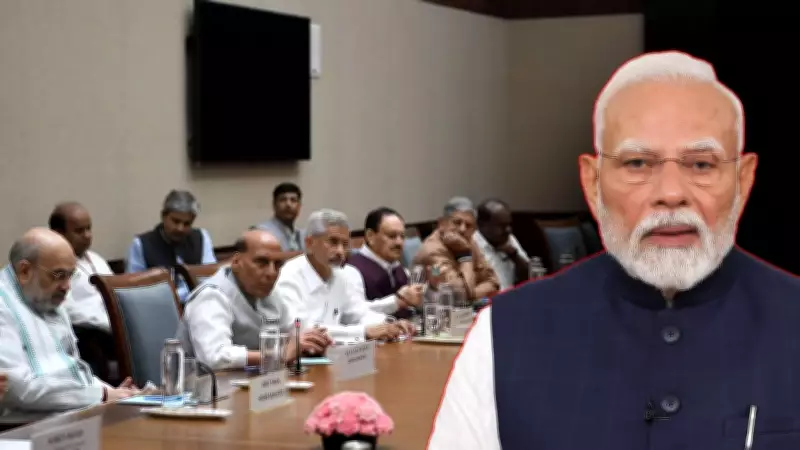
Government Convenes All-Party Meeting on West Asia Crisis Amid Opposition Pressure
Amid escalating tensions in West Asia due to the ongoing conflict between Iran and the United States, the Central government has called for an all-party meeting on March 25 to deliberate India's strategic response. The meeting is scheduled for 5 pm in the Parliament complex and comes at a critical juncture as geopolitical dynamics rapidly evolve.
Background and Context of the Meeting
The decision to hold this high-level consultation follows significant opposition criticism directed at Prime Minister Narendra Modi's recent statement in the Lok Sabha regarding the situation. Opposition parties have raised pointed concerns over the clarity and direction of India's foreign policy in light of the volatile developments in West Asia.
This meeting also comes on the heels of a comprehensive high-level defence review led by Defence Minister Rajnath Singh. That review involved senior military officials and representatives from the Defence Research and Development Organisation (DRDO), focusing on national security preparedness and strategic assessments related to the conflict.

Government's Position and Preparedness
The government has consistently emphasized its commitment to maintaining robust preparedness across all fronts. Official statements have highlighted ongoing diplomatic efforts aimed at de-escalating tensions and protecting India's national interests in the region. Authorities have underscored the importance of a calibrated and thoughtful approach to foreign policy during this period of international uncertainty.
Key objectives for the government include:- Assessing the impact of the Iran-US conflict on India's strategic and economic interests
- Evaluating potential security implications for the region and beyond
- Coordinating diplomatic initiatives with key international partners
- Ensuring continuity in energy security and trade relations
Opposition Concerns and Political Dynamics
The opposition has voiced substantial apprehension regarding the government's handling of the West Asia situation. Critics have demanded greater transparency and a more clearly articulated policy framework to address the complex challenges emerging from the conflict. The all-party meeting is viewed as an opportunity to bridge political divides and foster a more cohesive national approach.
Political analysts suggest that this meeting could serve as a crucial platform for building consensus across party lines, particularly as India navigates delicate international relationships and domestic political pressures.Expected Outcomes and National Implications
The meeting is anticipated to help shape a unified national stance on the West Asia conflict, balancing diplomatic pragmatism with strategic autonomy. Participants will likely discuss:
- India's diplomatic positioning in multilateral forums
- Humanitarian considerations and regional stability
- Economic ramifications, particularly regarding energy imports
- Long-term strategic partnerships in the Middle East
This consultation represents a significant step in India's foreign policy process, demonstrating institutional responsiveness to global crises while addressing domestic political accountability. The outcomes could influence not only immediate diplomatic maneuvers but also longer-term strategic orientations in India's engagement with West Asia and global powers.