The standoff between the Akal Takht and Punjab Chief Minister Bhagwant Singh Mann is not merely a political or religious dispute, but a moment of reckoning that lays bare the tensions between faith, authority, and democratic governance.
The Akal Takht has historically articulated the collective conscience of the Panth. Its edicts, though not legally enforceable, carry immense moral weight among the Sikh masses. The Chief Minister, on the other hand, represents a democratic mandate. What emerges from this crisis could well determine the course of Punjab politics ahead of the 2027 Assembly elections.
The Trigger: A Controversial Video
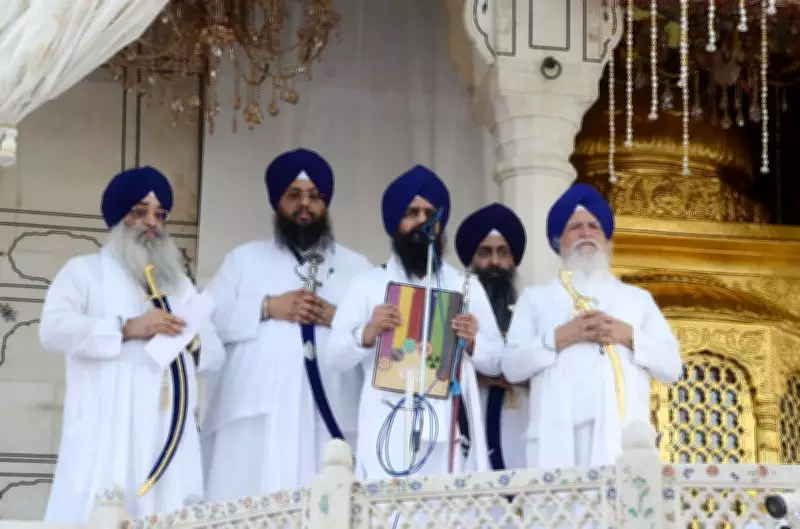
The instant trigger was a controversial video clipping — first circulated in 2025 and resurfacing in early 2026 — allegedly showing a man resembling the Chief Minister engaging in sacrilegious conduct. The Akal Takht, relying on “forensic reports”, declared the video to be “authentic”. After deliberations with the five Sikh High Priests, Giani Kuldeep Singh Gargaj, officiating Jathedar of the Akal Takht, pronounced the CM a “Guru-Dokhi” (anti-Guru) and “Khalsa Panth virodhi” (anti-community). The directive urged the Sikh community to refrain from associating with Mann.

Outrightly rejecting the allegation, the Chief Minister insisted that he was not the individual in the clip and termed the episode a “politically motivated conspiracy”. The AAP government has accused the religious functionaries of acting “at the behest of their political bosses” and misusing faith for electoral ends, referring to the Sukhbir Singh Badal-led Shiromani Akali Dal (SAD). While daring Mann to undergo a lie detector test, Badal has announced a ‘Dharam Yudh Morcha’ from July 19 under the “chhattar chhaya” (spiritual patronage) of Akal Takht, demanding his removal.
Beyond the Video Row: The Anti-Sacrilege Law
Parallel to the video controversy is a larger dispute over the Jaagat Jot Sri Guru Granth Sahib Satkar (Amendment) Act, 2026. The Akal Takht has objected to the new anti-sacrilege law, arguing that it was passed without consultation with Panthic institutions — the Akal Takht and the Shiromani Gurdwara Parbandhak Committee (SGPC). The process is on to summon Sikh ministers and MLAs for an explanation. The Akal Takht views the legislation as threatening religious authority. From the government’s standpoint, the law is a response to longstanding public anger over past sacrilege incidents and demands for stricter punishment, an issue that has dominated Punjab politics since the 2015 desecration incidents.
Political Context and Reactions
Bhagwant Mann was only recently projected as the Aam Aadmi Party’s chief ministerial face for the 2027 Assembly elections by the party’s national convener, Arvind Kejriwal. The 2015 Bargari sacrilege and Behbal Kalan firing incidents reshaped the 2017 elections. AAP’s own rise in 2022 partially relied on positioning itself as a clean alternative to sacrilege-tainted incumbents. The Takht’s pronouncement, even if not legally binding, has shifted the political narrative.
The Congress and the BJP have demanded accountability and Mann’s resignation, while the AAP has accused the rival parties, particularly the SAD, of politicising the Sikh institutions to regain lost ground.
Sikh scholar Rajwinder Singh Rahi says it is “an open secret that the sequence of events was meant to provide oxygen to the SAD, but it will hardly benefit the party. The deeply religious people are already dejected by the SAD over its anti-Panthic moves in the past. AAP would be hardly affected as its Dalit and Hindu vote bank is intact. The Congress is out of the picture in this context. The voters will move towards BJP only”.

Prof Harpal Singh, who taught Punjabi literature at Sikh National College, Banga, says in the absence of guidelines regarding the appointment, removal and working sphere of Jathedars, “they are constrained to be pawns of their appointing authority”. “Here it is the SGPC that is being dominated by its extended political arm, the SAD. Sukhbir’s orders to the Jathedars are peremptory and they could never think of being in defiance. Now, after the closure of all doors of revival, the SAD is bent on having an alliance with the BJP,” he says. “The Akal Takht’s directive to stay away from Mann, even if obeyed by voters, will not necessarily benefit SAD because of its dubious past. The Congress was never on the priority list of the Panthic lot. Ultimately, they will vote for the BJP only,” Prof Singh opines.
Prof Kuldip Singh, former head of GNDU’s political science department, says even if there are shortcomings regarding the appointment and autonomy of Jathedars, such an offensive act as shown in the video could never go unnoticed. “Still, SAD has very little to gain. The mishandling in Bargari and Behbal Kalan, coupled with the flip-flop exoneration of the Dera Sacha Sauda cult, reshaped the political landscape, leading to SAD-BJP’s debacle. These issues are alive today too. The controversial video may affect Mann’s credentials as the CM candidate but will cause little damage to AAP, which doesn’t play ‘identity’ politics per se.”
Akal Takht: A Historical Perspective
For more than 400 years, the Akal Takht has stood at the centre of Sikh religious and political life. Every newly appointed Jathedar inherits a legacy shaped by a defining image: Akali Phula Singh, the Akal Takht Jathedar, preparing to punish Maharaja Ranjit Singh. The Sikh psyche expects the Jathedar to fear none but the Guru. Yet the realities of the modern era are considerably different. Today’s Jathedars are appointed through institutional structures linked to the SGPC and do not possess the authority or autonomous power like their predecessors.
That said, the Akal Takht remains the most influential institution in Sikh affairs. Very few individuals have dared to openly disregard its directives. A recent example is preacher Ranjit Singh Dhandrianwale, boycotted for divergent views in 2020 before returning to the mainstream in 2025.
Foundation of the Takht
Although Sikhs had begun referring to their Guru as ‘Sacha Patshah’ (True Emperor) during the time of Guru Nanak Dev, the institutional foundation of Sikh temporal authority took shape after the martyrdom of Guru Arjan Dev in 1606. Soon afterwards, Guru Hargobind established the Akal Takht in the front courtyard of Harmandir Sahib. He introduced the doctrine of Miri-Piri, combining spiritual and temporal authority. The Sarbat Khalsa tradition emerged in the 18th century, bringing Sikh leaders together to deliberate on religious and political matters. By the turn of the century, Sikh authority was guided through a loose but influential central structure rooted in the Akal Takht.
A Defining Characteristic
The confrontation with Maharaja Ranjit Singh established a pattern. The Takht declared him guilty of religious misconduct over his marriage to Moran, ordered punishment and banned the Moranshahi coin. Such actions reinforced the perception that even the most powerful rulers remained accountable before the Panth.
After the British annexation of Punjab in 1849, the colonial authorities sought to limit the institution’s autonomy by placing loyal priests in charge at the Takht called ‘Sarbraha’ instead of Jathedar. However, the rise of the Singh Sabha and Gurdwara Reform movements transformed the Takht into the nerve centre of Sikh political mobilisation. Akali jathas departing for protests and courting arrest during various morchas were often dispatched from the Akal Takht. The SAD itself emerged from this broader political and religious movement.
Centre of Mobilisation
In 1953, a delegation led by Master Tara Singh departed from the Akal Takht to launch a movement seeking reservation benefits for Scheduled Caste Sikhs and those from backward classes. Yet the institution also demonstrated its willingness to discipline political leaders. During the Punjabi Suba agitation, both Master Tara Singh and Sant Fateh Singh were declared tankhaiya (guilty of religious misconduct).
Before Operation Bluestar in 1984, relations between Jathedars and militant groups were often uneasy. The influence of Damdami Taksal also grew. Following Bluestar, the Akal Takht summoned President Giani Zail Singh and declared Union Minister Buta Singh tankhaiya. In 1986 and again in 1988, Chief Minister Surjit Singh Barnala faced religious penalties over security operations at the Golden Temple complex. Former MP Amarjit Kaur also got punishment in 1998 for supporting military action.
Clashes Within Establishment
At various times, the Akal Takht has also found itself at odds with the SGPC, SAD and influential Sikh leaders. In 2000, Jathedar Giani Puran Singh excommunicated then SGPC president Bibi Jagir Kaur over the controversy surrounding the Nanakshahi Calendar. When she refused to appear before the Takht, four other SGPC officials were also excommunicated. The dispute escalated dramatically when the SGPC removed Puran Singh the same day and appointed Joginder Singh Vedanti as Jathedar.
In 2004, the Akal Takht issued a hukamnama declaring the Rashtriya Sikh Sangat, an organisation associated with the RSS, as “anti-Panthic” for attempting to mislead Sikhs and secure their support for activities considered contrary to Panthic interests.
The Akal Takht Jathedar’s authority, however, has never been absolute for the Panth. The controversy surrounding the pardon granted to Sacha Sauda chief Gurmeet Ram Rahim Singh in 2015, for instance, triggered widespread opposition. It eventually contributed to disciplinary action against former Takht Jathedar Giani Gurbachan Singh.
In 2024, Acting Jathedar Harpreet Singh once again demonstrated Akal Takht’s influence, pronouncing religious punishment for Badal, several former ministers and former Jathedar Gurbachan Singh.