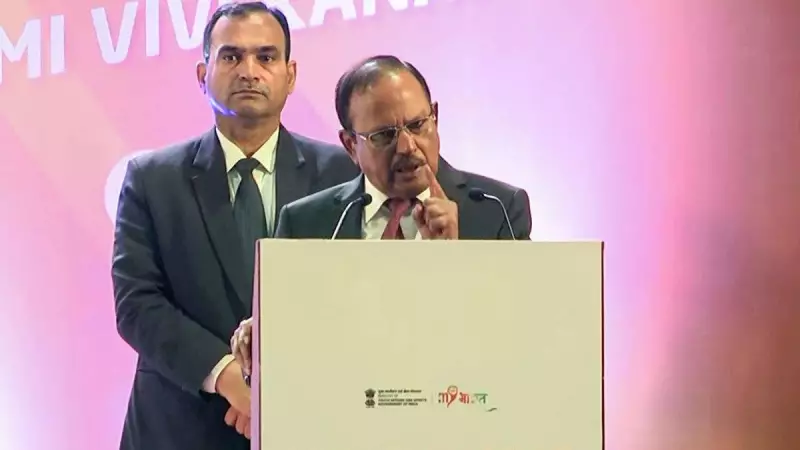
In a revelation that has taken many by surprise, India's National Security Advisor (NSA), Ajit Doval, has stated that he does not own a mobile phone and does not use the internet. This extraordinary admission from one of the nation's top security officials came during a public event, highlighting a starkly analog approach in an increasingly digital world.
The Startling Admission at a Public Forum
The disclosure was made on January 11, 2026, at an event where Doval was interacting with an audience. When asked about his views on technology and security, the NSA responded candidly, confirming his personal choice to remain disconnected from personal digital devices. This approach, while seemingly counterintuitive for a security chief in the 21st century, underscores a unique philosophy towards information management and personal focus.
Ajit Doval, a veteran of the Indian Police Service and a former chief of the Intelligence Bureau, is known for his strategic mind and pivotal role in shaping India's national security policy. His work often involves dealing with highly sensitive intelligence and cutting-edge cyber threats. Yet, he personally operates without the very tools that define modern communication.

How Does India's Top Security Official Function?
This revelation naturally leads to the question: how does the National Security Advisor manage his critical duties without a phone or internet access? The answer lies in a structured, support-driven system. Doval relies on his dedicated team of staff and secure, official channels for all communication and information gathering.
His office handles all digital correspondence, filters necessary information, and ensures he receives vital updates through secure and vetted means. This method creates a layer of insulation, potentially reducing distractions and minimizing his personal digital footprint—a significant advantage from a security perspective. It reflects a compartmentalized work style where focus is paramount and information intake is carefully controlled.
Implications for Security and a Digital India
Doval's choice presents a fascinating paradox. At a time when the Government of India is vigorously promoting its Digital India initiative, aiming for a digitally empowered society, the country's top security advisor consciously abstains from personal use of these technologies. His stance sparks a crucial debate about cybersecurity, personal privacy, and mental focus in leadership roles.
From a security standpoint, not having a personal phone eliminates risks like hacking, phishing attacks, or unauthorized tracking. It is a radical form of operational security. However, it also highlights a dependency on intermediaries for information flow. The revelation has ignited discussions on balancing technological adoption with personal security and the potential benefits of a digital detox for enhanced concentration and strategic thinking.
Public reaction has been mixed, with some praising his discipline and focus, while others question the practicality of such a stance for a key modern-day administrator. Nonetheless, it firmly establishes Ajit Doval's unique personal protocol, setting him apart in the global community of security leaders who are typically heavily reliant on constant digital connectivity.
In conclusion, NSA Ajit Doval's disclosure is more than a personal quirk; it is a statement on managing the deluge of information in the digital age. It underscores that in the high-stakes realm of national security, the clarity of thought and secure communication can sometimes be prioritized over the convenience of constant connectivity. His method serves as a powerful reminder of alternative approaches to work and life in a hyper-connected world.