AIADMK and BJP's Coalition Semantics: A Study in Political Wordplay
In a fascinating display of political nuance on Thursday, the AIADMK and BJP engaged in a subtle play of words regarding the constitution of the government they aspire to form after the upcoming assembly election in Tamil Nadu. This linguistic dance underscores the delicate balance within their alliance, as both parties navigate their partnership while maintaining distinct political identities.
Divergent Narratives on Government Formation
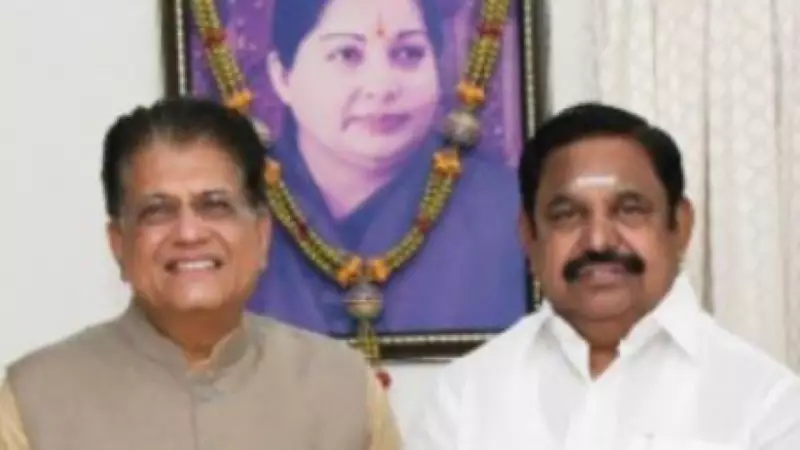
Union Minister Piyush Goyal, after holding talks with AIADMK leadership in Chennai ahead of Prime Minister Narendra Modi's visit on Friday, asserted that the "AIADMK-led NDA will come to power in April and transform the future of Tamil Nadu." This statement clearly indicates a vision for a coalition government under the National Democratic Alliance banner.
In contrast, AIADMK General Secretary Edappadi K. Palaniswami, sharing the dais at the same press meet, carefully avoided any reference to the NDA. Instead, he emphasized, "With the honourable Prime Minister leading the government at Centre and AIADMK forming the government in Tamil Nadu, the state will achieve very big development." This formulation subtly suggests a more autonomous role for AIADMK in state governance.

Historical Context of Alliance Semantics
The semantics of the AIADMK-BJP combine have been a point of contention ever since the two parties reunited in April 2025 after a separation lasting one and a half years. This linguistic tug-of-war reflects deeper political calculations and historical precedents in Tamil Nadu politics.
- BJP leaders, including Union Home Minister Amit Shah, have consistently referred to the alliance as the NDA. During a speech in Madurai in June 2025, Shah declared, "In the 2026 assembly election, BJP-AIADMK will form an NDA government."
- AIADMK leadership promptly opposed this characterization, reminding everyone that Tamil Nadu has no historical precedent for coalition governments at the state level.
- The party has instead preferred to describe the arrangement as an "AIADMK-led alliance," asserting its primacy in the state political landscape.
Alliance Dynamics and Power Sharing Implications
The recent rejoining of AMMK General Secretary T. T. V. Dhinakaran to the NDA on Wednesday has added another layer to this complex political equation. Dhinakaran hinted at power sharing arrangements, suggesting that the NDA would form the next government, of which he would be an integral part.
However, BJP State President Nainar Nagenthran offered a different perspective from Madurai, stating, "Because Congress raises the demand for power with DMK, we need not follow suit. We are not pressing for a coalition government with AIADMK." This statement attempts to position BJP as a more accommodating alliance partner focused on broader political objectives rather than immediate power sharing demands.
Unified Opposition to DMK Governance
Despite their semantic differences on coalition structure, both Goyal and EPS presented a united front in their criticism of the ruling DMK government. They launched scathing attacks on what they described as systemic failures in governance and administration.
- Piyush Goyal accused the DMK of presiding over crumbling infrastructure, asserting that "misgovernance, corruption and anti-development activities have become the symbols of DMK."
- Edappadi K. Palaniswami went further, alleging a staggering loss of Rs 4 lakh crore due to corruption and claiming the government had failed in every department of administration.
This coordinated criticism suggests that while the alliance partners may differ on the specifics of government formation, they share a common political adversary and electoral strategy. The careful wordplay observed in Chennai reflects the complex negotiations and political positioning that characterize alliance politics in Tamil Nadu, where historical precedents, regional pride, and national ambitions must all be balanced in the pursuit of electoral success.