27 Lakh Voters in West Bengal Face Exclusion as SC Rejects Appeals
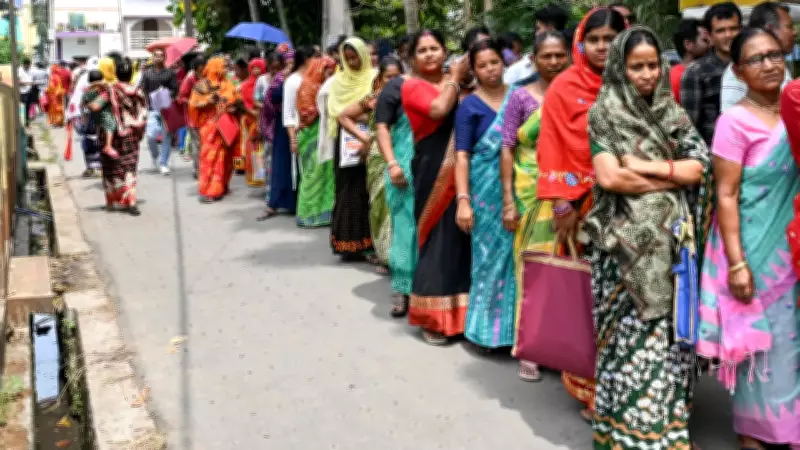
In a significant development ahead of the West Bengal assembly elections, nearly 27 lakh individuals out of 60 lakh whose claims were categorized as "doubtful" during a special intensive revision exercise may be barred from voting. Judicial officers overseeing the adjudication process have rejected their inclusion claims, a decision upheld by the Supreme Court.
Supreme Court Upholds Deletions Amid Trust Deficit
The Supreme Court, informed of final deletions by the Calcutta High Court, rejected pleas from the Bengal government and Trinamool Congress supporters to include names pending appeal. A bench comprising Chief Justice Surya Kant and Justices Joymalya Bagchi and Vipul M Pancholi emphasized that claims had been scrutinized by judicial officers acting as electoral registration officers.
The bench stated, "We allowed inclusion of names cleared by judicial officers through supplementary lists beyond the final voter list publication on February 28. This cannot be extended to appeals before appellate tribunals against rejections."

Massive Deletions and Logistical Challenges
Deletions after adjudication stand at approximately 88.8 lakh, representing 11.6% of the electorate at the start of the special intensive revision. In addition to the 60 lakh doubtful cases, another 61.7 lakh names were removed due to factors such as:
- Deceased individuals
- Residential shifts
- Duplicate registrations
- Untraceable voters
The bench highlighted that asking tribunals to adjudicate lakhs of appeals by April 15 would create "a crushing burden" and potential chaos. They noted that 700 judicial officers deployed for the revision had performed "a miracle" by completing adjudication of over 60 lakh claims.
Legal Arguments and Procedural Decisions
Advocate Shyam Divan, representing the Bengal government and TMC supporters, revealed that approximately seven lakh appeals have been filed, with more expected. He suggested these be decided by April 15 for inclusion in the final list.
However, the Supreme Court cited extraordinary powers under Article 142 of the Constitution, deployed due to trust deficit between the state and Election Commission. Advocate Kapil Sibal proposed empowering appellate tribunals to issue interim directions for inclusion of previously mapped voters, but the court declined.
The bench concluded that since tribunals are manned by seasoned former judges, it would be prudent for a committee established by the Calcutta High Court Chief Justice to decide uniform procedures for the 19 tribunals.
Election Commission Readiness and Timeline
The Election Commission, through senior advocate D S Naidu, informed the Supreme Court that infrastructure facilities for tribunals are in place, enabling full functionality. According to Section 23(3) of the Representation of the People Act, 1950, the voter list for phase two will be frozen on April 9, the last day of nomination.
The electoral roll for the first phase of Bengal assembly polls, scheduled for April 23, was frozen by Monday midnight, solidifying the exclusion of these 27 lakh voters unless appellate tribunals rule otherwise under the new procedural framework.